

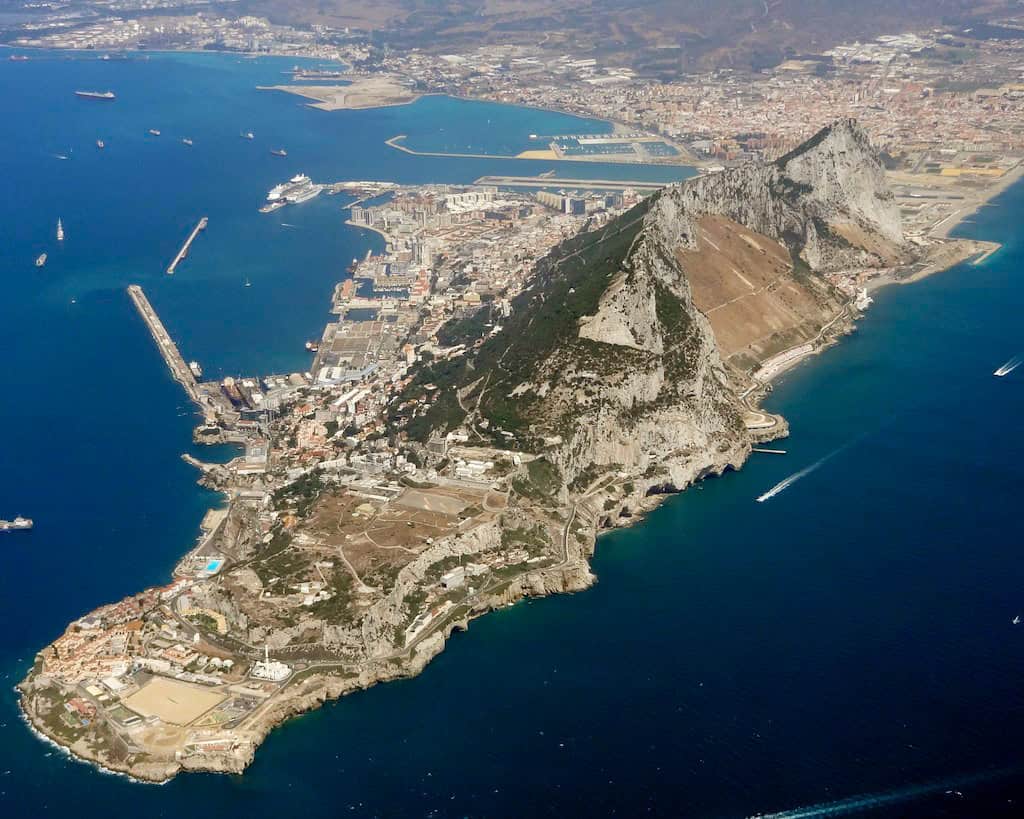
In 711, a commander named Ṭāriq ibn Ziyād led an army across the Strait of Gibraltar and into the Iberian Peninsula, setting in motion one of the most consequential military campaigns in Mediterranean history. More than thirteen centuries later, his origins remain debated, particularly in Algeria and Morocco — a dispute that has spilled from historical discussion into social media and television dramas. But what does the surviving historical evidence actually say?
The answer, it turns out, is less than we might hope — and far more interesting than a simple nationality label.
The earliest sources are strong on his career, silent on his birthplace
The most valuable surviving witness is the Chronicle of 754, a Latin Christian chronicle written in Iberia only about four decades after the conquest. As recent open-access scholarship on the chronicle’s terminology shows, its anonymous author distinguishes between Arabes (“Arabs”) and Mauri (“Moors”), using the latter broadly for North Africans. In its account of the conquest, the chronicle names Ṭāriq among the leaders of forces it describes as Arabs and Moors. This is strong evidence that Ṭāriq was a genuine historical participant in the conquest. But the chronicle supplies no birthplace, no tribe and no modern-equivalent nationality.
The source closest to Ṭāriq’s own lifetime, then, knows what he did but not where he came from.
One early Arabic account does connect him to present-day Algeria
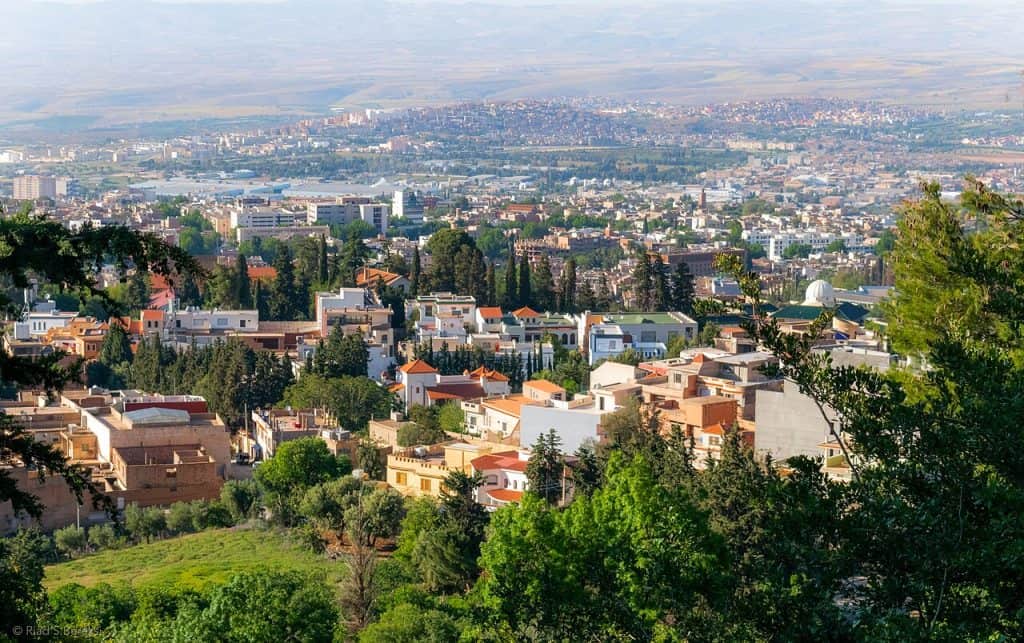
A much fuller picture appears in Ibn ʿAbd al-Ḥakam’s account, Futūḥ Miṣr wa-l-Maghrib wa-l-Andalus (The Conquests of Egypt, North-West Africa and Iberia), composed in ninth-century Egypt and one of the earliest surviving Arabic conquest narratives. It was written roughly a century and a half after the events it describes. According to this account, when the ruler traditionally called Julian sought contact with the Muslims, Ṭāriq was then in Tlemcen — a city in what is today western Algeria — while his superior Mūsā ibn Nuṣayr was in Kairouan, in present-day Tunisia.
This is one of the clearest early Arabic passages connecting Ṭāriq to a place now inside Algeria. But it establishes presence, not birth. A commander being at Tlemcen before a campaign does not logically prove he was born there, any more than his governorship of Tangier — reported in the same source — proves he was born in Morocco. Ibn ʿAbd al-Ḥakam himself never makes either inference.
“Berber” is probably right — but the label needs care
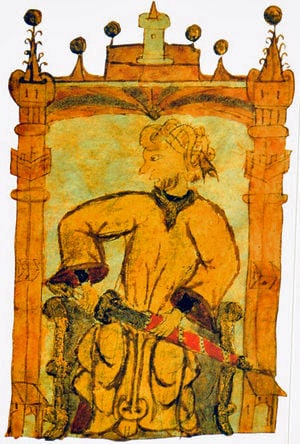
Many modern historians have regarded Ṭāriq as Amazigh (Berber). Spain’s Real Academia de la Historia presents him as a Berber general from North Africa, reflecting the conventional account.
However, the Amazigh identification is not beyond challenge. Jesús Lorenzo-Jiménez argued in 2022 that the client relationship between Ṭāriq and Mūsā may have pre-dated their presence in North Africa and used this to argue against a North African-Berber origin, proposing instead links with the former Sasanian sphere. Maribel Fierro directly revisited that thesis in Al-Qanṭara in 2024. She concluded that the surviving evidence does not allow Ṭāriq’s origins to be established with certainty, but that a Berber origin remains the most probable explanation.
The broader point also needs care. As the historian Ramzi Rouighi has argued, and as recent open-access work on medieval naming practices discusses, the medieval Arabic category barbar (“Berber”) developed particular meanings through the Arab conquest and later historiographical traditions. It should not be treated as a timeless ethnic census covering an unchanged population from antiquity to the present. This is a point about the history of names and categories, not a claim that Amazigh-speaking communities or their ancestors did not exist before the Arab conquest.
Nafza does not equal Algeria
Later historical traditions associate Ṭāriq more specifically with Nafza, a Berber genealogical grouping. But the evidence becomes more specific as the sources become later. A 2026 Algerian study by Mohamed Saadani, comparing early and later historical accounts, similarly traces how Ṭāriq’s initially ambiguous identity gradually became more firmly represented as Maghribi, Berber and Nafzi in later historiography.
The geography is equally complicated. Medieval genealogists themselves disagreed about whether Nefza and Nefzaoua should be distinguished, while branches associated with these genealogies were distributed across different parts of the Maghrib. The Oulhassa tradition is particularly relevant to Algeria because Oulhassa communities were later established around the mouth of the Tafna, west of Tlemcen, and Ibn ʿIdhārī is reported as applying Oulhassi as well as Nafzawi affiliations to Ṭāriq.
But none of this turns Nafza into a synonym for “Algerian”. Tribes migrated, confederations were dispersed, genealogical traditions changed, and today’s international boundaries did not organise the Maghrib of 711. Popular accounts sometimes compress these separate steps into a direct national genealogy — “Ṭāriq → Nafza → a branch later documented around Tlemcen → therefore Algerian” — but each step requires evidence of its own.
Tangier shows why location is not nationality
The same Arabic source also gives Ṭāriq a clear connection to present-day Morocco: Ibn ʿAbd al-Ḥakam reports that Mūsā appointed Ṭāriq governor of Tangier. Ṭāriq also operated in the far western Maghrib, dealt with Ceuta, and launched the Iberian expedition from the North African side of the Strait.
Yet historians cannot infer from the Tangier governorship that Ṭāriq was born there. The evidential logic has to be symmetrical: if Tlemcen cannot prove an Algerian birthplace, Tangier cannot prove a Moroccan one. Both locations are strong evidence for his career in the western Maghrib — but neither establishes his birthplace.
The larger problem: “Algeria” did not exist in 711
Perhaps the most fundamental difficulty is conceptual. In 711, neither Algeria nor Morocco existed as modern nation-states, and no political boundaries resembled today’s map. The Maghrib was undergoing rapid political change as Umayyad power expanded westwards. Its recent political landscape had included Byzantine-controlled territories as well as numerous local communities, tribal groupings and political formations, and control varied substantially across the region. UNESCO’s General History of Africa provides a useful wider account of this seventh- to eleventh-century transformation.
A person born at a spot inside the borders of modern Algeria in 670 would not thereby have possessed “Algerian nationality” in any modern political meaning. Historians routinely use formulations such as “in present-day Algeria” precisely to separate geographic correspondence from historical political identity. Projecting modern maps and ethnic categories backwards onto this very different political landscape risks creating certainty that the medieval evidence itself does not provide.
Heritage is broader than nationality
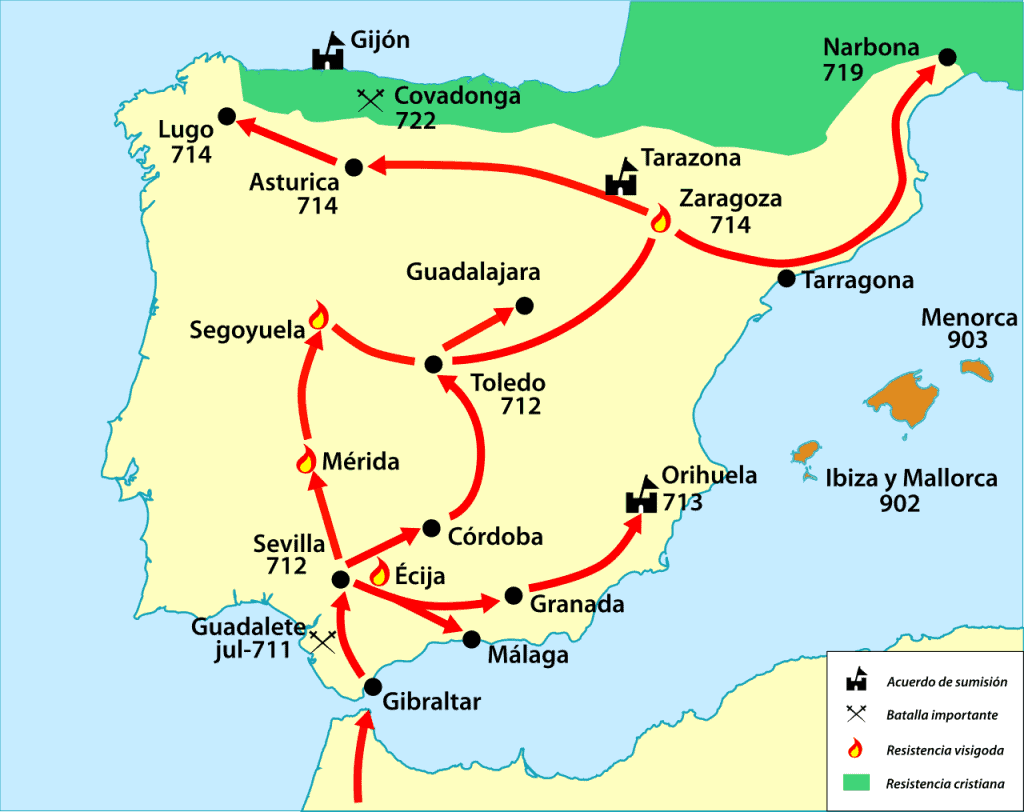
None of this means that modern societies are wrong to regard Ṭāriq as part of their heritage. Algerian cultural memory can emphasise his Tlemcen connection; Moroccan memory can emphasise Tangier and the embarkation zone; and Spanish and Gibraltarian memory can commemorate the consequences of his crossing. Gibraltar itself takes its name from Jabal Ṭāriq (“Ṭāriq’s mountain”).
The historical problem begins when cultural association is converted into an unsupported claim of exclusive modern nationality. Projecting present-day national identities backwards onto pre-modern people can obscure rather than clarify the evidence. Such claims can reflect modern identity-making as much as the surviving record of the eighth century.
What we can say with confidence
Drawing on the available scholarship, the evidence supports the following:
- Firmly supported: Ṭāriq was a real historical commander who led the force that entered Iberia in 711. The near-contemporary Chronicle of 754 identifies him in its account of the conquest.
- Firmly supported: He was active in the western Maghrib before the crossing. Ibn ʿAbd al-Ḥakam places him at Tlemcen and reports his governorship of Tangier.
- Probable but debated: He was Amazigh/Berber. This remains the most probable interpretation in Fierro’s 2024 reassessment, but the surviving sources do not make it certain.
- Not established: He was born in Tlemcen or in the Wadi Tafna/Oulhassa region.
- Anachronistic in the modern sense: He was “Algerian” or “Moroccan” as a holder of a modern national identity.
Taken together, the safest description is that Ṭāriq ibn Ziyād was an early eighth-century Muslim commander based in the western Maghrib who led the army that entered Iberia in 711. His exact birthplace is unknown. Many scholars consider an Amazigh origin probable, although the medieval traditions are conflicting and recent scholarship has reopened the question. Ibn ʿAbd al-Ḥakam places him at Tlemcen before the crossing and also reports his governorship of Tangier; later genealogical traditions link him with groupings including Nafza and Oulhassa. None of this establishes a modern Algerian or Moroccan nationality.
For Algerians, Ṭāriq’s story is worth telling honestly — not because qualification diminishes Algeria’s connection to him, but because the real historical link is more intellectually compelling than a slogan. Tlemcen appears explicitly in one of the earliest surviving Arabic narratives of the conquest. That does not make it Ṭāriq’s proven birthplace, but it gives the city a real place in the tradition surrounding his career. His wider story belongs to a shared Maghribi and Mediterranean history that connected places now divided among Algeria, Morocco, Tunisia, Spain and Gibraltar.
The history of how medieval North Africans shaped the Mediterranean world is a story large enough that it does not need to be squeezed into the borders of any single modern state.