

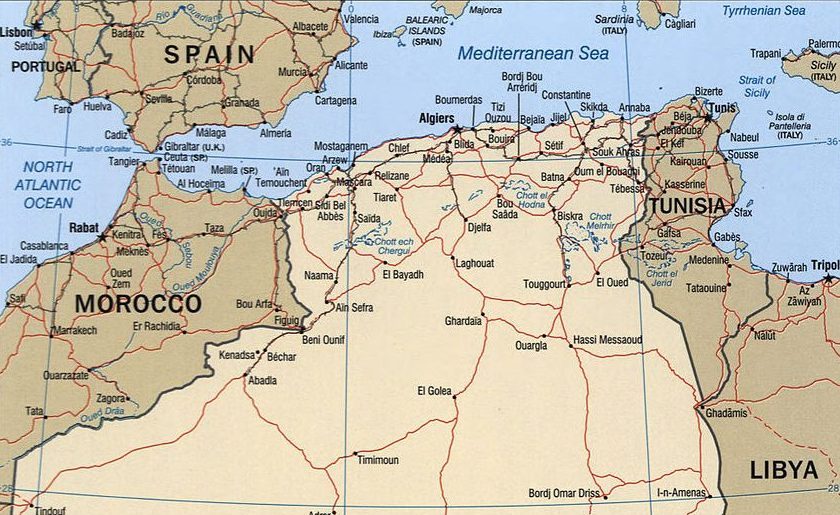
Algeria’s cities tell stories—stories etched in stone bridges spanning dramatic gorges, whispered through the narrow alleys of ancient kasbahs, and celebrated in the vibrant rhythms of rai music echoing from Mediterranean ports. From the amphitheatre-like capital perched on coastal hills to inland trade centres where Saharan winds meet mountain air, Algeria’s urban landscape reveals a nation shaped by geography, history, and an enduring spirit of resilience.
Algeria’s urban development reveals fascinating patterns. Approximately 91% of the population lives on just 12% of the country’s land mass, concentrated along the Mediterranean coast where the fertile Tell region provides favourable conditions for agriculture and urban development. This coastal concentration has created a distinctive urban hierarchy, with Algiers dominating as a primate city more than three times larger than second-place Oran.
The Coastal Constellation: Where History Meets the Sea
Algiers: The White City’s Layered Legacy
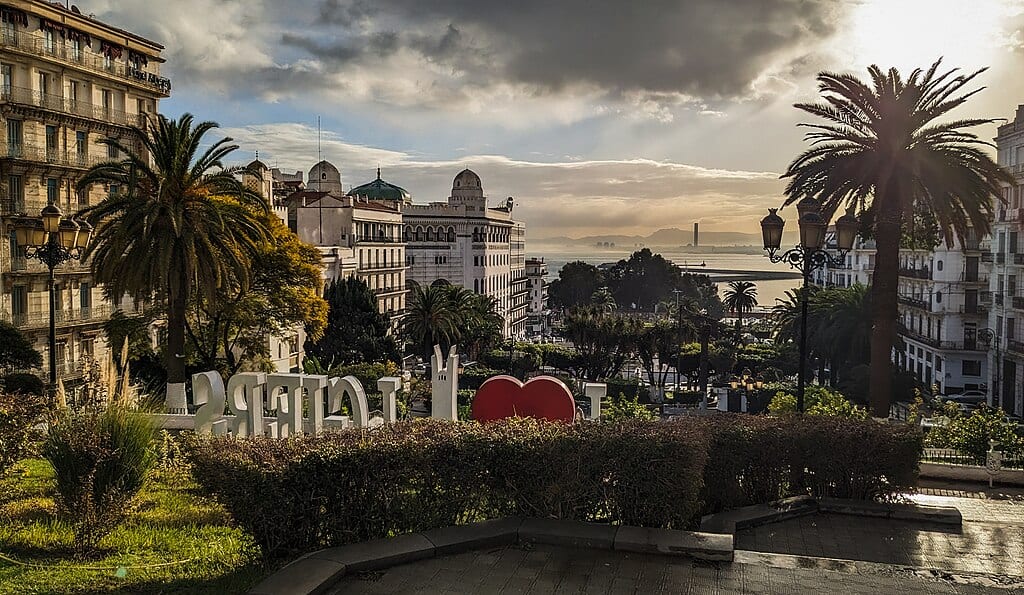
Algiers commands attention—not merely as Algeria’s capital, but as a living museum where civilisations have left their mark across millennia. With over three million inhabitants, this primate city spreads like an amphitheatre across the Sahel Hills, its distinctive white buildings cascading towards the Bay of Algiers. The city’s Arabic name, Al-Jazāʾir (“The Islands”), recalls the small islands that once dotted the bay, most now incorporated into the harbour that has shaped its destiny for centuries.
The UNESCO-listed Casbah stands as perhaps Algeria’s most profound cultural testament—a medina where high blank-walled houses and winding streets have preserved their distinctive character through Ottoman rule, French colonisation, and independence. Here, ancient mosques like Ketchaoua and El Kébir share space with Ottoman-style palaces, creating what UNESCO describes as a unique architectural influence that has shaped urban development across the Western Mediterranean and Sub-Saharan Africa.
Yet Algiers is not frozen in time. The modern Martyrs’ Memorial—three stylised palm trees converging to protect an eternal flame—honours the nation’s independence struggle while the bustling Place Grande Poste, a neo-Moorish marvel from 1910, bridges the colonial and contemporary eras. This layered identity reflects Algeria’s complex history: Phoenician trading post, Roman settlement, Islamic stronghold, Ottoman regency, French colonial capital, and finally, the beating heart of an independent nation.
Oran: The Radiant Crossroads
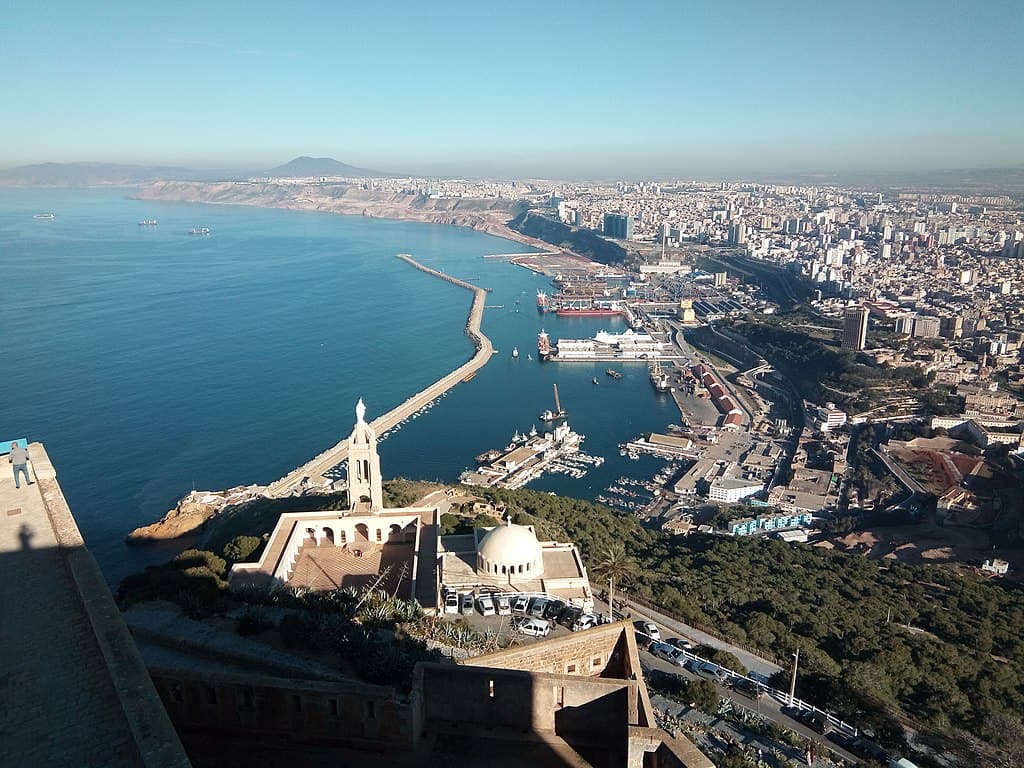
Four hundred kilometres or so west along the coast, Oran pulses with a different energy. Known as “the Radiant City,” Algeria’s second-largest urban centre has earned its reputation as a cultural crossroads where Mediterranean breezes carry the sounds of rai music—the popular genre that was born in these very streets.
Oran’s identity has been forged by waves of migration and cultural exchange. Founded by Andalusian merchants in the 10th century, the city later welcomed refugees from Spain, creating a rich tapestry of influences still visible today. The transformed Great Synagogue—now the Abdallah Ibn Salam Mosque—stands as a poignant reminder of the city’s former Jewish community, while the 16th-century Spanish fortress of Rosalcazar, noted as one of the largest surviving Spanish coastal fortresses in North Africa, overlooks a bay that has witnessed centuries of maritime trade.
The city’s cultural landmarks tell stories of resilience and adaptation. The Ottoman-era Bey’s Palace, constructed upon the ruins of Spanish defenses, exemplifies how successive civilisations have built upon their predecessors’ foundations. Meanwhile, the vibrant Place d’Armes remains the heart of Oran, surrounded by buildings that bear witness to its complex past while hosting the contemporary rhythms of Algerian life.
Mountain Cities: Where Geography Shapes Destiny
Constantine: The City of Bridges
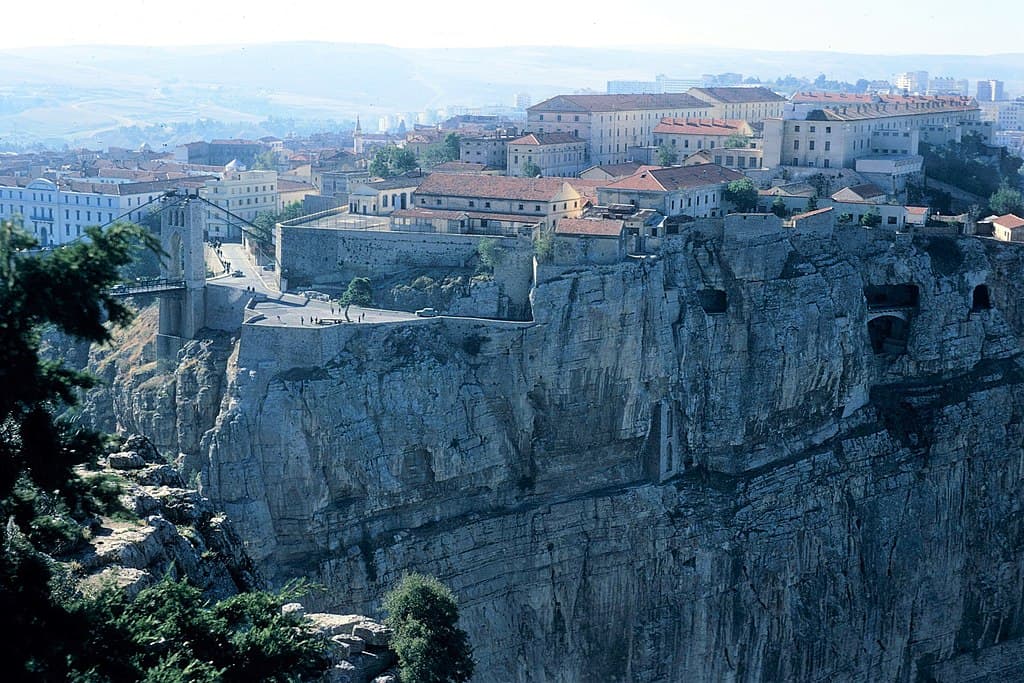
Perhaps no Algerian city demonstrates the relationship between geography and culture more dramatically than Constantine. Perched on a rocky plateau about 640 metres above sea level, the city is surrounded by precipitous gorges carved by the Rhumel River. This natural fortress has been continuously inhabited for over two millennia, earning it recognition as one of the world’s oldest cities.
Constantine’s iconic suspension bridges are more than mere infrastructure—they represent human ingenuity triumphing over challenging terrain. These elegant spans, connecting neighbourhoods across deep gorges, have become synonymous with the city’s identity. The dramatic topography that once made Constantine impregnable has been transformed into its greatest asset, creating a unique urban landscape where buildings seem to emerge from the very rock itself.
The city’s historical depth is staggering. Known in antiquity as Cirta, it served as the capital of the Numidian Kingdom before being rebuilt by Emperor Constantine, who gave it his name. This profound historical continuity—evidenced by Roman ruins, Islamic monuments, and Ottoman structures—makes Constantine a living archive of North African civilisation.
Sétif: The Trade Capital of the High Plains
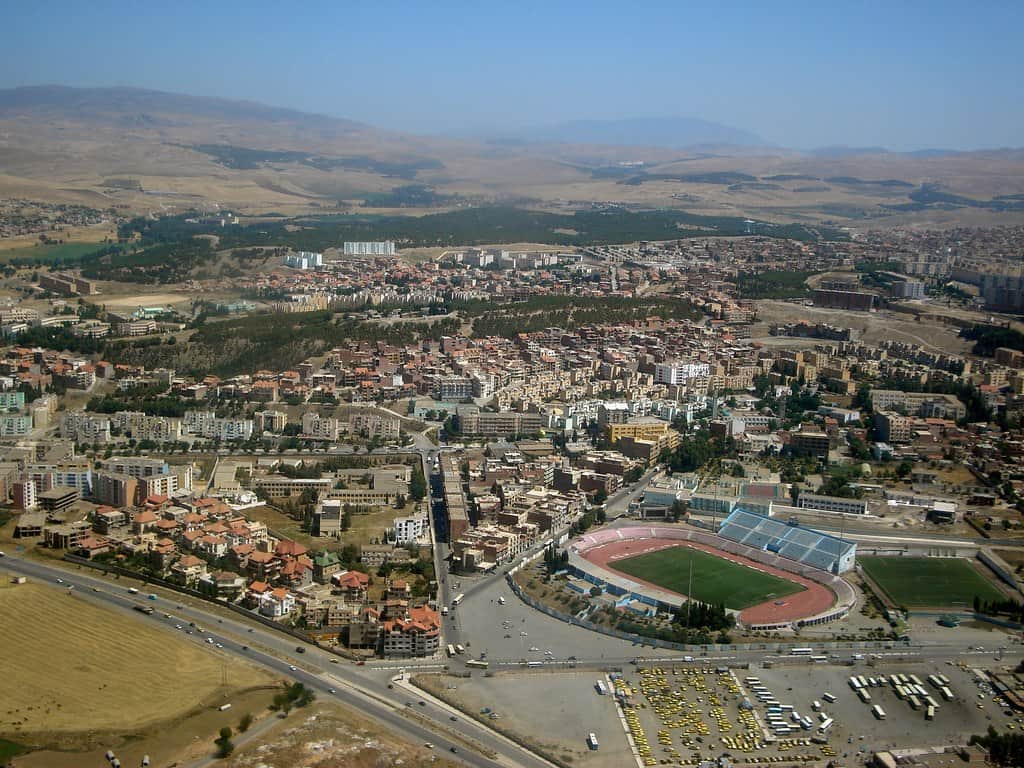
Inland, at over 1,000 metres elevation, Sétif has earned its designation as Algeria’s trade capital through centuries of commercial activity. Positioned strategically between the Tellian Atlas and the Aurès mountains, the city serves as a natural transit point for goods moving between Algeria’s diverse geographical zones.
Sétif’s cultural significance extends far beyond commerce. The city houses some of Algeria’s finest Roman archaeological treasures, including the exquisite ‘Triumph of Dionysus’ mosaic from the 3rd century AD, considered among the world’s finest Roman mosaics. Yet Sétif is equally known for its pivotal role in modern Algerian history—the May 1945 uprising that profoundly impacted the trajectory of Algerian independence began here and became a catalyst for the independence movement, imbuing the city with profound symbolic importance.
The bustling Ain El Fouara Fountain and the tranquil El Amir Abdelkader Garden reflect the city’s dual nature: a centre of dynamic commercial activity and a place of historical reflection. Traditional crafts flourish here too, from the distinctive Guergour carpets with their geometric patterns to the intricate silver jewellery.
Desert Gateways: Bridging Worlds
Djelfa: The Steppe Capital
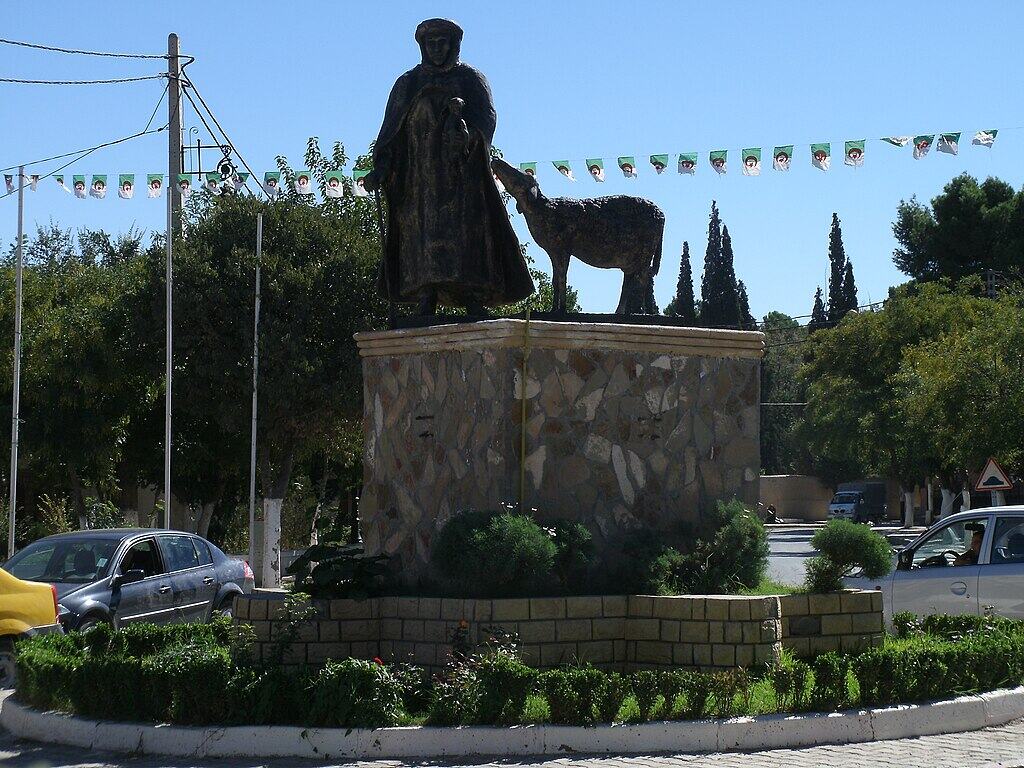
In the transitional zone between the high plateaus and the Sahara, Djelfa represents a different facet of Algerian urban life. Elevated at 1,110 metres, this rapidly growing city serves as a bridge between Algeria’s northern hills and southern desert regions.
Djelfa’s cultural heritage is perhaps most visible in its traditional crafts, particularly the carpet weaving that symbolises Ouled Naïl hospitality. The intricate geometric patterns in dark red and black reflect not mere decoration but deeply held cultural values. Women’s traditional craft activities—from the famous camel hair burnous to leather goods like the traditional shoes El Taobi and El Megroune—maintain connections to the region’s nomadic heritage while providing economic opportunities.
The region’s ancient Neolithic rock carvings, dating from 7000 to 5000 BC, remind visitors that this transitional landscape has been home to human communities for millennia. Today’s Djelfa balances this historical depth with modern industrial development, including major cement and yeast production facilities that contribute to national self-sufficiency goals.
Batna: Capital of the Aurès
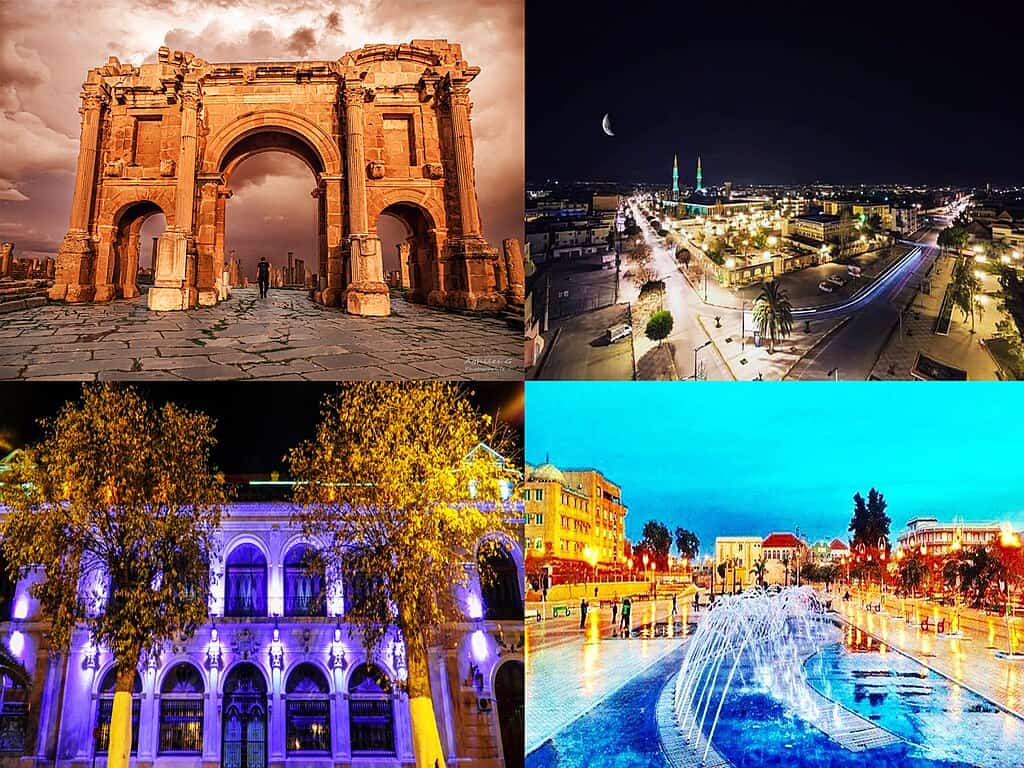
At the gateway to the Aurès Mountains, Batna holds special significance as the birthplace of Algeria’s independence movement. Founded as a French military outpost in 1844 to control Saharan routes, the city transformed into the command centre of the Algerian Revolution, earning designation as “military region one” from 1954 to 1962.
This revolutionary heritage permeates Batna’s identity, but the city’s cultural significance extends deeper. As one of the principal cities of the Chaoui region, Batna preserves distinctive Amazigh traditions, from the elegant silver jewellery crafted in the Wad Al Taga region to the traditional Shawi dress that represents one of North Africa’s most beautiful traditional garments.
The nearby Roman ruins of Timgad and Tazoult underscore the region’s role as a historical crossroads, while the annual International Timgad Festival celebrates the city’s contemporary cultural vitality. Traditional crafts—particularly pottery reflecting Amazigh heritage and textile production including the distinctive Al-Barnos and Al-Zarabi—maintain connections to ancestral practices while providing modern livelihoods.
A Nation’s Story Written in Stone and Spirit
Algeria’s major cities represent more than population centres—they are repositories of memory, catalysts of change, and guardians of culture. Each city contributes its unique voice to Algeria’s urban symphony: Algiers with its governmental authority and cultural prestige, Oran with its commercial dynamism and artistic innovation, Constantine with its historical depth and engineering marvels, Sétif with its trade networks and archaeological treasures, Djelfa with its traditional crafts and strategic location, and Batna with its revolutionary heritage and Amazigh culture.
Together, they form an urban tapestry that reveals Algeria’s greatest strength—its ability to honour the past while building the future, to maintain cultural authenticity while embracing change, and to remain proudly Algerian while engaging confidently with the world.