

Algerian cuisine is far from uniform. Its regional traditions have been shaped by geography, climate and the communities who have cooked in a particular place for generations. Three dishes illustrate this diversity particularly well: osbane (العصبان), stuffed offal parcels prepared across the country but never quite the same way twice; zviti (الزفيطي), a fiery bread-and-vegetable mixture pounded in a wooden mortar in the towns of the Hodna; and eastern Algerian mloukhiya (الملوخية), a slow-cooked, dark green jute-mallow stew rooted in the culinary traditions of eastern Algeria, including Tébessa, Souk Ahras and Annaba.
Each belongs to a different layer of Algeria’s food culture. Zviti is among the most distinctive of Algeria’s regional dishes, closely associated with the Hodna and Bou Saâda. Osbane is part of a wider North African family of stuffed offal preparations. And mloukhiya connects eastern Algeria to a wider culinary tradition found across North Africa and the Middle East, while retaining distinctive local preparation methods and customs. Together, they offer a window into how Algerian culinary identity is built—not through a single national recipe book, but through culinary knowledge passed down through generations.
Zviti: Bou Saâda, the Hodna and the culture of the wooden mortar
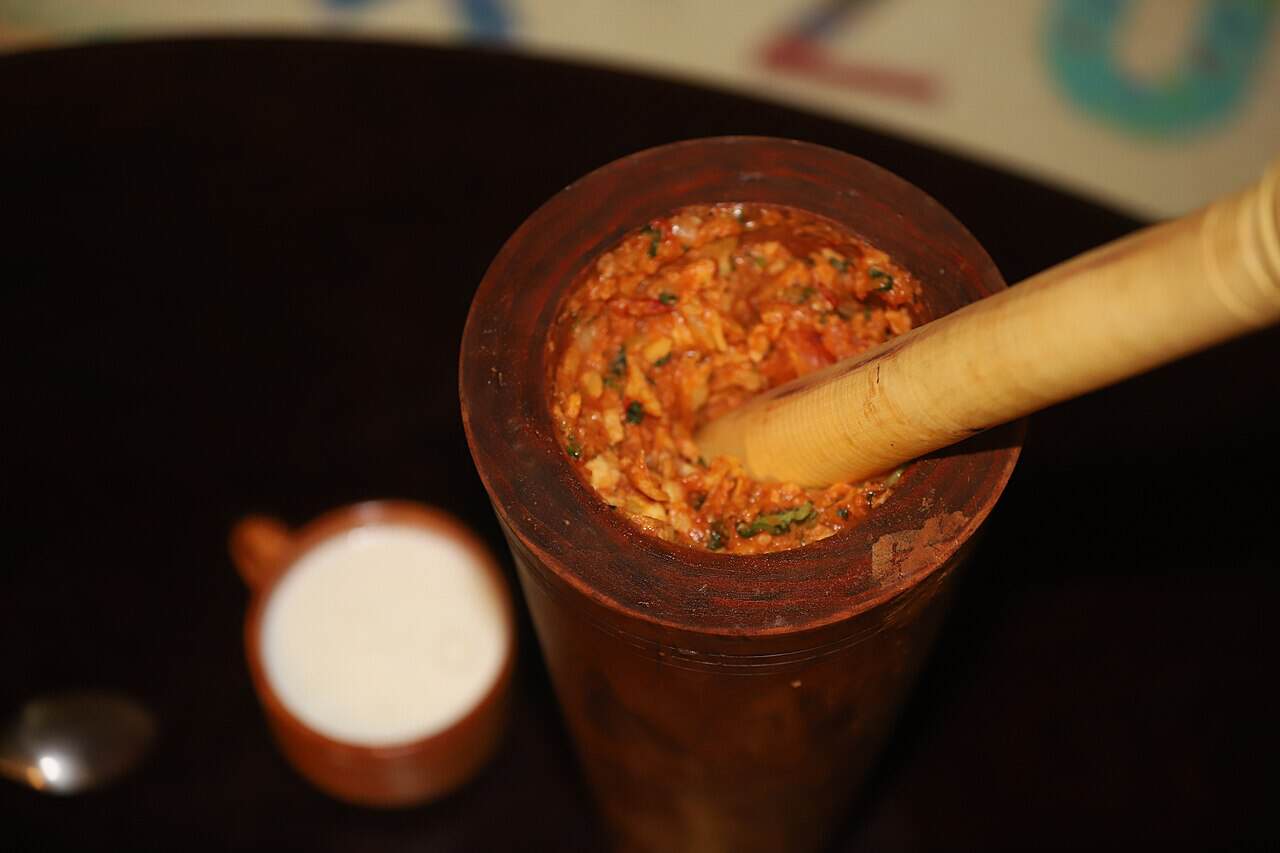
Of the three dishes, zviti—also written zfiti or z’fiti—is the one most closely associated with a particular Algerian regional identity. Contemporary Algerian academic and heritage writing consistently places it in M’Sila province, the Hodna and especially Bou Saâda. A 2021 study of Bou Saâda’s cultural heritage lists zviti alongside chakhchoukha (a dish of torn flatbread served with a seasoned stew), traditional clothing, silverwork and the famous Bou Saâda knife as elements of the city’s inherited cultural landscape. A 2025 study by Lina Zeghlache likewise describes zviti, known in M’Sila as slata mahres (mortar salad), as an emblematic regional dish. Around Barika, a related preparation is known as batout.
The dish is built from deceptively simple ingredients: rakhsas (unleavened flatbread), made from semolina or wheat flour, tomatoes, very hot green or red chillies, garlic, coriander and salt, with variations involving tomato purée, olive oil or green olives. The vegetables are cooked or roasted, then combined with pieces of freshly cooked flatbread and vigorously pounded. The goal is not a smooth purée but a hot, coarse, intensely aromatic bread-and-vegetable mixture in which chilli, garlic and coriander penetrate the crumbled bread.
Its defining utensil is the mahres (wooden mortar). In Zeghlache’s study, it is described as a conical vessel typically measuring 60–80 cm in height, although the size depends on the number of diners. Its thick wooden walls help keep the contents hot, and it serves simultaneously as a preparation vessel, serving dish and, in the traditional arrangement, communal eating vessel—zviti is eaten directly from it with wooden spoons.
That vessel links cuisine to another regional craft. The Algerian newspaper El Massa describes how specialist artisans produce wooden mortars from suitable tree trunks, including oak, pine, eucalyptus or occasionally almond wood. According to a craftsman interviewed by the newspaper, producing a single mahres can take an entire week, beginning with the careful selection of a suitable tree trunk. The continued popularity of zviti helps preserve this traditional craft. The survival of the dish sustains the meaning of the utensil, and the utensil reinforces the identity of the dish.
Zviti is an everyday meal, a dish shared with guests and a symbol of regional identity. A 2015 report describes it as eaten throughout the year—sometimes in small quantities to stimulate the appetite, and traditionally among households with limited means as an inexpensive complete meal. It also describes how mothers traditionally teach their daughters to prepare zviti from an early age, reflecting the importance attached to culinary knowledge in local households. More recent research into internet memes from the Hodna shows the same symbolism surviving in humorous digital form: one meme humorously depicts what happens when a husband refuses his Bou Saâda wife’s fiery zviti, illustrating how closely the dish is associated with regional identity.
The precise origins of zviti remain uncertain. One local story says that the dish existed from the time of Sidi Thameur, a religious figure associated with the foundation of Bou Saâda. The 2015 newspaper report attributes this account to local tradition rather than contemporary historical evidence. Moreover, two of the dish’s defining ingredients, tomatoes and chilli peppers, originated in the Americas and spread to other continents following transatlantic contact from the late 15th century onwards. The present-day recipe therefore reflects an evolving culinary tradition.
Whatever its precise origins, zviti’s distinctive preparation, vocabulary and communal use of the mahres make it a particularly recognisable expression of the Hodna’s culinary heritage.
Osbane: the Eid offal parcels that change across Algeria
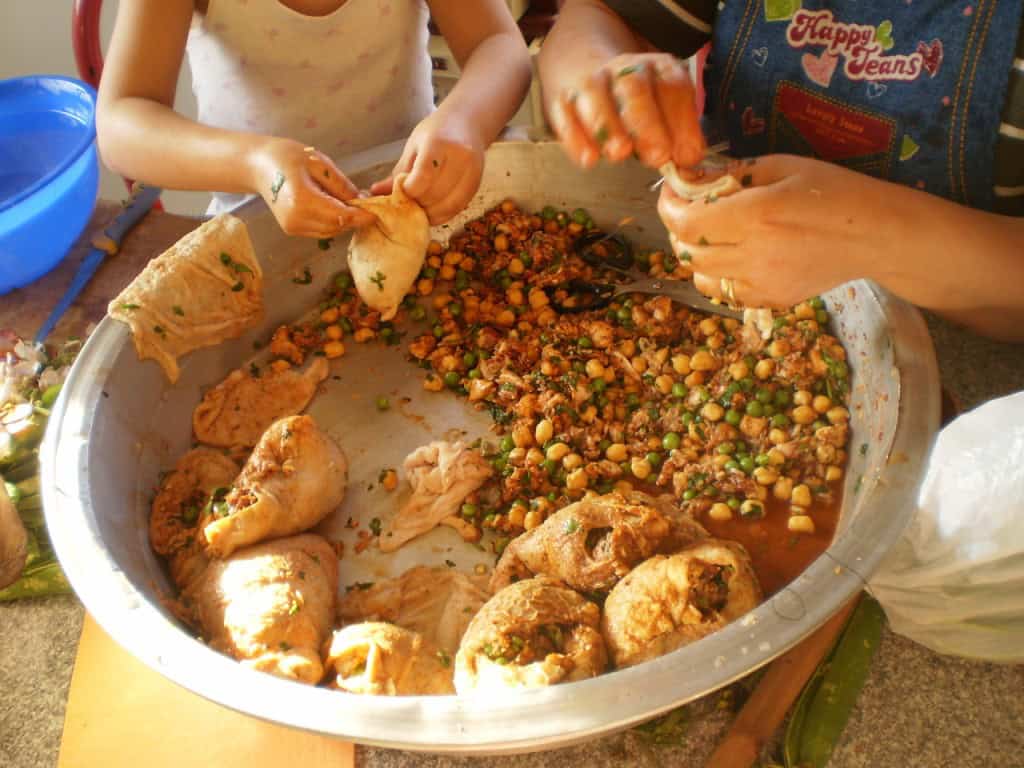
Osbane—also written osbana or usban—is a stuffed sheep-stomach preparation made from the edible parts of a slaughtered animal. The casing is usually made from the cleaned rumen, the largest compartment of a sheep’s stomach, while the filling commonly includes intestines, stomach tissue, lungs and other edible offal, combined with onion, tomato, chickpeas, garlic, coriander or parsley, and seasonings such as black and red pepper. Rice also features in many Algerian versions of the dish, though its presence varies considerably between regions and households.
Osbane is closely related to dewara (الدوارة), another Algerian offal speciality associated with Eid celebrations. While dewara typically consists of chopped offal cooked in a seasoned sauce, osbane is distinguished by its stuffed stomach parcels, although regional and household terminology can overlap.
The preparation is laborious and inseparable from the handling of the whole animal. The stomach must be emptied and thoroughly cleaned; pieces of rumen are cut to form pouches or sausage-like parcels; the chopped offal and vegetable-spice mixture is inserted; the opening is sewn or otherwise closed; and the osbane is then cooked in liquid, often a red sauce or a broth that may ultimately accompany couscous. A University of Constantine–led online survey of 581 preparers and 928 consumers, published initially in 2025 and subsequently in the International Journal of Gastronomy and Food Science in 2026, identified statistically significant regional differences in precisely such practices—from whether cooks scrape off the dark gastric layer to which side of the rumen faces outward.
Despite these regional differences, osbane is closely associated with religious and family celebrations across Algeria. The same survey found that it was primarily consumed in the home and, for 79 per cent of surveyed consumers, no more than three times a year. It is particularly associated with Eid al-Adha (the Muslim Festival of Sacrifice), when families that carry out the traditional animal sacrifice have fresh offal available to prepare the dish. This connection with Eid gives osbane a significance that extends beyond taste—it turns perishable parts of the sacrificial animal into a painstaking family preparation and embodies a culinary ethic in which valuable edible organs are not discarded. The techniques involved—cleaning the offal, preparing the stuffing, sewing the pouches—are forms of domestic expertise traditionally transmitted within households.
Medieval Arabic cookery knew sausages, stuffed intestines and other offal preparations. In her study of medieval Islamic cuisine, culinary historian Lilia Zaouali describes a preparation called usban, associated with the tenth-century Baghdad cookbook of Ibn Sayyar al-Warraq, in which pieces of liver were wrapped in caul fat, the thin fatty membrane surrounding an animal’s internal organs. Yet that Abbasid preparation was not the same recipe as modern Algerian osbane. The shared name and related culinary techniques point to a long history of offal preparations in Arabic culinary literature, but they do not establish a direct line of descent from a specific medieval recipe.
Eastern Algerian mloukhiya: a slow-cooked tradition of the eastern borderlands
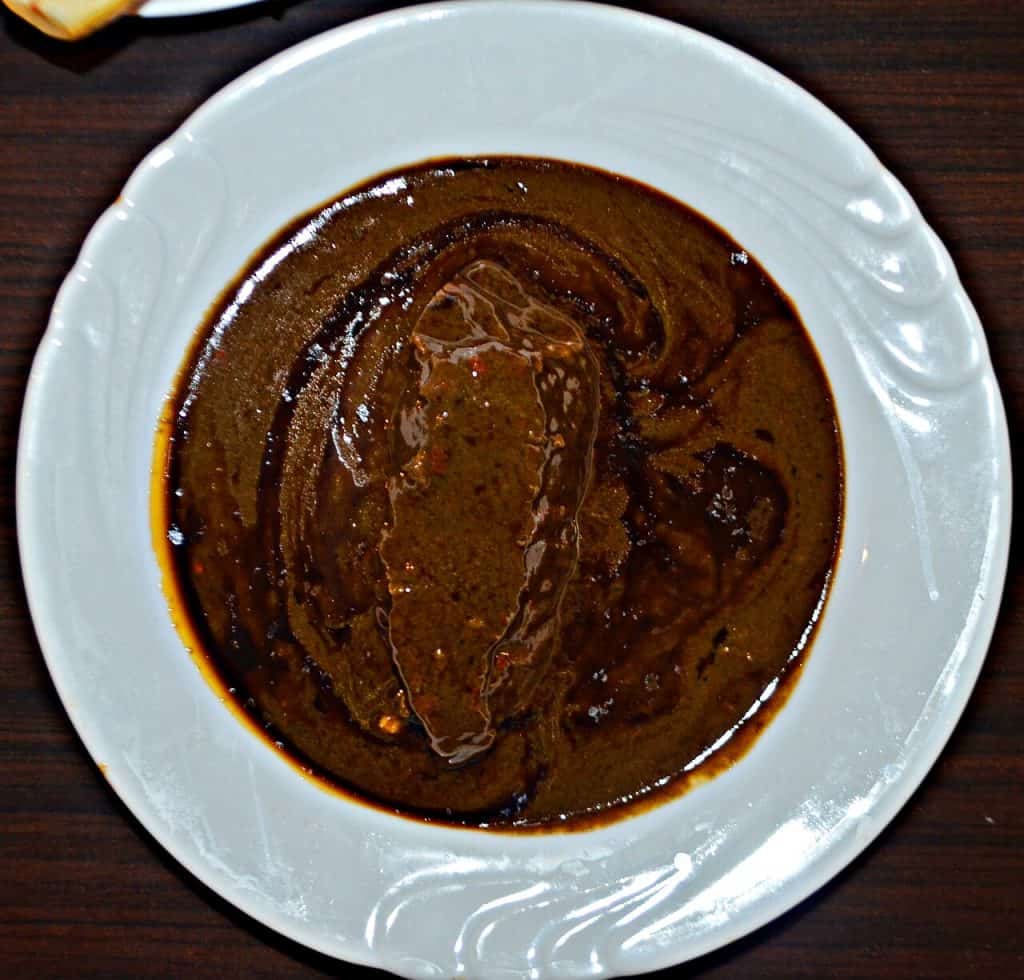
Eastern Algerian mloukhiya requires some care with terminology. The preparation discussed here is the dish made from jute mallow, Corchorus olitorius, whose dried leaves can be ground into a fine green powder and cooked for hours with oil, meat and spices. Researchers describe it as an edible plant used in the far east of Algeria to prepare mloukhiya, a slow-cooked meat stew with a distinctive dark green colour and a smooth, velvety consistency, traditionally eaten with bread.
This clarification matters because plant names overlap regionally. In parts of the Maghreb, the name mloukhiya can also refer to okra (Abelmoschus esculentus), a different member of the mallow family. For the eastern Algerian culinary tradition examined here, however, it is powdered jute-mallow leaves rather than okra pods that form the basis of the dish.
Mloukhiya is part of a wider eastern Algerian culinary tradition, extending from inland communities such as Tébessa and Souk Ahras to the Mediterranean city of Annaba. The Algerian Ministry of Tourism and Handicrafts includes it in its official guide to the traditional dishes of Souk Ahras, documenting preparations involving meat or tripe, bay leaves, tomatoes, garlic and spices. In Tébessa, first-hand accounts of family recipes similarly document culinary knowledge passed down through generations. Zika, an Algerian culinary writer from Annaba, describes mloukhiya as a characteristic local dish and records versions made with lamb, veal, beef or kercha (tripe).
The classic powdered preparation is a form of slow cooking. The green powder is dispersed into oil and combined with meat, water and spices, although the order in which the ingredients are incorporated varies between households. A traditional Annaba tehrissa (seasoning paste) can include garlic, caraway, ground coriander and chilli, while the documented Souk Ahras preparation incorporates bay leaves and fresh tomato.
In Tébessa, one home cook documenting a recipe inherited from her mother recalls the traditional use of earthenware cooking pots, with preparation beginning early in the day and cooking continuing for around five hours. Modern pressure cookers can shorten the process, but the gradual transformation of the powdered leaves remains central to the dish. Both the Souk Ahras tourism guide and Annaba culinary accounts identify the separation of oil at the surface as an important sign that cooking is complete.
That transformation is essential to the dish’s sensory identity. The bright green powder eventually produces a very dark green-brown sauce, strongly scented with spices, garlic and meat. Bread—particularly matlou’ (a traditional leavened flatbread)—is its natural companion, because this is a sauce to be scooped and absorbed rather than a leafy side vegetable.
The plant’s deeper history extends across continents. Jute mallow has long been cultivated in both Africa and Asia, and botanical specialists describe its geographical origin as disputed, although the diversity of wild species and genetic evidence point to Africa as an important centre of origin for the genus.
The dish also has a documented place in medieval Arabic culinary literature. The 13th-century Syrian cookbook Kitab al-Wusla ila al-Habib (The Book of the Bond with the Beloved) records four preparations of mloukhiya. These historical recipes demonstrate the long culinary history of jute mallow in the region, although they differ from many contemporary versions.
That evidence, however, does not demonstrate that powdered mloukhiya was already being cooked in medieval Algeria. Although the dish belongs to a wider culinary tradition spanning North Africa and the Middle East, the precise circumstances of its introduction or development in eastern Algeria remain uncertain. The available historical evidence does not establish a particular Algerian city as its birthplace.
The eastern Algerian preparation closely resembles Tunisian mloukhiya, in which dried jute-mallow leaves are ground into powder, mixed with olive oil and cooked with meat for around five hours. This contrasts with many Egyptian and Levantine preparations, where the leaves are generally used whole or finely chopped rather than ground into powder.
The resemblance is unsurprising given the geographical proximity and historical connections between eastern Algeria and Tunisia, particularly in border regions such as Tébessa and Souk Ahras, but resemblance is not proof of one-way borrowing. Both countries have developed their own regional and household variations within a shared tradition of preparing mloukhiya from powdered jute-mallow leaves.
What these three dishes reveal about Algerian culinary identity
Taken together, these dishes illustrate the diversity within Algerian cuisine. Zviti is closely associated with the Hodna and Bou Saâda; osbane is widespread but varies considerably between regions; and mloukhiya is a speciality of eastern Algeria whose closest counterparts cross the Tunisian frontier. Their geography mirrors Algeria itself, with its Mediterranean cities, high plains, oases, pastoral zones and border regions.
Each dish also reveals a different way in which culinary traditions are kept alive. Zviti preserves not only a regional recipe but also the craftsmanship of the wooden mahres and the customs of sharing food. Osbane is closely tied to religious celebrations, particularly Eid al-Adha, and the skills involved in preparing the whole animal. Eastern Algerian mloukhiya brings together the patience of slow cooking and culinary knowledge passed down through generations.
Their importance lies not only in what goes into the pot, but in who prepares them, when they are eaten, which tools accompany them, what stories they carry, and how Algerians recognise a region—and sometimes themselves—in a taste.
Continue exploring
 28 June 2025