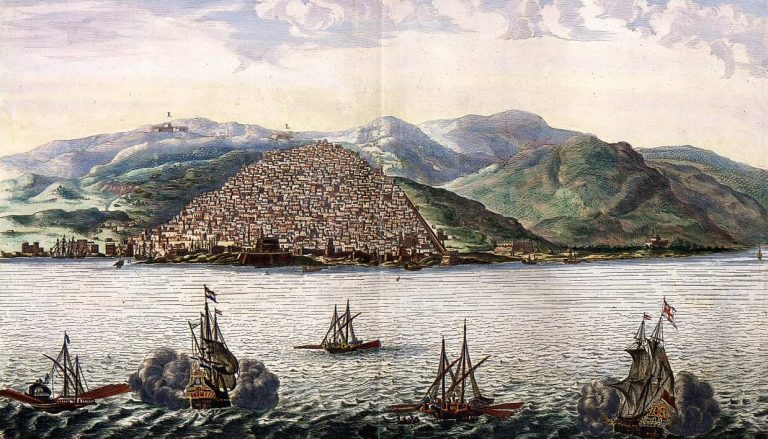
In Algeria, mosques are far more than places of worship. They are repositories of memory, centres of learning, symbols of resistance, and stages for social solidarity. From the humblest village prayer hall to the grandest urban congregational mosque, these sacred spaces have shaped—and been shaped by—the rhythms of Algerian life for over thirteen centuries. Official reporting based on the Ministry of Religious Affairs’ 2020 annual report puts the number of mosques in Algeria at 18,449 (end-2020).
Understanding Algeria’s mosques means understanding the country itself: its Islamic heritage, its colonial wounds, its independence struggle, and its contemporary aspirations. To walk through the arched doorways of an Algerian mosque is to step into a living continuum of faith and identity.
Mosques as Multi-Dimensional Institutions
Mosques in Algeria have long been central to religious, educational, social, and political life. Their primary function remains devotional: hosting the five daily prayers and the special Friday congregation, where imams deliver sermons that blend spiritual guidance with commentary on social issues. This religious role has historically helped maintain community cohesion and moral order. In neighbourhoods and villages across the country, the mosque serves as a communal space where people of all walks of life meet regularly, reinforcing bonds of faith and fellowship.
Life-cycle events are woven into the fabric of the mosque. From the call to prayer that welcomes a newborn, to wedding ceremonies, Ramadan iftars, and funeral prayers, the mosque anchors daily life and rites of passage. Mosques also coordinate charitable activities—especially during Ramadan and Eid—such as distributing alms (zakat and sadaqa) to the poor and organising traditional solidarity practices. This reflects an enduring ethos in Algerian society: the mosque as a locus of social solidarity and mutual aid, echoing customs like touiza (community collective help) that strengthen communal bonds.
Centres of Education and Scholarship
Beyond devotion, Algerian mosques have historically been centres of education and scholarship. For centuries, major mosques in cities like Algiers, Tlemcen, and Constantine included Quranic schools and madrasas where children and adults learned reading, theology, law, and Arabic language. Around the Great Mosque of Tlemcen, for example, judicial and teaching institutions (mahkama and madrasa) operated in close association with the mosque—illustrating how, in pre-colonial times, mosques anchored both scholarship and the administration of justice.
Throughout Ottoman-era Algeria (16th–19th centuries), mosques and affiliated zawiya (religious lodges) were the primary institutions for learning. They produced generations of ‘ulama (scholars) who taught jurisprudence, sciences, and literature under the mosque’s arches. Even under French colonial rule (1830–1962), when formal Islamic education was suppressed, the mosque remained a refuge for learning.
Notably, in the early twentieth century, a reformist movement led by Sheikh Abdelhamid Ben Badis and the Association of Algerian Muslim ‘Ulama used mosque-based classes to revive Arabic and Islamic learning and nurture a modern Algerian national consciousness. From 1931 onwards, Ben Badis and fellow scholars established Quranic schools in many mosques and taught thousands of Algerian children in Arabic and Islamic subjects. These lessons not only imparted religious knowledge but also instilled a sense of national consciousness that countered French attempts to erode Algerian culture. The slogan of Ben Badis’s movement—”Islam is our religion, Arabic our language, Algeria our homeland”—was often spread from mosque pulpits. Thus, the educational role of mosques fuelled a form of cultural resistance and helped lay the groundwork for modern Algerian nationalism.
Political and Symbolic Roles
Mosques have also played a pivotal political and symbolic role during key periods of Algerian history. During the French colonial era, policies deliberately targeted Islamic institutions: the colonial administration confiscated hubous (endowments) that funded mosques and religious schools, and often converted prominent mosques into churches or military depots. These actions were deeply resented and helped rally Algerian opposition. The French takeover of Ketchaoua Mosque in 1832—involving mass killings and its conversion into a cathedral—became emblematic of the broader assault on Algerian identity. As a result, many mosques became incubators of anti-colonial sentiment. Imams and Sufi leaders used mosque networks to keep the spirit of resistance alive, even if overt political activity in mosques was restricted by law.
By the mid-twentieth century, references to Islam and the defence of mosques featured prominently in nationalist discourse. Independence fighters portrayed the liberation struggle as not only a fight for land but also for the right to worship freely. When Algeria won independence in 1962, one of the first acts of the new nation was to reclaim and restore mosques that had been taken or closed. The emotional reconversion of the Ketchaoua Cathedral back into a mosque, marked by triumphant Friday prayers in July 1962, underscored the mosque’s power as a symbol of recovered sovereignty.
Mosques in Contemporary Algeria
In the post-independence era, the Algerian state has both invested in mosques and tightened their regulation. The government built hundreds of new mosques across the country to accommodate a growing urban population and to fulfil the ideals of the independent nation. At the same time, wary of political dissent in the guise of religion, the state brought mosques under closer control. Only state-authorised imams may lead prayers; the Ministry of Religious Affairs oversees mosque administration and the importation of Qurans and other religious texts; sermon content is supervised (before or after delivery) through ministry structures.
These measures were intensified following Algeria’s tumultuous “Black Decade” of the 1990s. In that period, the rise of the Islamic Salvation Front (FIS) party saw mosques become rallying points for political activism—many imams espoused the party’s platform, and large mosque gatherings often turned into demonstrations. When the military-backed authorities annulled elections in 1992, Algeria descended into conflict and some mosques became contested spaces—used in places by radical groups for recruitment or to store weapons, while others were raided or restricted by security forces. By the late 1990s, as stability gradually returned, the state reasserted tighter control: preachers advocating extremism were removed and oversight of mosques was strengthened.
Today, Algerian mosques continue to fulfil their age-old functions whilst navigating modern realities. They remain centres of community life and spiritual solace—every evening, especially during Ramadan, mosques fill with families coming for prayers (such as tarawih prayers) and community iftars. Many mosques run informal education programmes, like Quran memorisation classes for youth and religious lectures for adults, sustaining the educational legacy within the limits allowed. Socially, mosques often spearhead local charity drives, collecting donations for the needy, organising communal weddings for low-income couples, and providing spaces for conflict mediation and counselling. They also contribute to national unity by commemorating events—for instance, nationwide prayers are held to mark Independence Day or to pray for rain during droughts.
In state affairs, the Algerian government frequently uses mosques to communicate public messages; major policy themes (such as calls for national reconciliation or health guidance during the COVID-19 pandemic) are disseminated through Friday sermons crafted in coordination with the Ministry of Religious Affairs.
Four Mosques That Define Algerian Islamic Heritage
With this context in mind, we turn to four mosques that embody different chapters of Algeria’s Islamic history: the ancient pilgrimage site, the medieval architectural masterpiece, the colonial battleground, and the modern monument to ambition.
1. Sidi Okba Mosque: Algeria’s Oldest Islamic Sanctuary
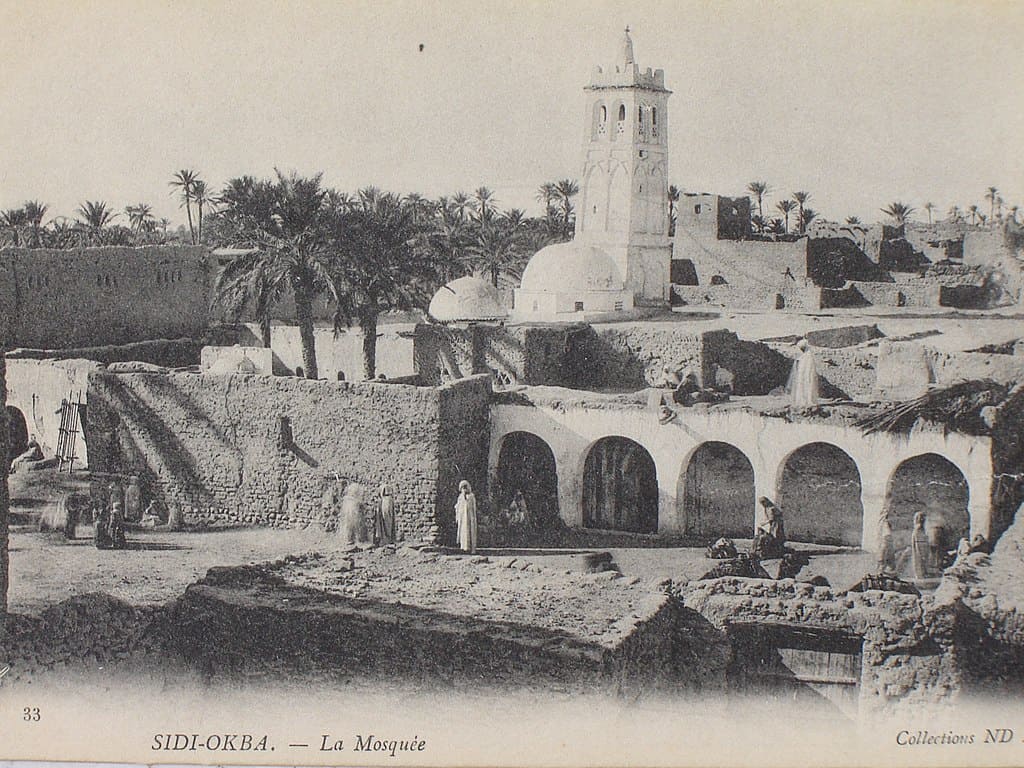
The Sidi Okba Mosque—also known as Masjid Sayyidi ‘Uqba—is located in the village of Sidi Okba near Biskra, in north-eastern Algeria. It was established in 686 CE as a mausoleum to house the remains of the Arab general Uqba ibn Nafi (known locally as Sidi Okba), a companion of the Prophet Muhammad who led the first Islamic conquest of the Maghreb. This makes Sidi Okba among the oldest Islamic monuments in Algeria and the wider Maghreb.
Over the centuries it has been renovated multiple times, but it retains elements of its early design that echo the first mosques of Islam. For example, the prayer hall’s columns are originally palm trunk posts coated in plaster, supporting simple horseshoe arches in a layout of parallel naves without a central aisle—a plan reminiscent of the Prophet’s Mosque in Medina. The mihrab (prayer niche) of Sidi Okba is flanked by plain piers and topped with a half-dome carved in radiating flutes, reflecting the austere, early Islamic aesthetic. The adjacent minaret is square-based and relatively low, with minimal decoration aside from some Kufic inscriptions and merlon crenellations near its top. These features echo descriptions on Archnet.
Historically, Sidi Okba Mosque has been revered as both a religious and cultural landmark. It stands at the tomb of a key figure in Algeria’s Islamic history, making it an important pilgrimage site for Algerian Muslims and a symbol of the country’s early Islamic heritage. Despite its age, the mosque was in continuous use for worship for well over a millennium. In 2009, a larger modern Islamic complex was built around it—including a new prayer hall for 5,000 worshippers, a Quranic school, and other facilities—to accommodate the growing community. The old seventh-century structure is now preserved as a historic centrepiece for reflection and homage to Uqba ibn Nafi, whilst regular prayers take place in the new extension. Sidi Okba Mosque remains a powerful emblem of Algeria’s Islamic roots, showcasing early Islamic architectural techniques and serving as a link between the country’s first contact with Islam and its present-day faith community.
2. Great Mosque of Tlemcen: Jewel of Almoravid Architecture
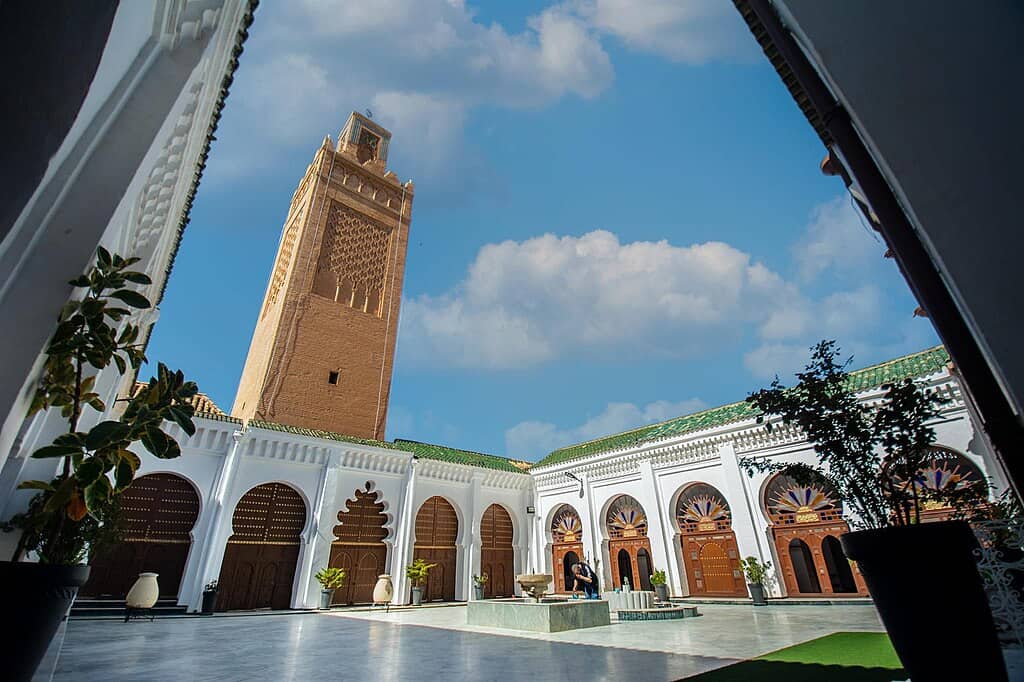
The Great Mosque of Tlemcen (Djamaa El-Kebir de Tlemcen) is a historic congregational mosque in the city of Tlemcen, north-western Algeria. It was originally founded in 1082 CE by the Almoravid ruler Yusuf ibn Tashfin, who established Tlemcen (then called Tagrart) as a garrison town. The mosque was substantially expanded and embellished by Yusuf’s son and successor, Ali ibn Yusuf, with a major reconstruction dated by inscription to 1136 CE. Later, during the thirteenth century, the Zayyanid sultan Yaghmorasan ibn Zyan added the present minaret (completed in 1236) and additional sections to the mosque. The result is amongst the best-preserved examples of Almoravid architecture in Algeria—an architectural gem that has survived nearly a thousand years of history. In fact, French colonial authorities recognised its value and declared the mosque a protected historic monument in 1875, helping ensure its preservation.
Architecturally, the Great Mosque of Tlemcen is celebrated for its elegant Andalusian–Maghrebi design. The floor plan follows a classic T-plan: a rectangular prayer hall composed of 13 aisles running perpendicular to the qibla wall, intersected by a wider central nave leading to the mihrab. Rows of whitewashed masonry columns support horseshoe arches, which in turn are intersected by transverse arcades of polylobed (multifoil) arches, creating a visually intricate lattice of arches. Notably, two bays in front of the mihrab are covered by decorative domes—a signature feature of Almoravid mosques. The dome above the mihrab bay is especially exquisite: built with interlacing brick ribs forming an intricate star pattern, with carved plaster filling the compartments between the ribs.
This design shows a clear influence from the Great Mosque of Cordoba in al-Andalus, as Almoravid architects brought artisans from Cordoba to help create such motifs. The mihrab itself is framed by rich arabesque and Kufic ornamentation, and the original carved cedar minbar (pulpit) still survives as a testament to the mosque’s age. The minaret stands about 29–34 metres high, a plain square tower decorated with a few marble columns and bands—a later addition but harmonising with the overall style. Next to the mosque once stood judicial (mahkama) and teaching institutions (madrasa), indicating Tlemcen’s importance as a centre of Islamic scholarship in the mediaeval period.
The Great Mosque of Tlemcen holds deep cultural and religious significance. As the city’s main Jamaa (Friday mosque) for centuries, it was the heart of Tlemcen’s community life—a place of worship, learning, and justice. The mosque is often hailed as an architectural masterpiece of the Almoravid era, “amongst the most beautiful and well-kept buildings” from that period. Its continuous use over nearly ten centuries (except during brief closures for repairs) reflects the enduring importance of the mosque to Tlemcen’s residents. Even under French rule, it remained a functioning mosque and was protected for its heritage value. Today, visitors admire the mosque’s serene courtyard and finely carved dome as a living museum of Islamic art and architecture. For Algerians, the mosque of Tlemcen is a source of pride—a tangible link to the Maghreb’s golden age of Islamic civilisation and a symbol of the city’s historical role as a bastion of faith and knowledge.
3. Ketchaoua Mosque: From Colonial Tragedy to Symbol of Independence
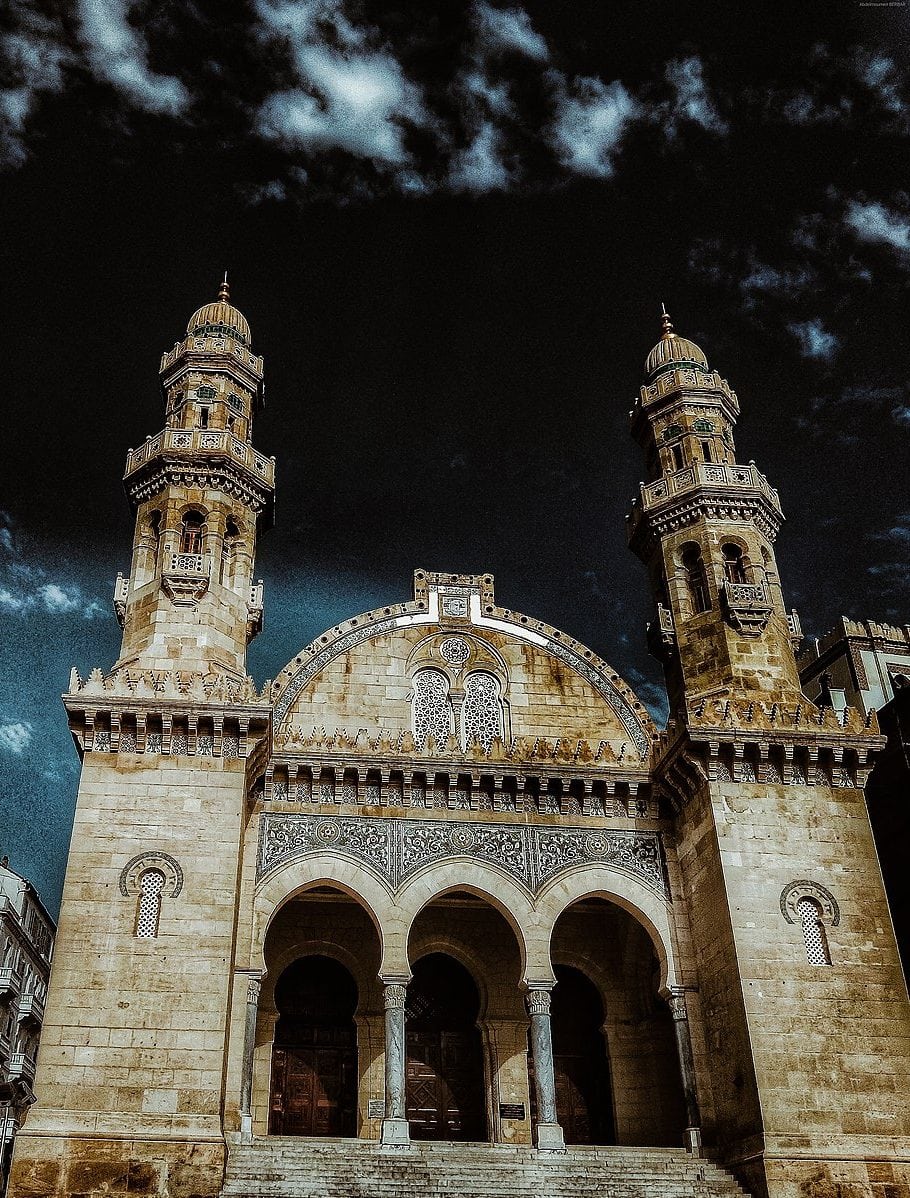
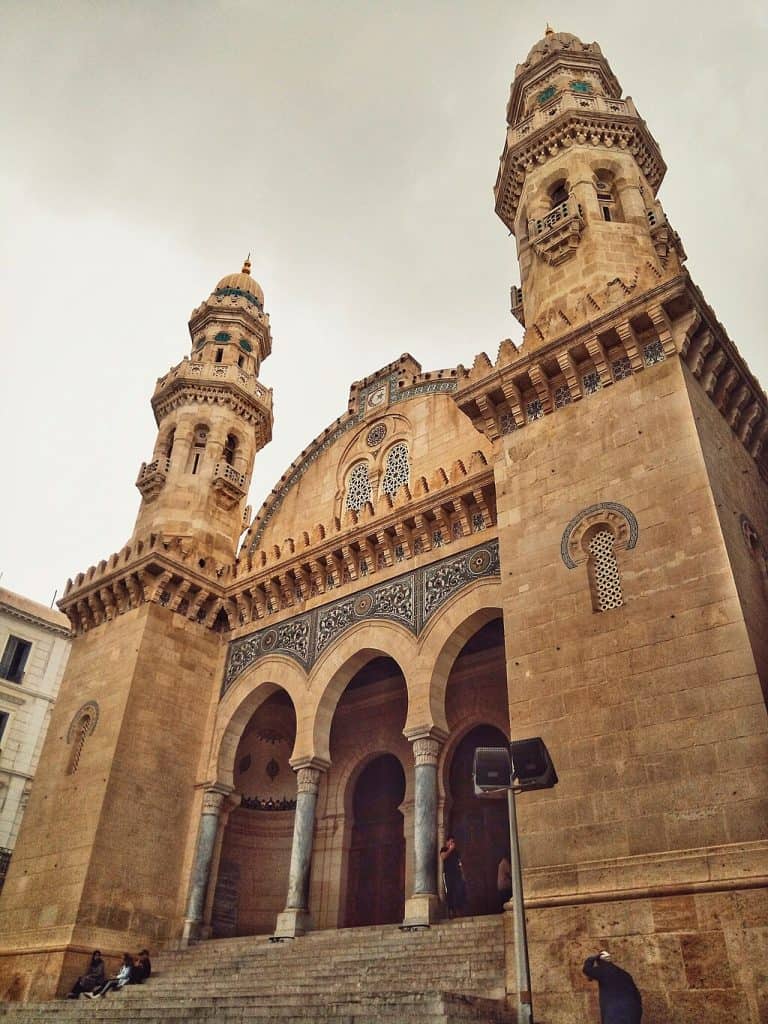
The Ketchaoua Mosque is a landmark mosque located at the foot of the Casbah in Algiers, the capital of Algeria. It was originally built in 1520 under the Ottoman governor Hayreddin Barbarossa, making it a product of the Ottoman era in Algeria. The mosque’s architecture reflects a unique fusion of styles: it has elements of traditional Ottoman and North African Moorish design, combined with later European influences. The mosque’s most striking features are its twin minaret towers flanking the main entrance and its richly decorated façade. The façade showcases horseshoe and scalloped arches and intricate stone carvings that exhibit an Andalusian influence, whilst the interior contains marble and onyx columns and a high central cupola that hint at Byzantine inspiration. The ornamentation—from the vibrant tiles and floral motifs on the walls to the carved wood and plaster—gives Ketchaoua a chef-d’œuvre quality, often described as an architectural jewel of Algiers. Its name “Ketchaoua” is believed to derive from the Turkish koçaova, meaning “goat’s horn”, possibly referring to the shape of the site or a former use of the area.
Beyond its aesthetic value, Ketchaoua Mosque is freighted with historical and political significance. In the early days of French colonial rule, it became the scene of a tragic confrontation. The French Army, under Governor Duke de Rovigo, decided in 1832 to seize Ketchaoua—then one of Algiers’ principal mosques—and convert it into a Catholic church. When thousands of Algerian Muslims gathered inside the mosque in peaceful protest, French troops stormed the building, resulting in the massacre of thousands of worshippers and the destruction of the mosque’s original structure. By 1845 the French had rebuilt the site as the Cathedral of St Philippe, and for over a century Ketchaoua functioned as a church in the heart of colonial Algiers. This made it a potent symbol of colonial domination and the suppression of Algerian faith.
Upon independence in 1962, one of the new nation’s first celebratory acts was to recover and reconsecrate Ketchaoua as a mosque—Algerians performed the first Friday Jumu’ah prayer there just days after independence. The event underscored Ketchaoua’s status as a “symbol of Algerian independence”, representing the return of Islam and national identity to a place from which it had been forcibly removed. In 2008 the mosque was closed for structural restoration (after earthquake damage), and a major Turkish-funded restoration was completed in 2018, carefully returning Ketchaoua to its original Ottoman-era glory. Today, the mosque—part of the UNESCO-listed Casbah of Algiers—stands not only as an active house of worship but as a monument to Algeria’s resilience. Its layered history, from Ottoman beginnings to colonial desecration and finally to rebirth, makes Ketchaoua a cherished national heritage site and a testament to the enduring spirit of Algerian Islam.
4. Djamaa El Djazaïr: Africa’s Largest Mosque and Algeria’s Modern Ambition
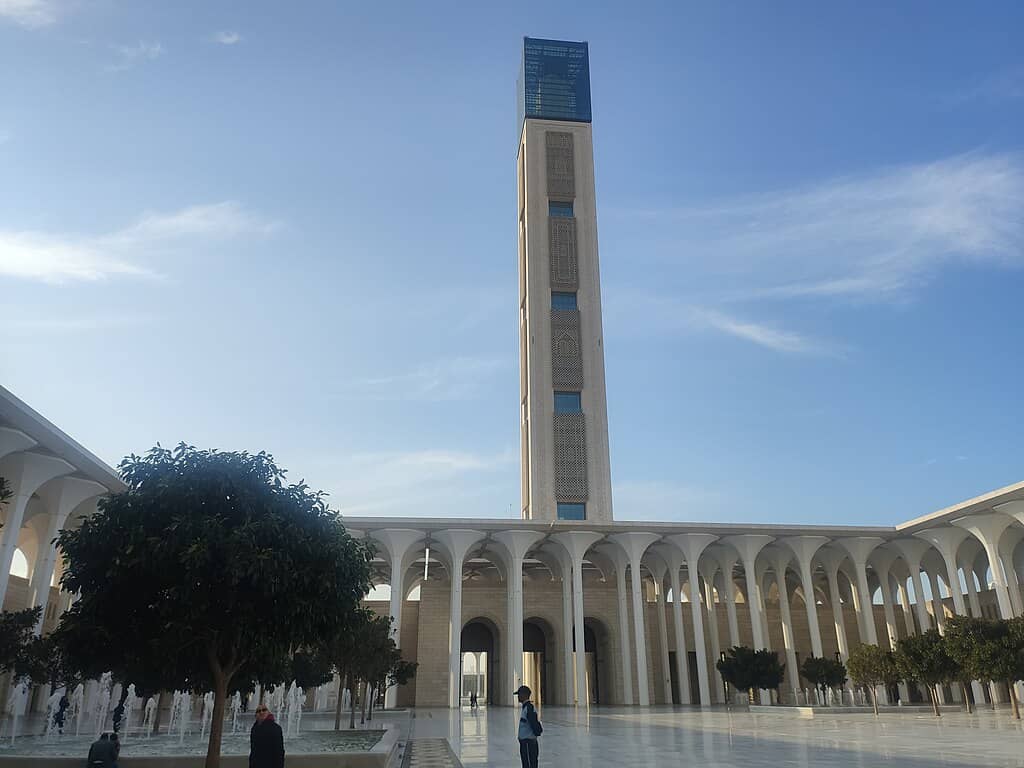
The Djamaa El Djazaïr, or Great Mosque of Algiers, is a modern monumental mosque that represents Algeria’s resurgence in the twenty-first century. Located in the Mohammadia district of Algiers on the Bay of Algiers waterfront, it was completed in 2019, with staged openings thereafter and an official presidential inauguration in February 2024. Djamaa El Djazaïr is currently the largest mosque in Africa and the third-largest in the world by overall area (after the Holy Mosques in Mecca and Medina). Its most prominent feature is its colossal minaret, which soars to 265 metres in height—making it the tallest minaret in the world, as well as one of the tallest structures in Africa. The minaret’s design includes an elevator and an observation deck at the top, offering panoramic views of the city and bay.
The mosque complex covers an expansive 27.75 hectares (about 70 acres) of land. It encompasses not only a vast prayer hall (capable of accommodating up to 120,000 worshippers in total) but also a range of facilities such as a national Islamic library (with space for up to one million volumes), a Quranic school, a museum of Islamic art, a conference centre, gardens, and even a helipad for official visitors.
Architecturally, Djamaa El Djazaïr is a blend of modern engineering and Islamic aesthetic motifs. Its style is often described as modernist with Arab-Maghrebi flourishes. The main prayer hall is a cube-shaped structure with a monumental dome rising above it, and the exterior façades feature geometric patterns and abstracted Islamic designs executed in white marble and glass. Inside, the prayer hall is adorned with grand chandeliers, carved wood and stone decorations, and vast carpets, all arranged to inspire awe by their sheer scale. Despite its ultra-modern construction, the mosque incorporates traditional elements such as muqarnas (stalactite vaulting) and calligraphic friezes, linking it stylistically to Algeria’s Islamic heritage.
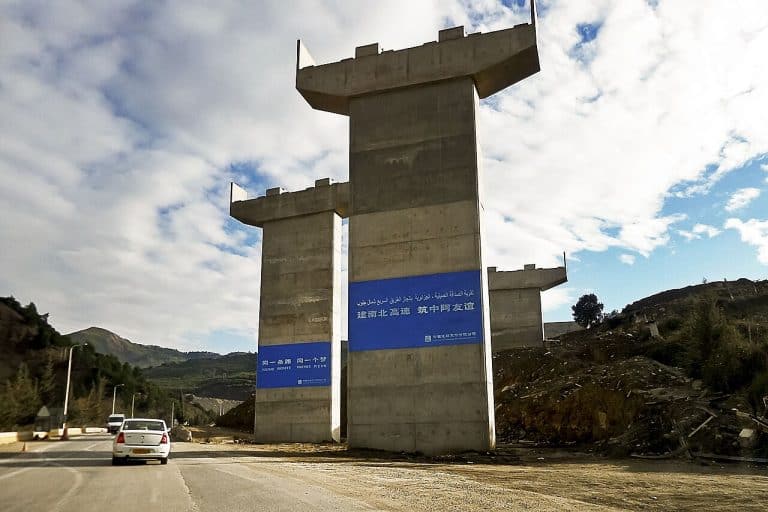
Importantly, the complex was built to high technical standards: Design documents and media briefings cite engineering to withstand very strong seismic activity (reportedly up to magnitude 9.0). Construction was led by a Chinese state-owned company and took over seven years, with the project reportedly costing around $1 billion. The initiative for this mega-mosque came from the former president Abdelaziz Bouteflika, who envisioned it as a prestige project reflecting Algeria’s Islamic identity and post-independence nation-building. Indeed, upon its inauguration, President Abdelmadjid Tebboune hailed the Djamaa El Djazaïr as a “civilisational and religious monument” for Algeria.
Djamaa El Djazaïr’s significance is both spiritual and symbolic. As a functioning mosque, it serves the religious needs of Algiers’ populace, hosting daily prayers and large congregations for Jumu’ah (Friday prayers) and Eid festivals. Its massive size allows it to hold tens of thousands of worshippers, easing crowding in the capital’s other mosques. Culturally, the mosque has become a new icon of Algiers—often called the “Algeria Mosque”—showcasing the country’s Islamic heritage on an unprecedented scale. The towering minaret now dominates the city skyline as a visual affirmation of Algeria’s Muslim identity, just as church spires once dominated colonial Algiers.
Moreover, the complex’s educational and museum facilities aim to make it a hub of Islamic learning and tourism, connecting Algerians and international visitors with the rich history of Islam in the Maghreb. In a contemporary context, Djamaa El Djazaïr also reflects the Algerian state’s use of grand architecture to project unity and pride. Despite some domestic criticism (with detractors calling it a vanity project during a time of economic challenges), many Algerians take pride in having Africa’s largest mosque in their capital. In sum, Djamaa El Djazaïr stands as the modern representative amongst Algeria’s great mosques—a bridge between tradition and modernity, and a physical emblem of the nation’s faith and ambition.
Conclusion: Mosques as Guardians of Heritage
In summary, mosques in Algeria have been and remain multi-dimensional institutions: they are houses of worship at the core of daily religious practice; they have historically been schools and universities forging the intellectual life of the nation; they became symbols of political resistance and identity during colonisation and the fight for independence; and they persist as venues for social cohesion, charitable works, and state outreach in contemporary times.
From the humble adobe mosque of a Saharan village to the vast marble halls of the Grand Mosque of Algiers, each mosque carries forward a legacy of faith and community. The resilience of the mosque as an institution—adapting through conquest, colonialism, independence, and modern statehood—testifies to its foundational role in Algerian society and its significance as a guardian of the spiritual and cultural heritage of Algeria.