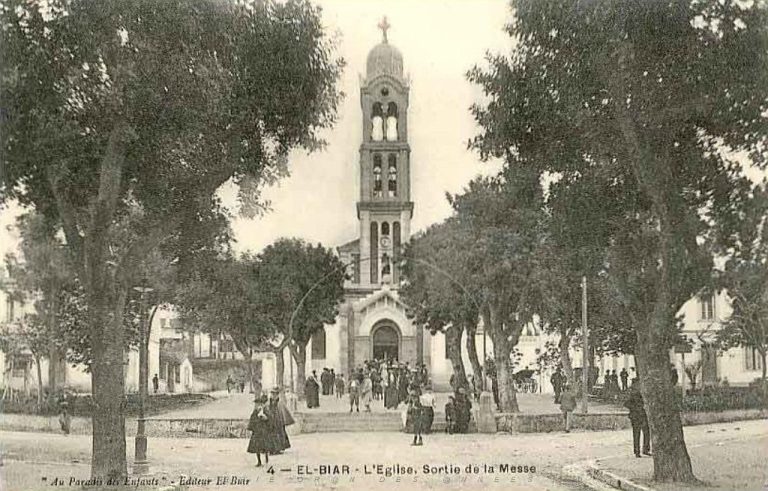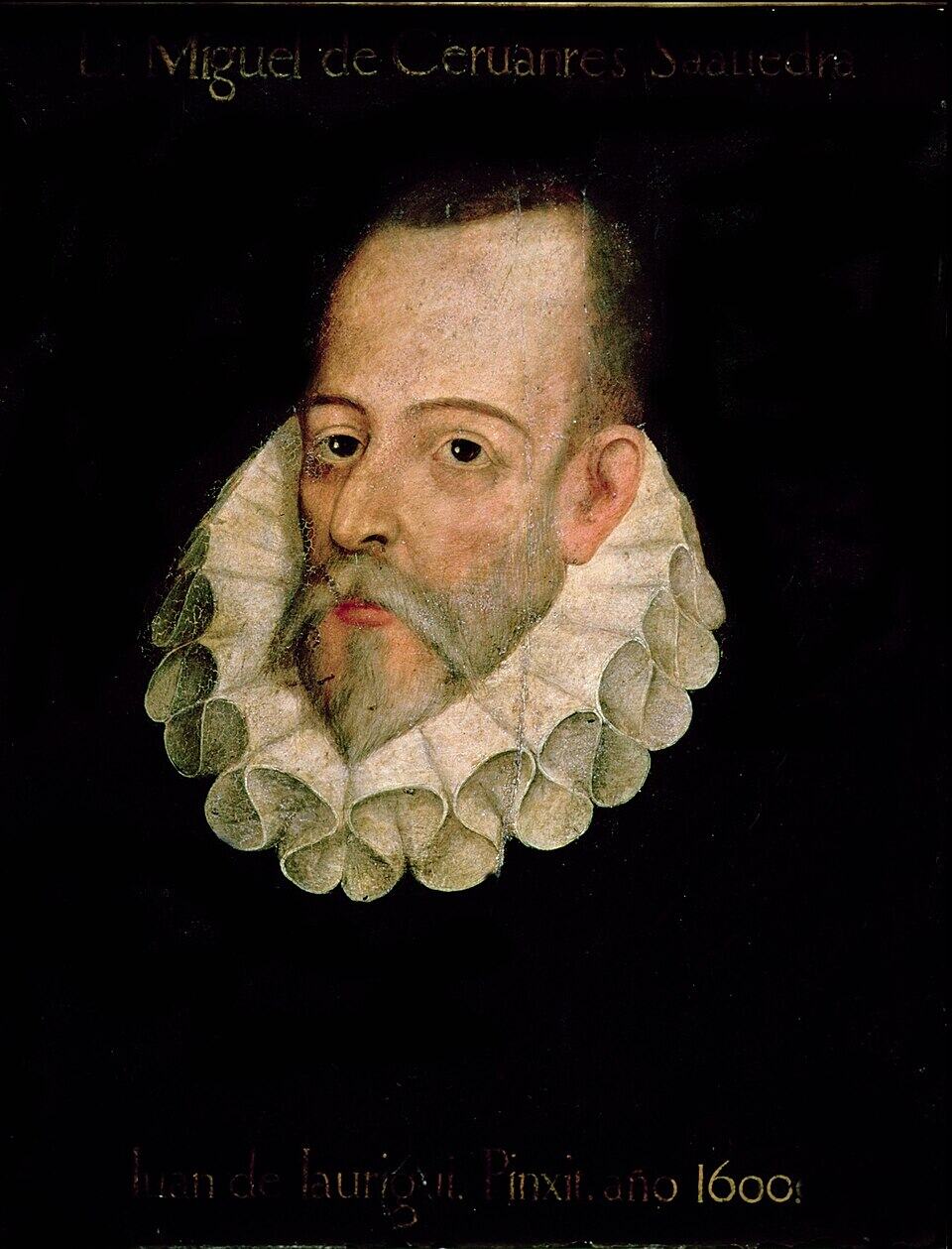
In the autumn of 1575, a Spanish soldier named Miguel de Cervantes was sailing from Naples toward home when corsairs seized his ship in the western Mediterranean. He would not see Spain again for five years. The city where he was taken — Algiers, then a well-connected Ottoman port city where war, commerce, conversion, and captivity overlapped — left a mark on him that no amount of distance could undo. When Cervantes eventually wrote his way into literary history, Algiers came with him.
The connection between Cervantes and Algiers is not legend, nor literary speculation. It rests on a rare and unusually detailed primary document: a legally styled witness dossier, the Información de Argel, drafted in Algiers itself in October 1580, shortly after Cervantes was ransomed and freed. What it records — chains, cave hideouts, escape networks, betrayal, and covert correspondence across a frontier that ran between Ottoman Algiers and Spanish-held Oran — contains material that Cervantes would later rework in literary form.
Captured at Sea, Held in Algiers
The capture is documented with unusual precision. On the return voyage from Naples in 1575, the galera Sol was taken by Algerian corsairs while sailing toward Spain. Cervantes was taken to Algiers and enslaved to a renegade corsair known as Dali Mami, who, on finding letters of recommendation among Cervantes’s possessions, classified him as a high-value prisoner — a caballero principal — and kept him in chains accordingly. The higher the presumed ransom, the heavier the confinement.
Algiers at this point was no backwater. By the late sixteenth century, Algiers was an Ottoman provincial centre with governors, military commanders and Janissary troops, but it was also deeply embedded in Maghribi and Mediterranean commercial life. Captivity was integrated into that economy. Many enslaved men moved within a mixed system of state ownership, private ownership, and ransomability; being “of ransom,” as the dossier repeatedly puts it, meant that a captive’s body was as much a financial instrument as a person.
For Cervantes, this meant nearly five years of waiting, planning, and attempting escape — while Algiers shaped him in ways that would surface, decades later, in some of the most-read pages of European literature.
Escape Attempts and the Cave Outside the City
The Información de Argel records four major escape attempts. The most vivid, and the most thoroughly documented, is what scholars sometimes call the cave episode.
At some point in 1577, Cervantes organised the concealment of 14 Christian captives in a cave outside the city walls, provisioning them covertly for months while awaiting a rescue vessel. The logistics were elaborate: according to the dossier, Muslim couriers carried messages between Algiers and the Spanish-held port of Oran, roughly 350 kilometres to the west. Oran functioned throughout this period as the main imagined route of escape for captives in Algiers — near enough to aim for, close enough for clandestine communication, far enough to make the attempt extraordinarily dangerous.
The plan collapsed. An informer the dossier calls el Dorador — the gilder — betrayed the group. The captives were arrested in late September 1577. Cervantes, according to the dossier, took sole responsibility to protect those who had followed him, a detail the document frames as an act of loyalty to God and king. He was threatened with two thousand blows. The punishment, it seems, was not carried out in full — though the threat itself tells us something about the stakes involved.
A separate attempt, also recorded in the dossier, involved an overland escape toward Oran with a Muslim guide who abandoned the group partway, forcing a retreat to Algiers. Oran appears again and again in the documentary record: a destination, a communications node, an imagined exit from a city with no easy exits.
What Kind of City Was Algiers?
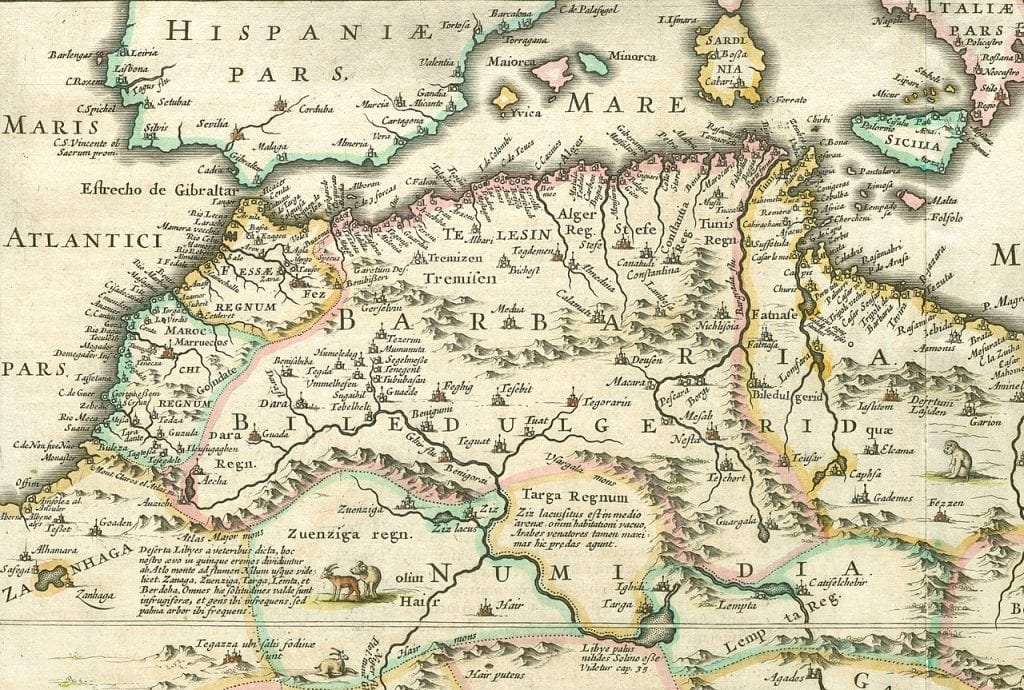
To understand what Cervantes experienced, it helps to understand what Algiers was — not as a backdrop, but as a social system.
The city’s captivity economy was not simply a matter of locked doors and chains. It ran on intermediaries: renegades (Christians who had converted to Islam and operated in both worlds), multilingual merchants, Muslim guides willing to carry messages for the right price, Trinitarian and Mercedarian friars authorised to negotiate ransoms across confessional lines. The redeemer who eventually secured Cervantes’s freedom in 1580 was a Trinitarian friar named Juan Gil. The notary who drafted the dossier immediately afterwards — Pedro de Ribera — was working within an ad hoc Christian clerical-notarial structure that operated, as the dossier itself notes, “among Christians in this Algiers.” It was a community within a community, with its own paperwork.
Scholars of the Ottoman Maghrib have consistently noted that European captivity narratives give only a partial view of this world — shaped by conflict, Christian polemic, and genre expectations — and that a fuller picture would require cross-archival work drawing on Ottoman Turkish, Arabic, and French colonial-era collections alongside the Iberian records. What survives most fully in this case is the Christian captive archive; Ottoman and Arabic documentation has not been integrated into the story to the same extent. For present purposes, what the dossier offers is the captive’s vantage point: granular, self-interested, but also strikingly specific in ways that later retellings rarely are.
The document is, by design, an act of advocacy. Cervantes commissioned it to present his merits to royal councils in Spain. The procedural facts it records — dates, named individuals, the notary, the existence of the cave concealment, the Oran correspondence — carry strong evidential weight. The moral self-portraiture — motives attributed, heroism claimed, singularity asserted — should be read as partly rhetorical, even when broadly consistent with other testimonies.
A valuable near-contemporary source that corroborates and enriches the picture is the Topografía e historia general de Argel, printed in 1612 under the name Diego de Haedo but widely attributed in scholarship to the captive doctor Antonio de Sosa. Its descriptions of Algiers’ captivity world — bagnios, punishments, social hierarchies, escape attempts — corroborate the dossier’s account, though it too is a Christian captive’s representation and should be weighed accordingly.
Algiers in the Writing
Cervantes left Algiers in 1580. He never left it entirely.
The most direct literary returns are his plays. El trato de Argel (Life in Algiers) and Los baños de Argel (The Bagnios of Algiers) are set in the captivity world he knew — the bagnios, the corsairs, the ransom negotiations, the daily texture of a city where enslaved Christians and Ottoman masters shared an uneasy proximity. In Los baños de Argel, Cervantes describes the city as “arca de Noé abreviada” — a Noah’s Ark in miniature — because it contains “all sorts” of trades and “disguised qualities.” It was not, in his literary rendering, only a prison-city. Cervantes represents it as a place of mixture, disguise, hierarchy and uneasy coexistence — a place where, as the play notes, even captives could maintain their religion, albeit “in secret.”
The reach of Algiers into Don Quixote is subtler, but arguably more consequential, given the novel’s readership across the centuries.
Embedded in Part I (chapters 39–41) is the “Captive’s Tale,” in which a former prisoner recounts his years in Algiers. Two details in particular have attracted scholarly attention. The first is a passage describing the language used between captives and locals: a tongue used across “Berbería” and even Constantinople, “neither Moorish nor Castilian … but a mixture of all languages,” enabling communication across confessional and cultural lines. This lingua franca passage maps Algiers into a broader Mediterranean communication system and aligns closely with Algerian scholarship that has foregrounded the city’s multilingual port culture.
The second is a moment in chapter XL where the captive narrator pauses to mention — without elaborating — a Spanish soldier “called Saavedra” who attempted many escapes and was feared to face severe punishment. Saavedra was Cervantes’s maternal surname. The brief allusion is a text-internal bridge between the man who survived Algiers and the novelist who never quite stopped writing about it: Algiers as autobiographical shadow-thread running through one of the world’s most famous novels.
The literary scholar María Antonia Garcés has argued that captivity functions as “the primordial fact” in Cervantes’s life and work — that the writing repeatedly returns to the experience of confinement and escape as a kind of core. Algerian scholar Ahmed Abi Ayad, writing in the journal Insaniyat and in eHumanista/Cervantes, has similarly framed Algiers as a “lieu de mémoire” and “source littéraire” — a place of memory and literary source — in Cervantes’s work, emphasising the city’s cosmopolitan linguistic practices as a shaping influence. These are interpretive arguments, not strictly document-driven claims, but they are grounded in serious engagement with the primary texts.
A Cave, a Grotto, and Cultural Memory
Today, a cave in Algiers — the Grotte de Cervantes, situated near the Bois des Arcades in the Hydra neighbourhood — is marked as the site of Cervantes’s hiding place. Official Spanish cultural bodies have visited it; a commemorative plaque was installed in 2014. The cave features in tourist guides, Arabic-language cultural writing, and Algerian heritage discourse.
The historically careful formulation is this: that Cervantes and his group concealed themselves in a cave outside Algiers is well attested in the 1580 dossier. That the specific site visited today is that cave is a later tradition — strong as cultural memory, weaker as forensic proof. The two things are worth keeping separate, not because the tradition is unimportant, but because the documented story is already remarkable enough without embellishment.
One claim that circulates in popular accounts — that Cervantes wrote Don Quixote, or began it, while hiding in the cave — is not supported by the 1580 dossier or by any near-contemporary evidence. It should be treated as mythmaking rather than history.
Cervantes and Algeria Today
The institutional afterlife of the Cervantes–Algiers connection is active and ongoing. The Instituto Cervantes de Argel and its counterpart in Oran are part of Spain’s modern cultural infrastructure in Algeria, promoting Spanish language teaching and cultural exchange. Algerian state media has reported on formal partnership agreements between Algerian universities and the Oran centre — showing how the Cervantes name still circulates in contemporary educational and cultural exchange between Algeria and Spain.
Francophone Algerian scholarship has also used Cervantes’s Algiers writing to think about intercultural encounter under pressure. In “Cervantès, Captif à Alger” (2007), the Algerian scholar Fayçal Bensaadi argues that Emmanuel Roblès, writing in April 1959 during the Algerian war, reread Cervantes’s Algerian captivity through the lens of “dialogue des cultures” — a reading shaped by the fractures of his own time. That is reception history rather than evidence about sixteenth-century Algiers, but it shows how the Cervantes–Algiers connection continued to acquire new meanings in modern Algeria.
What the Archive Actually Proves
The strongest case for Algiers’s importance to Cervantes does not rest on myth or on the tourist cave or on the claim that captivity “explains” Don Quixote. It rests on something more durable: a legally styled dossier produced in Algiers in 1580, corroborated by primary passages in Don Quixote, Los baños de Argel, and El trato de Argel, and situated within serious scholarship on both sides of the Mediterranean.
What those sources collectively show is a city — Algiers — functioning as a social world structured by languages, intermediaries, coercion and negotiation; and a writer who lived inside that system for five years, emerged from it, and then spent decades writing around and through it. The archive does not tell us what Cervantes felt in the cave or how Algiers changed him from the inside. What it tells us, with unusual precision for the sixteenth century, is that he was there, that he tried to escape, and that he kept returning — in his plays, in his novel, in the brief, sidelong mention of a soldier called Saavedra who attempted too many escapes and somehow, against the odds, survived.