High in the Saharan Atlas of north-eastern Algeria, where rugged cliffs give way to the fertile valleys of the Oued Abiod and Oued Abdi, a musical tradition has been carrying the voice of a people for well over a century. Chaoui music — rooted in the Aurès massif and the Tachawit-speaking Shawiya (or Chaoui) communities who call it home — is less a fixed genre than a living family of song, dance, and instrumental practice. Its recurring elements include oral poetry, communal participation and close relationships between voice, dance, the gasba reed flute and the bendir frame drum.
A mountain, a people, a language
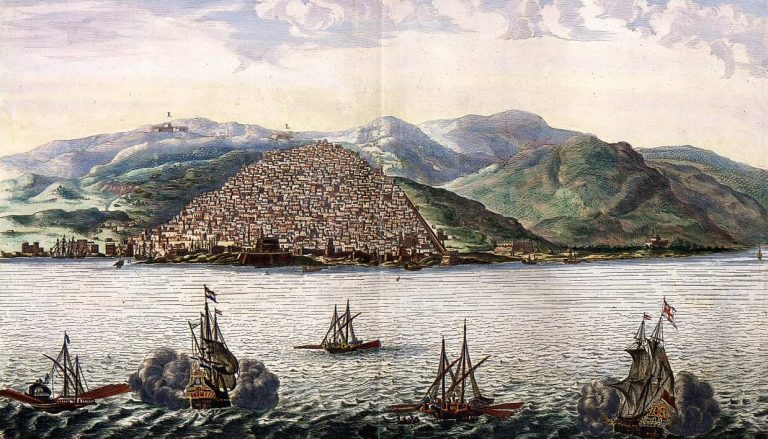
The Aurès is one of Algeria’s most distinctive landscapes — a meeting zone between mountain, steppe and Sahara, fronted by cliffs and crowned by Mount Chélia, which at 2,328 metres is the highest point in northern Algeria. That geography is not incidental to the music. Documented repertoires include songs about journeys, agricultural labour, weddings, courtship, exile and particular places in the Aurès.
The Shawiya, or Chaoui, are one of Algeria’s major Amazigh communities. Their language, generally called Tachawit or Chaoui, belongs to the Zenati branch of the Amazigh language family. Language sits at the heart of the tradition rather than alongside it. Researcher Mostéfa Haddad writes that Aïssa Djermouni’s sung poetry sometimes alternated between Chaoui and Arabic, with poems rhymed in both languages “as Aurès tradition requires” — a translation of Haddad’s original French. In the women’s repertoires documented by sociologist Naziha Hamouda, songs composed before 1954 were generally in Berber, with an Arabic word or verse introduced only for special effect. During the war of independence, songs were increasingly composed in Arabic as well as Berber, or in a mixture of the two languages.
Researcher Mostéfa Haddad writes that Aïssa Djermouni’s sung poetry sometimes alternated between Chaoui and Arabic, and that his poems rhymed in both languages in keeping with Aurès tradition. In the women’s repertoires documented by sociologist Naziha Hamouda, songs composed before 1954 were entirely in Berber, except when a poet introduced an Arabic word or verse for special effect. During the war of independence, she found greater use of Arabic and of mixed Arabic–Tachawit lyrics as singers responded to the political circumstances.
From village courtyards to colonial stages
Because Chaoui music developed largely through oral transmission, its earliest history is difficult to date precisely. Its movement into public performance and commercial recording can be traced more clearly through figures such as Aïssa Djermouni, a Chaoui poet-singer born into a farming family in M’toussa. In his Encyclopédie berbère biography, researcher Mostéfa Haddad reports that Djermouni began singing publicly around 1910, was invited to perform at the Colonial Exhibition and Centenary of Algeria in Paris in 1931, and made his first commercial recording in Tunis for Philips in 1934. Researcher Hadj Miliani records that Djermouni performed at the Olympia in Paris in 1937, as part of a wider interwar movement of Algerian musicians travelling to France, often to make recordings.
This was a period of contradictions. Colonial-era mobility opened new audiences and recording contracts, while religious reformers and, for partly different reasons, some nationalist organisers within the Aurès — which Hamouda dates from 1936 — pushed back against older festive customs, particularly performances by the Theazriyin, women artists and singer-dancers known as Theazriyin or Azriat, and the use of the ghayta shawm at weddings. The tradition did not disappear under this pressure; it adapted. Communities, by Hamouda’s account, kept hiring performers regardless, and the practices resurfaced — sometimes against renewed official disapproval — after independence in 1962.
One of the most valuable surviving traces of this earlier world is a 1935–36 ethnographic mission led by Thérèse Rivière, working alongside Germaine Tillion, during which Rivière recorded Aurès songs in 1936 directly onto wax cylinders. The collection, now digitised and catalogued by CREM-CNRS, holds 42 items and more than 100 minutes of material — solo songs, laments, guest airs, and teasing songs tied to named localities. Like all ethnographic collections of its period, the archive also reflects the choices, classifications and power relationships of the colonial research setting.
During the war of independence itself, song became something closer to a political archive. Hamouda describes “intense song activity” through those years, with lyrics mourning the dead and praising fighters. In an interview, singer Houria Aïchi recalled that, during Algeria’s independence struggle, Aurès women composed “hundreds, if not thousands” of songs honouring men who had gone to fight colonialism. These political songs formed part of a broader repertoire that also encompassed love, work and exile.
Voice, flute, and frame drum
Chaoui music cannot be reduced to a single rhythmic or melodic structure. Algerian research distinguishes several regional repertoires, including çrawi and forms known as Ayach, Dmam, Rakruki and Çalhi. Some songs are performed in a free or unmeasured style with one or two gasba flutes, while collective dance forms are more commonly supported by percussion and a regular pulse. These distinctions show considerable variation across the Aurès rather than one musical formula shared by every Chaoui performance.
| Instrument | What it is | Role in Chaoui music |
| Gasba | A reed flute played by blowing across its bevelled opening | Signature melodic partner to the voice, central to solo song and guest airs |
| Bendir | A frame drum | Sets the pulse and anchors collective dance and chorus |
| Ghayta | A double-reed shawm, related to the wider North African and Middle Eastern zurna family | Historically tied to weddings and outdoor festivals, valued for its volume and projection |
| In some contemporary arrangements | Synthesiser, drum kit, guitar, oud, clarinet | Broaden the sound in festival and fusion settings, without displacing gasba and bendir |
At the 2015 Festival of Chaoui Song and Music in Khenchela, Radio Algérienne described the gasba and bendir as defining sounds of the opening performances.
Songs that mark a life
Chaoui music is, fundamentally, occasional music — written for weddings, circumcisions, harvest and mutual-aid gatherings, and seasonal festivals. Hamouda records testimony that no wedding or feast in the Aurès felt complete without its proper song-and-dance forms, with different songs marking different stages of the bridal procession.
Women have been central custodians, composers and improvisers within many domestic, work, wedding and resistance-song traditions. Men have meanwhile occupied prominent roles as public singers, instrumentalists and participants in forms such as rahaba. Houria Aïchi has described the women’s courtyard of her Batna childhood as a space of song, poetry, weaving, and pottery — the world she later drew on to rebuild repertoire for the concert stage. Hamouda’s research confirms that women were the central composers and improvisers of ceremonial song, shaping its emotional register even as some, the azriat performers, faced moral condemnation from colonial authorities and nationalist reformers alike, despite being locally honoured as artists for important occasions.
A prominent group form is rahaba, in which coordinated movement and collective singing are rhythmically supported by footsteps, voices and, in some local traditions, the bendir. Algerian documentation describes it as traditionally male-led, while noting that women sometimes participate.
From cassette to streaming
Houria Aïchi remains the clearest bridge between the village repertoire and the international stage. Born in Batna and trained in sociology, she moved to Paris in 1970 and began her singing career after a 1984 invitation to a women’s music festival there. Her method, by her own account, involved returning to Batna to record relatives and neighbours, then reworking what she gathered — an approach that treats inherited songs as material for continuing artistic practice rather than as fixed reconstructions. Albums such as Songs of the Aures (1990) and, with l’Hijâz’Car, Les Cavaliers de l’Aurès (2008), remain accessible entry points for listeners encountering the tradition.
A newer generation continues to use Chaoui as a language of contemporary creation. IWAL, a duo formed by Nesrine and Fayssal, composes and performs primarily in Chaoui, treating the language as a means of transmission, healing and cultural affirmation. Their work follows earlier recording artists such as Ali el-Khencheli, whose music appears in the Bibliothèque nationale de France’s sound archive, and Markunda Aurès, a Chaoui singer-songwriter who began releasing recordings in the 1980s while collecting and renewing older songs. Together, these artists show how Chaoui music has developed across several generations, from early commercial recordings to contemporary performance.
A tradition still being written
Algeria has, in recent decades, given Tamazight greater institutional standing — recognised as a national language in 2002 and an official language in 2016. That recognition has not, on its own, guaranteed the language’s transmission at home: Studies of particular Chaoui- and Kabyle-speaking families suggest that Chaoui faces particular pressure compared with Kabyle in some communities, even where parents actively encourage bilingual use. Within that context, singing in Chaoui carries weight as a language act, not only a musical one.
A further major challenge is the limited scholarly documentation available to international readers. As Haddad observed in 2003, musicological study of Chaoui song remains largely unstudied — and more than two decades later, English-language scholarship remains limited, and the sources reviewed for this article do not provide a comprehensive account of Chaoui rhythmic systems, regional variations and performance terminology. Much of the strongest evidence sits in French and Arabic archives, regional journalism, and discographic databases rather than in accessible monographs. Women’s performance history, in particular, remains under-catalogued relative to its central role in the tradition.
What is clear, across the documented record, is that Chaoui music has moved through colonial-era exhibition and recording circuits, attempts to suppress particular performance practices, post-independence cultural policies and successive changes in recording technology not by standing still, but by continually renewing the relationship between voice, poetry, and place. The gasba and bendir still sound current in the Aurès today — not because they are relics, but because they remain in use.