

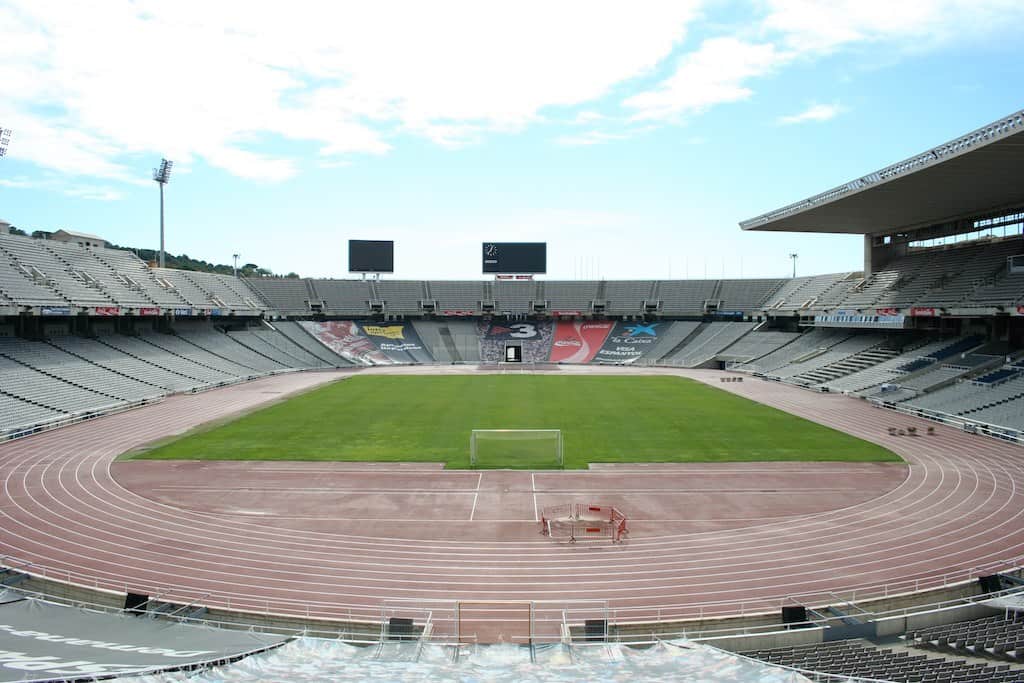
In the summer of 1992, as the world watched the Barcelona Olympics, a young woman from Constantine crossed the finish line of the women’s 1500 metres in a personal-best time that would echo far beyond the track. Hassiba Boulmerka’s victory represented more than athletic excellence—it marked Algeria’s first-ever Olympic gold medal and challenged deeply entrenched notions about women’s place in sport and society.
Early Struggles and Athletic Promise
Born on 10 July 1968 into a modest family in Constantine, Boulmerka faced resistance to her athletic ambitions from an early age. Her father initially opposed her running in standard athletic attire, concerned about local perceptions of women competing in shorts and sleeveless vests. A supportive physical education teacher, Aboud Labed, recognised her potential and convinced her father to allow her to compete. Limited educational opportunities meant that after junior secondary school, Boulmerka worked as a secretary by day whilst training in the evenings—a testament to her extraordinary determination.
Her persistence paid dividends. After winning the Pan-Arab Junior Cross-Country Championship in 1986, Boulmerka moved to Algiers to train under coach Amar Bouras. In 1988, she claimed double gold in the 800 metres and 1500 metres at the African Championships, announcing herself on the continental stage at just 20 years old.
Historic Achievements
Boulmerka’s breakthrough came at the 1991 World Championships in Tokyo, where she became the first woman from an Arab or African nation to win a track-and-field world title, clocking 4:02.21 in the 1500 metres. The following year in Barcelona, she achieved her ultimate goal: Olympic gold in the 1500 metres with a time of 3:55.30, overtaking Lyudmila Rogacheva of the Unified Team (EUN) in a dramatic final turn.
Her success continued with a second world title in 1995 at the World Championships in Gothenburg, where she ran 4:02.42 despite not having won any major race earlier that season. She also held the African record in the 1500-metre record (3:55.30) from 1992 until 2015 and set an African mile record (4:20.79 in 1991, Oslo) that stood until 2008.
Controversy and Courage
Boulmerka’s rise coincided with Algeria’s escalating political violence in the early 1990s. Her athletic attire—standard international running gear—drew vehement criticism from armed Islamist groups. Despite being a practising Muslim herself, she faced harassment whilst training, with some throwing stones and shouting insults. Following her 1991 world title, death threats from Islamist militants forced her to relocate her training base to Europe for safety.
Boulmerka considers herself a good Muslim and equates Islam with peace and tolerance, framing the conflict as one of interpretation rather than faith. When she won her second world title in 1995, she framed the win as a stand against obscurantism.
A Symbol Beyond Sport
After winning the 1500 metres at the 1991 World Championships, Boulmerka grabbed her hair and let out a triumphant scream. She later explained: “I screamed for joy and for shock, and for much more. I was screaming for Algeria’s pride and Algeria’s history, and still more. I screamed finally for every Algerian woman, every Arab woman.”
This powerful statement captured how Boulmerka viewed her achievements as transcending personal glory. Her victories were celebrated not only in Algeria but throughout the Arab and Muslim world. Queen Noor of Jordan has been quoted in profiles as saying Boulmerka carried hopes for Arab women’s emancipation.
Lasting Legacy
Boulmerka’s courage paved the way for future generations. Nouria Mérah-Benida, who won 1500 metres gold for Algeria at the 2000 Sydney Olympics, explicitly acknowledged Boulmerka’s courageous legacy as inspiration. “This is for the Arab women, so they can develop like other women in the world,” Mérah-Benida said after her victory.
After retiring in 1997, feeling worn out by the fights that accompanied her sporting life, Boulmerka was elected to the International Olympic Committee Athletes’ Commission in 1999, where she continued advocating for women’s sports participation. She received numerous honours, including the Prince of Asturias Award for Sports in 1995, recognising her for her sporting values and human qualities in a world where facilities are not the most favourable for women.
An Enduring Icon
Today, Boulmerka remains known in Algerian media as the “‘Gazelle de Constantine’ (Constantine Gazelle)”, a tribute to both her hometown and graceful running style. Her story resonates as that of an athlete who refused to compromise her identity despite facing extraordinary pressures. As she reflected on her career, sports have given Boulmerka an opportunity to express her aspirations for women and for society—aspirations she transformed into reality, inspiring countless others to follow.
Hassiba Boulmerka was inducted into the International Women’s Sports Hall of Fame in 2008 and was listed among Sports Illustrated’s “Top 100 Women Athletes of the 20th Century.”