

In Algeria, the holy month of Ramadan arrives with an air of reverence so profound that it is sometimes spoken of with reverence as Sidna Ramadan, meaning “Our Master Ramadan”. For the country’s predominantly Sunni Muslim population, this month represents far more than a period of fasting—it is a time when domestic routines transform, streets take on new rhythms, and the bonds of family and community are renewed through shared meals, prayer and acts of charity.
Preparing for the Sacred Month
The weeks preceding Ramadan see Algerian households engaged in thorough preparation with a deep clean marking the run-up to the sacred month. Some families tend to purchase new kitchen utensils and dishware, while pantries are stocked with essentials: dates, honey, nuts and grains. This deep-cleaning and provisioning symbolises a fresh start as Algerians ready themselves both spiritually and materially for the month ahead.
Mosques, too, undergo preparation. Volunteers clean and sometimes decorate these spaces to welcome the larger congregations that gather throughout Ramadan.
In rural communities, preparations often extend further. In traditional Kabyle villages, the tajmaât (village assembly) meets well in advance to organise resources and identify families in need of support, ensuring no one goes without during the holy month.
The Rhythm of Daily Observance
Fasting from dawn to sunset is widely observed in Algeria, where Muslims make up the overwhelming majority of the population (around 98–99% in major international estimates). Participating in the fast is viewed as a core expression of faith and identity—Some observers note that Ramadan fasting carries a particularly strong social visibility in Algeria—so much so that not fasting, without a recognised excuse, can be read socially as stepping outside communal norms.
Before dawn, families rise for suhoor, the pre-dawn meal. In rural communities historically, a figure known as the Alberah would walk through villages beating a bendir drum to wake residents. Today, mosque loudspeakers and alarm clocks have largely replaced this tradition, though the nostalgia for the Alberah drumbeaters remains.
Throughout the day, believers abstain from food, drink and other physical pleasures, focusing on patience, prayer and charity. Many increase their Qur’an recitation, aiming to complete the entire text by month’s end through nightly prayers—a practice known as khatm al Qur’an.
Iftar: Breaking Fast Together
Each evening at sunset, families and neighbours gather for iftar, the meal that breaks the fast. Following prophetic tradition, Algerians typically begin with dates and milk. Only after the sunset maghrib prayer does the family sit down to the full iftar spread.
Communal spirit lies at the heart of this tradition. In many neighbourhoods, particularly in cities, collective iftars and charitable tables known as mawa’id ar-rahma or restaurants Errahma are organised to ensure that even the poor and travellers can share in the meal. In Oran alone, local media reported that 130 such free restaurants were authorised for Ramadan 2026, operated by charities and private donors in coordination with provincial authorities.
The Nocturnal Social Scene
After the tarawih evening prayers, social gatherings often continue late into the night. Families regroup to share mint tea and an assortment of syrupy sweets, spending quality time together. This nightly socialising—strolling through markets, enjoying coffee or tea with friends—contributes to a lively nocturnal atmosphere across Algerian cities. Streets that fall quiet in the late afternoon as fasting residents prepare for iftar come alive after dark, with cafés and pastry shops doing brisk business well past midnight.
Across Algeria (and the Arab world), Ramadan is also the peak television season. Broadcasters and streaming platforms schedule their flagship dramas (mosalsalat) and entertainment programmes for the month—especially for the evening hours after iftar—because viewing patterns shift and competition for ratings and advertising intensifies. Media research on the region describes “Ramadan media” as a distinctive cycle of content produced and timed specifically for the holy month, designed to capture the season’s unusually large audiences.
The Iftar Table: A Culinary Tradition
Algerian iftar tables showcase a rich array of traditional dishes. The essential warm bowl of soup holds pride of place—most commonly chorba frik, a tomato-based broth with mutton or lamb, vegetables, herbs and frik (cracked green wheat) that gives it a distinctive hearty flavour.
Alongside the soup comes the often-indispensable bourek: a crispy fried pastry roll stuffed with spiced ground meat, egg, cheese or potato. These two dishes—chorba and bourek—are often considered the twin pillars of a proper iftar, served almost daily in many households.
Special dishes mark the beginning of Ramadan. Tajine lahlou (also called tajine barkouk), a sweet tagine of lamb or chicken slow-cooked with dried prunes, apricots, raisins and cinnamon in honeyed syrup, is traditionally prepared on the first day to wish everyone a ‘sweet’ month.
Sweets and Evening Treats
After the main meal, attention turns to desserts. Perhaps the most iconic Ramadan sweet is zlabiya (also spelled zlabia)—a deep-fried lattice or pretzel-shaped dough soaked in sticky orange-coloured syrup. Its popularity is such that queues form at pastry shops in late afternoons to purchase it fresh for the evening.
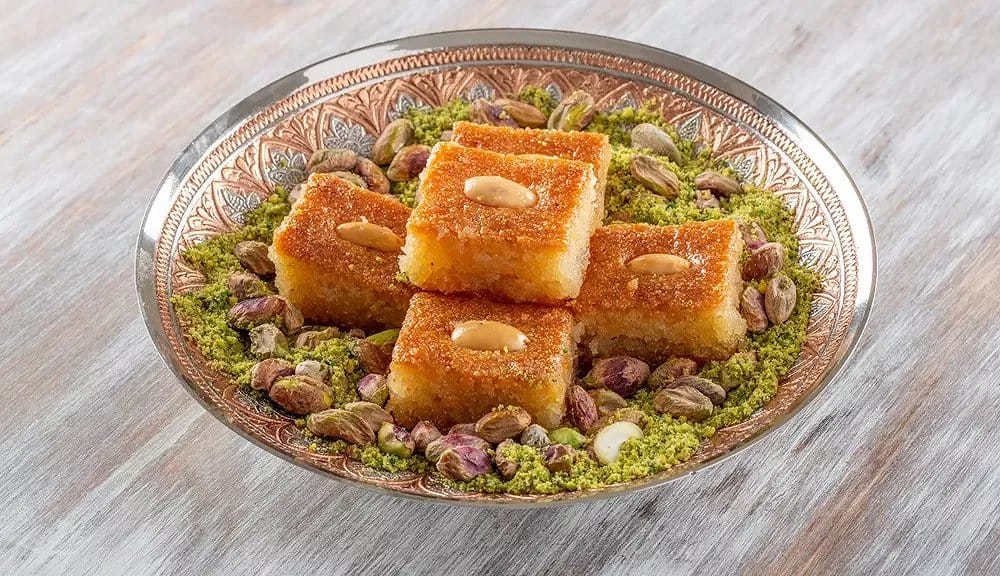
Other favourites include qalb el-louz (literally “heart of almonds”), a dense semolina and ground almond cake soaked in syrup; baklawa; makrout (semolina date cookies fried and honeyed); and samsa (almond triangles).
For suhoor, many Algerians favour mesfouf—a sweet couscous dish steamed with butter and sugar, mixed with raisins or dates, and often garnished with nuts and cinnamon. It is typically eaten with cold leben (fermented milk) to sustain energy through the fasting day.
Economic and Social Dynamics
Consumer Patterns
Ramadan sees significant changes in consumer behaviour. Despite being a month of fasting, household food spending increases substantially. Several Algerian reports and consumer groups describe a sharp rise in household food spending during Ramadan—sometimes framed as several-fold compared with the rest of the year. Each evening meal is treated as a special occasion, with multiple courses expected.
This cultural expectation places strain on family budgets, particularly for middle- and lower-income households. Price inflation of food staples—vegetables, fruits, meat and sweets—is an almost annual phenomenon accompanying the surge in demand.
Government Measures
The Algerian government implements various adjustments to accommodate Ramadan. Public sector working hours are shortened: in recent years, office hours during Ramadan have typically run from approximately 8:30 AM to 3:30 PM in most provinces, with even earlier hours (7:00 AM to 2:00 PM) in the hotter southern regions.
To address price inflation, authorities deploy market inspectors to monitor costs of staple goods. Special “Ramadan markets” offer produce at moderated prices, cutting out middlemen. In recent years, the traditional koufat Ramadan (Ramadan basket) is often discussed alongside direct solidarity grants; official communications for Ramadan 2026, for example, set the solidarity allowance at 10,000 DZD for eligible households.
Social Cohesion
Despite economic pressures, Ramadan reinforces social bonds. The month brings families together for daily iftar, regardless of how busy modern life keeps them apart during the rest of the year. Neighbours exchange dishes, relatives share invitations, and the tradition of reconciliation—using Ramadan to mend strained relationships—remains strong.
The charitable spirit is institutionalised through free iftar tents, donation drives and neighbourhood food baskets. Even those with little are said to share what they have with neighbours during Ramadan. This collective generosity reflects the deeply held value that no one should go hungry during the holy month.
A Living Tradition
Ramadan in Algeria represents a complex weave of religious observance, cultural practice and social tradition. From the pre-dawn suhoor to the late-night gatherings over mint tea and sweets, from the steaming bowls of chorba to the queues at pastry shops for fresh zlabiya, the month leaves an indelible impression on Algerian life.
As one journalist observed, Ramadan is a special atmosphere—the family meals, the smells from the kitchen, the anticipation of sunset, the Qur’an on television—which explains why being away from home during this time is particularly difficult for Algerians.
Ramadan remains a cornerstone of Algerian cultural and religious identity. It continues to illustrate the enduring values of faith, family, charity and community that define the holy month across the country.