


Updated: 16 August 2026
For visitors and expats arriving in Algeria, the dinar can seem like a puzzle at first. With an exchange rate hovering around 133 dinars to one US dollar, the currency carries a different weight than what many international travellers are accustomed to. But understanding the dinar’s purchasing power reveals a country where subsidised staples and local production keep everyday costs remarkably low—even if the numbers on the bills can look high at first glance.
Understanding the Currency
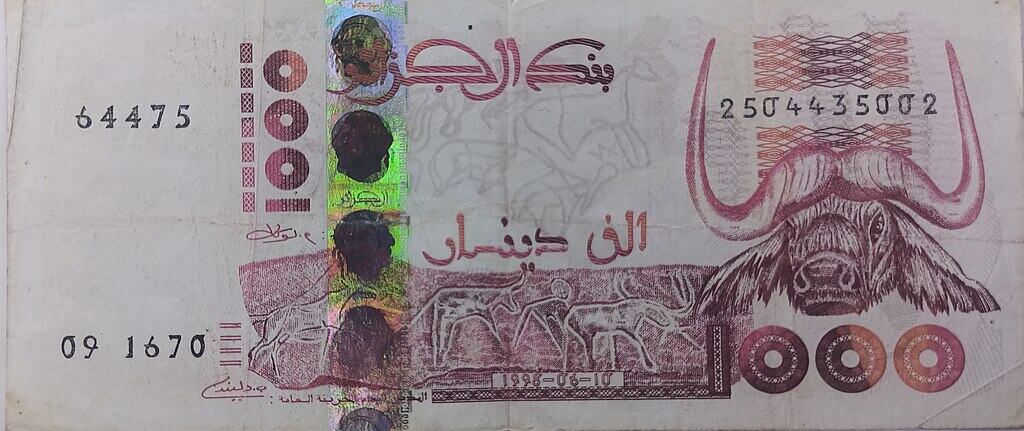
The Algerian dinar (DZD) has evolved significantly over recent decades. While officially divided into 100 centimes, those smaller denominations have long disappeared from circulation, victims of inflation. Prices are typically rounded to the nearest 5 dinars; 1–2 DZD coins and centimes are effectively obsolete in daily use. Coins in daily use run from 5, 10, 20, 50, 100 and 200 dinars; higher values are bimetallic.
Recent coin issues have continued, including a new 100 dinar coin in 2021 and a new 10 dinar coin in 2023. The 200 dinar coin has existed since 2012 (independence anniversary; later issues continue). This shift reflects decades of gradual inflation—what once required paper money now jingles in your pocket. Banknotes commonly used: 500, 1,000 and 2,000 dinars (with updated issues in 2019/2021 and a 2022 commemorative 2,000-dinar banknote on a hybrid DuraSafe substrate (paper–polymer–paper).
The official exchange rate in mid-August 2026 sits at approximately 133 DZD to 1 USD, though it’s worth noting that Algeria’s currency isn’t freely convertible, and a parallel market exists at weaker rates.
Food: Subsidies Make the Difference
Perhaps nowhere is Algeria’s social policy more visible than at the bakery. A standard 500 g loaf of ordinary bread is officially priced at just 15 DZD (about $0.11), reflecting long-standing subsidies. A 250 g loaf is officially 7.50 DZD.
Milk tells a similar story. Government-subsidised milk in sachets (pouches) costs just 25 dinars per litre (about $0.19), though shortages sometimes push people toward UHT milk at around 130 dinars. These subsidies apply nationwide—a village in the Sahara pays roughly the same for basic bread and milk as someone in central Algiers.
Beyond subsidised items, locally produced foods remain affordable:
- Indicative: White rice: ~190 DZD/kg (~$1.43)
- Indicative: Eggs: ~225 DZD/dozen (~$1.69)
- Indicative: Chicken: ~600 DZD/kg (~$4.52)
- Indicative: Tomatoes: ~110 DZD/kg (~$0.83)
- Indicative: Potatoes: ~80 DZD/kg (~$0.60)
Beef stands out as relatively expensive, with good-quality beef in major cities often ~2,000-2,600 DZD/kg ($15-20), making it a luxury for many families who opt for chicken or lamb instead.
Regional variations exist but remain modest for most items. Produce may be cheaper in agricultural zones, while imported packaged goods cost more outside major cities. Overall, food represents one of the most budget-friendly aspects of Algerian life. Short-term shortages (e.g., subsidised milk) can occur in some districts before supply catches up; rural distribution can be patchy.
Transportation: Ultra-cheap Fuel
Algeria’s fuel subsidies are legendary. Unleaded petrol is 47 DZD/L and diesel 31 DZD/L (regulated national prices). To put this in perspective, filling a 50-litre tank costs under $18—five to six times cheaper than in Europe. These administered prices are part of Algeria’s wider subsidy architecture, periodically adjusted via finance laws.
Public transportation matches this affordability (these figures are indicative and city-operator dependent):
- City bus or tram rides: ~20-40 DZD (~$0.15-0.30)
- Monthly public transit pass: ~1,100-1,200 DZD (~$8-9)
- Urban taxis: ~150 DZD base fare plus ~60 DZD per km
While rural areas may lack extensive public transit networks, residents benefit from the same extraordinarily low fuel prices, making private vehicle operation quite economical.
Housing: The Urban-Rural Divide
Housing costs reveal Algeria’s sharpest urban-rural divide. One recent private-sector snapshot (Lamacta, 2026) puts median apartment asking rents in Algiers at ~70,000 DZD/month, Oran ~75,000 DZD and Constantine ~26,000 DZD. Figures vary widely by neighbourhood and building quality.
For perspective:
- Algiers median apartment asking rent: ~70,000 DA (~$527 USD)
- Oran median apartment asking rent: ~75,000 DA (~$565 USD)
- Constantine median apartment asking rent: ~26,000 DA (~$196 USD)
Within Algiers itself, neighbourhood matters significantly, with areas such as Hydra among the capital’s most expensive. Government programmes (AADL/LPP, rent-to-own, subsidised credit) also shape the market and reduce effective out-of-pocket rent for some households. Many Algerians, particularly outside major cities, own their homes outright, and extended family living arrangements remain common, reducing rental expenses for many households.
Utilities and Connectivity
Government subsidies extend to utilities. A typical basic utilities bill for a medium apartment runs about 5,000-6,000 DZD monthly (roughly $38-45), though heavy air conditioning in summer can push costs higher. Cooking gas remains dirt cheap—a 13 kg butane cylinder costs just 200 DA (about $1.50) and lasts for weeks (regulated tariff).
Mobile phone plans with calls and 10+ GB of data allowance cost around 900-1,400 DZD monthly, while home broadband runs about 2,000-3,000 DZD per month, making connectivity accessible even in smaller towns, though rural areas may rely more on mobile internet.
Clothing: Local vs. Imported
Clothing prices reflect a two-tier system. International brands command premium prices:
- Levi’s jeans: ~4,700 DZD (~$35)
- Chain store summer dress: ~5,600 DZD (~$42)
- Nike athletic shoes: ~8,900 DZD (~$67)
However, local markets and Algerian-made goods offer much lower prices—basic jeans might cost 1,500-3,000 DA at a village market, and locally made shoes run only a few thousand dinars. This divide is primarily urban, as rural residents typically shop at local markets where traditional and locally produced clothing remains affordable.
The Dinar’s Purchasing Power
So what does ~133 DZD (≈US$1) actually buy in Algeria? According to current prices, it could purchase approximately nine regulated 500 g loaves of ordinary bread, five litres of subsidised milk pouches, or three to five urban bus rides. These comparisons illustrate how the dinar maintains strong purchasing power for basic necessities, even as imported goods and premium services carry higher relative costs.
The country’s extensive subsidy system means that a family’s basic needs—bread, milk, fuel, electricity—remain accessible on modest incomes. Indicative baskets suggest core expenses (excluding rent) can be covered on a few hundred US dollars per month, varying by household size and city.
Typical Everyday Prices in Algeria, 2026
| Item | Typical price | Approx. USD | Notes |
|---|---|---|---|
| Food | |||
| Ordinary bread, 500 g | 15 DZD | $0.11 | Regulated price |
| Subsidised milk, 1 litre pouch | 25 DZD | $0.19 | Regulated price |
| UHT milk, 1 litre | ~130 DZD | ~$0.98 | Indicative |
| White rice, 1 kg | ~190 DZD | ~$1.43 | Indicative |
| Eggs, dozen | ~225 DZD | ~$1.69 | Indicative |
| Chicken, 1 kg | ~600 DZD | ~$4.52 | Indicative |
| Tomatoes, 1 kg | ~110 DZD | ~$0.83 | Indicative |
| Potatoes, 1 kg | ~80 DZD | ~$0.60 | Indicative |
| Good-quality beef, 1 kg | ~2,000–2,600 DZD | ~$15–20 | Varies by city and cut |
| Transport | |||
| Unleaded petrol, 1 litre | 47 DZD | ~$0.35 | Regulated national price |
| Diesel, 1 litre | 31 DZD | ~$0.23 | Regulated national price |
| Urban bus or tram journey | ~20–40 DZD | ~$0.15–0.30 | City and operator dependent |
| Monthly public transport pass | ~1,100–1,200 DZD | ~$8–9 | Indicative |
| Urban taxi starting fare | ~150 DZD | ~$1.13 | Indicative; varies by city |
| Urban taxi, per km | ~60 DZD | ~$0.45 | Indicative; varies by city |
| Housing | |||
| Algiers apartment | ~70,000 DZD/month | ~$527 | Median asking rent |
| Oran apartment | ~75,000 DZD/month | ~$565 | Median asking rent |
| Constantine apartment | ~26,000 DZD/month | ~$196 | Median asking rent |
| Utilities & Connectivity | |||
| Basic utilities, medium apartment | ~5,000–6,000 DZD/month | ~$38–45 | Usage dependent |
| Butane cylinder, 13 kg | 200 DZD | ~$1.50 | Regulated price |
| Mobile plan | ~900–1,400 DZD/month | ~$7–11 | Plan dependent |
| Home broadband | ~2,000–3,000 DZD/month | ~$15–23 | Plan and speed dependent |
| Clothing | |||
| Levi’s jeans or equivalent | ~4,700 DZD | ~$35 | Indicative international-brand price |
| Chain-store summer dress | ~5,600 DZD | ~$42 | Indicative |
| Nike athletic shoes or equivalent | ~8,900 DZD | ~$67 | Indicative |
Note: Prices are 2026 snapshots. Regulated prices are nationally administered; other figures are indicative and can vary by city, season, neighbourhood, supplier and product quality. US dollar equivalents use the official exchange rate and are rounded.
Exchange & convertibility
Algeria’s dinar is not freely convertible outside the country. Visitors will see a gap between the official rate and the informal (parallel) market, which often trades the dinar weaker. This article uses official rates for consistency; actual cash exchange outcomes may differ.
Urban and Rural Realities
While this article presents averages, Algeria’s economic landscape varies considerably between urban centres and rural areas. Cities offer more variety in goods and services but command higher prices for housing and certain consumer items. Rural areas benefit from lower housing costs and cheaper local produce but may have more limited access to imported goods and modern services.
What remains consistent across this geography is the impact of government policy. Whether in coastal Oran or an interior town, subsidised bread costs roughly the same, petrol prices are uniform, and basic utilities remain affordable. These policies reflect decades of social commitments that have shaped how Algerians experience daily economic life.
Note: All prices reflect 2026 snapshots from: Bank of Algeria (official exchange rates), ARH (regulated fuel & butane tariffs), Ministry of Commerce (regulated bread & milk prices), Lamacta (housing), and crowd-sourced cost-of-living portals (Numbeo, Combien-coûte) used directionally.