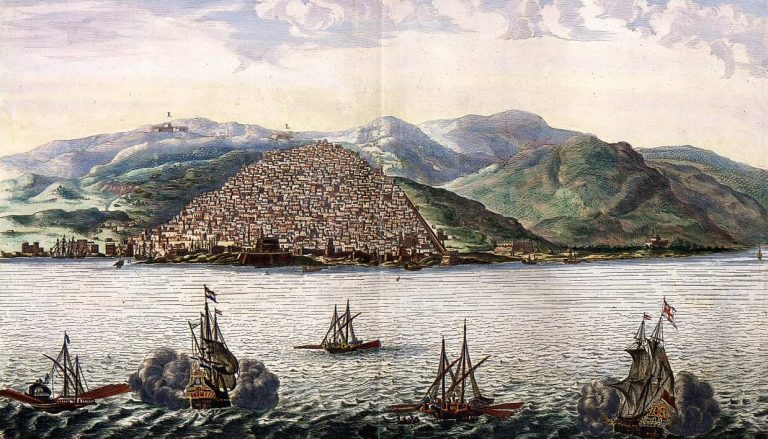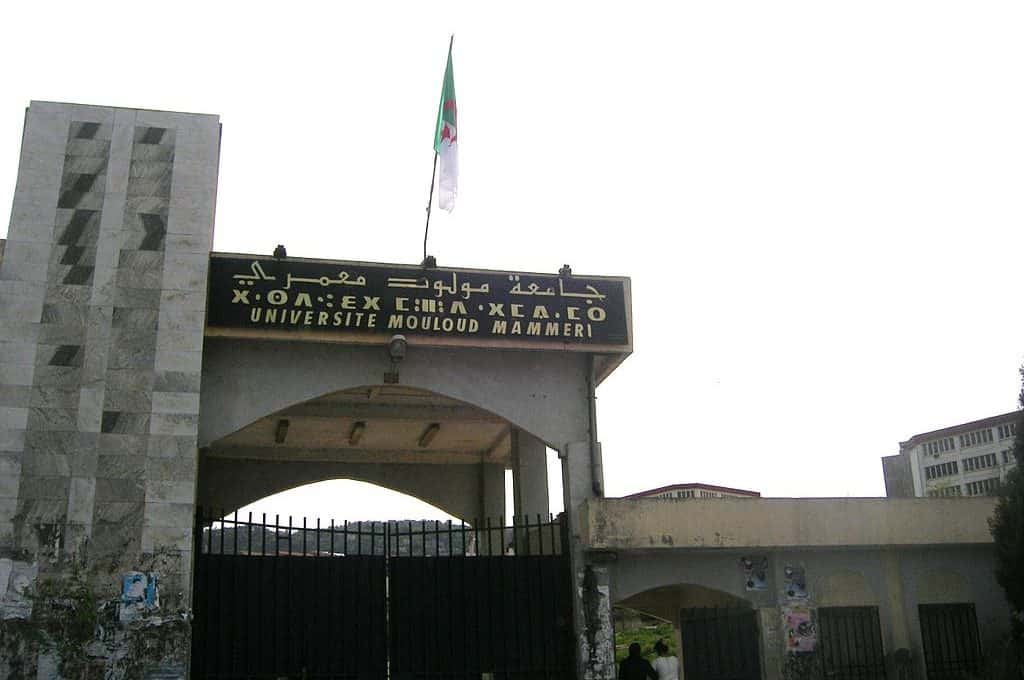
In the bustling souks of Oran, a merchant might call out in a dialect laced with Spanish-derived words. Travel east to Constantine, and you’ll hear the rapid, punctuated rhythms that locals describe as distinctly Constantinois. Move south to the Aurès Mountains, and Chaoui speakers switch seamlessly between their indigenous Amazigh (Berber) tongue and Arabic, whilst in Algiers, the capital’s cosmopolitan dialect serves as a linguistic crossroads where centuries of cultural exchange have left their mark.
This is Algeria’s extraordinary linguistic landscape—a living testament to the country’s complex history and cultural richness.
A Patchwork of Regional Voices
Algeria’s spoken Arabic, commonly called Darija, is far from uniform. The country’s dialects reflect distinct historical and geographical influences, creating what linguists describe as a continuum of variation that tells the story of Algeria’s past.
In Algiers, the capital’s dialect has evolved into something of an urban koine—a common tongue born from the mixing of various dialects in this cosmopolitan hub. Here, speakers preserve the deep ‘q’ sound of Classical Arabic whilst some of their counterparts in other regions have shifted it to a softer ‘g’. The Algiers accent, with its blend of urban pre-Hilalian Arabic and influences from Andalusi immigrants, has gained prominence due to the capital’s media and cultural influence.
Western dialects, particularly around Oran, possess their own distinctive character. Historical Spanish occupation has left its mark—residents still use Spanish-derived terms like sabbat (from zapato, meaning shoe), whilst the western dialects have maintained an openness to foreign vocabulary that reflects centuries of Mediterranean contact.
In eastern Algeria, particularly around Constantine and Annaba, dialects share similarities with neighbouring Tunisian Arabic. The word barsha (meaning ‘a lot’), borrowed from Tunisian Arabic, contrasts with the central Algerian bizzaf—illustrating how geography shapes linguistic choices.
Perhaps most striking are the isolated dialectal pockets scattered across Algeria’s diverse landscape. In Jijel, locals speak an immediately recognisable variant where the ‘q’ sound becomes ‘k’ and ‘t’ sounds take on an affricated quality—features that likely reflect historical Kabyle influence in the region. These variations remind us that Algeria’s mountains and valleys have long served as guardians of linguistic diversity.
The Amazigh Heritage: Languages of the Land
Algeria’s indigenous Amazigh languages—including Kabyle (Taqbaylit), Chaoui (Tachawit), and Mozabite (Tumzabt)—represent an unbroken link to North Africa’s pre-Arab past. These languages, spoken by an estimated 25–30% of Algeria’s population, are not merely dialects but distinct tongues with their own grammatical structures and rich oral traditions.
Kabyle, with around three million speakers in the mountainous Kabylie region east of Algiers, stands as the most widely spoken Berber language in Algeria. Its speakers have maintained a vibrant cultural identity, with Kabyle music, poetry, and literature serving as vehicles for both artistic expression and identity preservation.
The Chaoui people of the Aurès Mountains speak Tachawit, sharing some features with Kabyle whilst maintaining distinct vocabulary and phonological characteristics. Meanwhile, in the M’zab Valley around Ghardaïa, the Mozabite community has preserved Tumzabt with remarkable tenacity, using it in daily life whilst also maintaining fluency in Arabic.
Tamazight was recognised as national in 2002 and as national and official in the 2016 constitution; an organic law in 2018 created the Algerian Academy for the Tamazight Language.
Layers of History in Every Word
Algeria’s dialects serve as archaeological sites of language, preserving traces of every civilisation that has touched this land. The eleventh-century Hilālī migrations and other Arab tribes brought Bedouin dialects that would reshape the linguistic landscape, introducing features like the ‘g’ pronunciation of ‘q’ and simplified vowel systems that characterise much of today’s Algerian Arabic.
The Andalusi refugees who fled the Spanish Reconquista brought their own linguistic gifts, enriching urban dialects with new vocabulary and pronunciation patterns. Ottoman rule (1518–1830) left hundreds of Turkish-origin items in Algerian Arabic — some estimates puts Algeria’s total around 600+. Terms like dolma (stuffed vegetables) and countless administrative and military terms such as bey, dey and aghā reflect three centuries of Ottoman presence.
French colonisation (1830–1962) introduced perhaps the most visible foreign influence. From bureau becoming biro (office) to hôpital becoming sbīṭār (hospital), French vocabulary permeates daily Algerian speech. Today, educated urban Algerians effortlessly code-switch between Arabic and French, sometimes within a single sentence—a practice so naturalised that many speakers barely notice the transition.
Even the way Algerians pronounce French has acquired distinctly local social meanings, as explored in our article on why Algerian elites roll their French r.
The Art of Linguistic Navigation
What emerges from this complexity is not chaos but remarkable communicative fluency. Algerians navigate what linguists describe as multiglossia—managing dialectal Arabic for daily life, Modern Standard Arabic for formal contexts, and French for technical and professional domains.
This linguistic versatility extends to code-switching patterns that reflect both practicality and social positioning. An Algerian might discuss family matters in dialect, conduct a business meeting largely in French, and cite a Quranic verse in Classical Arabic—all whilst peppering their speech with Turkish-origin intensifiers and Berber-derived terms for local phenomena.
The Digital Revolution and Dialect
Interestingly, social media has created new spaces for dialectal expression. Young Algerians increasingly write in dialect using Latin script and numbers, reflecting a wider ‘Arabizi’ trend that uses numerals like ‘3’ for ع online. This represents a subtle but significant shift towards greater acceptance of dialect in written contexts.
Living Languages in a Changing World
Algeria’s linguistic diversity faces modern pressures. Urban migration creates linguistic melting pots where different dialects converge, whilst globalisation introduces new vocabulary and communication patterns. Some smaller Berber-speaking communities experience language shift towards Arabic, although it’s fair to say recognition aims to counter this shift.
Yet this linguistic ecosystem shows remarkable resilience. Algerian Arabic continues to evolve, absorbing new influences whilst maintaining its distinctive character. Berber languages find new expressions through media and education, and the interplay between languages creates constantly shifting patterns of use and meaning.
A Tapestry, Not a Hierarchy
Perhaps most remarkably, Algerians have transformed what could be linguistic fragmentation into cultural wealth. Rather than viewing their multilingual reality as problematic, many embrace it as an asset—a reflection of Algeria’s position at the crossroads of Africa, the Arab world, and the Mediterranean.
Understanding Algeria’s spoken dialects means appreciating them not as “corruptions” of some ideal form, but as robust, living languages shaped by centuries of human movement, cultural exchange, and adaptation. They carry the voices of Berber ancestors, Arab settlers, Ottoman administrators, and French colonisers, all woven into the everyday speech of modern Algerians.