

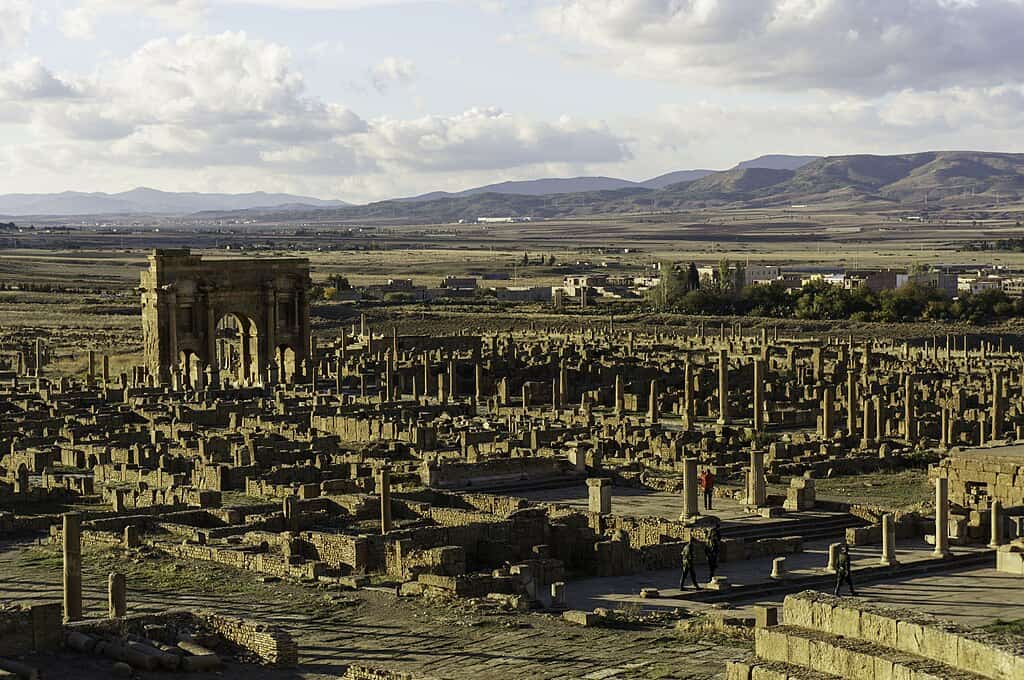
From the Mediterranean coast to the Aurès Mountains, Algeria holds one of North Africa’s most remarkable collections of Roman ruins—a testament to centuries when this land formed the prosperous heart of Rome’s African provinces. These ancient cities, many UNESCO World Heritage Sites, offer visitors an extraordinary window into how Roman civilisation adapted to and thrived in North African landscapes. These were never Roman set-pieces dropped onto empty land: they sat within long-lived Amazigh landscapes, where local elites financed buildings, served on councils, and shaped urban life across the Roman and the late antique period.
The Crown Jewels of Roman Algeria
Timgad: The Pompeii of Africa
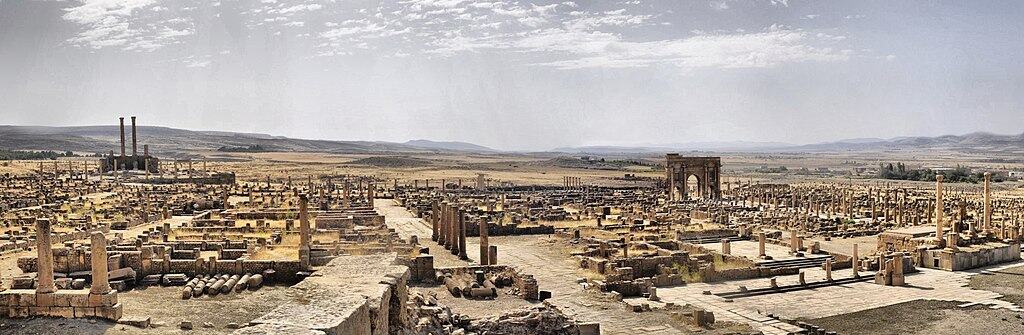
Founded by Emperor Trajan in AD 100 as a colony for military veterans, Timgad (ancient Thamugadi) stands as one of the best-preserved examples of Roman town planning anywhere in the former empire. Its perfectly orthogonal street grid, with the cardo and decumanus intersecting at right angles, remains clearly visible today—wheel ruts from ancient carts still mark the paved streets.
The city’s Arch of Trajan, built of golden sandstone around AD 100–115, continues to command the western approach. Perhaps most remarkably, Timgad’s theatre, which once seated about 3,500 spectators, remains in such excellent condition that it still hosts occasional performances. The site earned UNESCO recognition in 1982 for offering what the organisation calls a “compelling image of the grandeur of Rome on Numidian soil.”
Djémila: Mountain Majesty
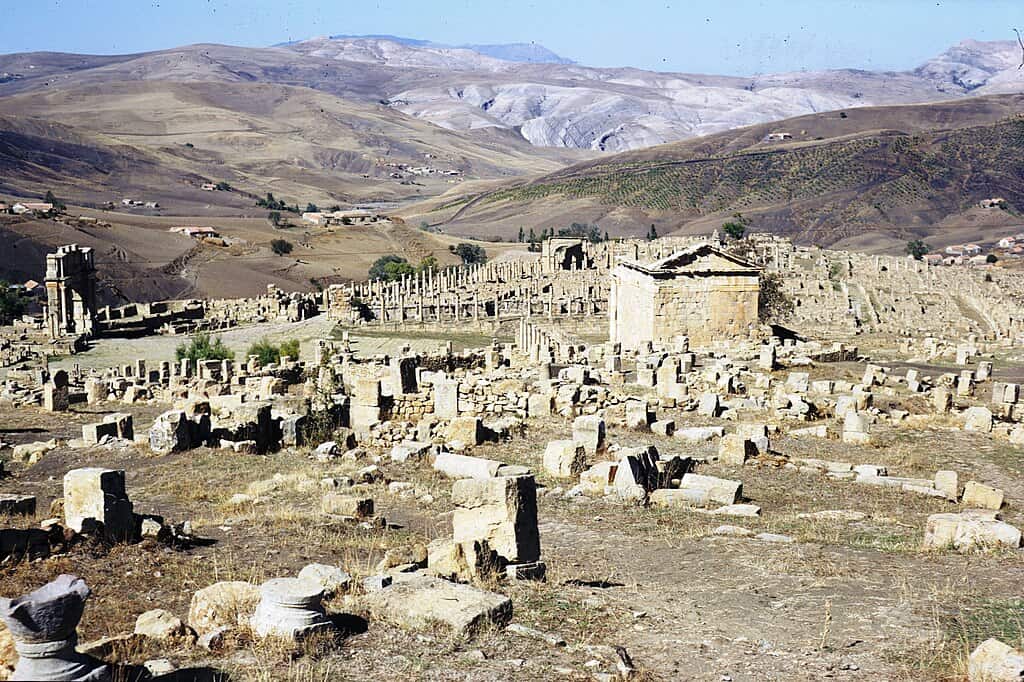
Perched 900 metres above sea level between river gorges, Djémila (ancient Cuicul) showcases how Roman architects brilliantly adapted their urban designs to challenging terrain. Founded around AD 96, this mountain city demonstrates what UNESCO describes as the unique adaptation of Roman architecture to a mountain environment.
The site preserves two forums—the original and the later Severan Forum—connected by the still-standing Arch of Caracalla (AD 216). Its theatre, built into the hillside with views of surrounding green mountains, remains one of the most picturesque ancient performance spaces in North Africa. The Christian quarter, with its basilicas and baptistery from the 4th–5th centuries, illustrates the city’s evolution from pagan Rome to Christian North Africa.

Tipasa: Where Phoenician Meets Roman
On the Mediterranean coast about 60 kilometres west of Algiers, Tipasa presents a unique fusion of civilisations. Beginning as a Phoenician trading post in the 6th century BC, it later became a strategic Roman port under Emperor Claudius. What makes Tipasa extraordinary is this layering of history—Phoenician tombs, Roman civic buildings, and early Christian basilicas stand side by side among pine trees overlooking the azure sea.
The site includes the ruins of the Great Basilica, once measuring 48 metres in length with five aisles, and hundreds of stone sarcophagi in surrounding necropolises. Despite coastal erosion and urban development pressures, Tipasa maintains what UNESCO describes as vestiges of Phoenician, Roman, paleo-Christian and Byzantine structures all visible in one location.
Military Might and Cultural Life
Lambaesis: Legion Headquarters
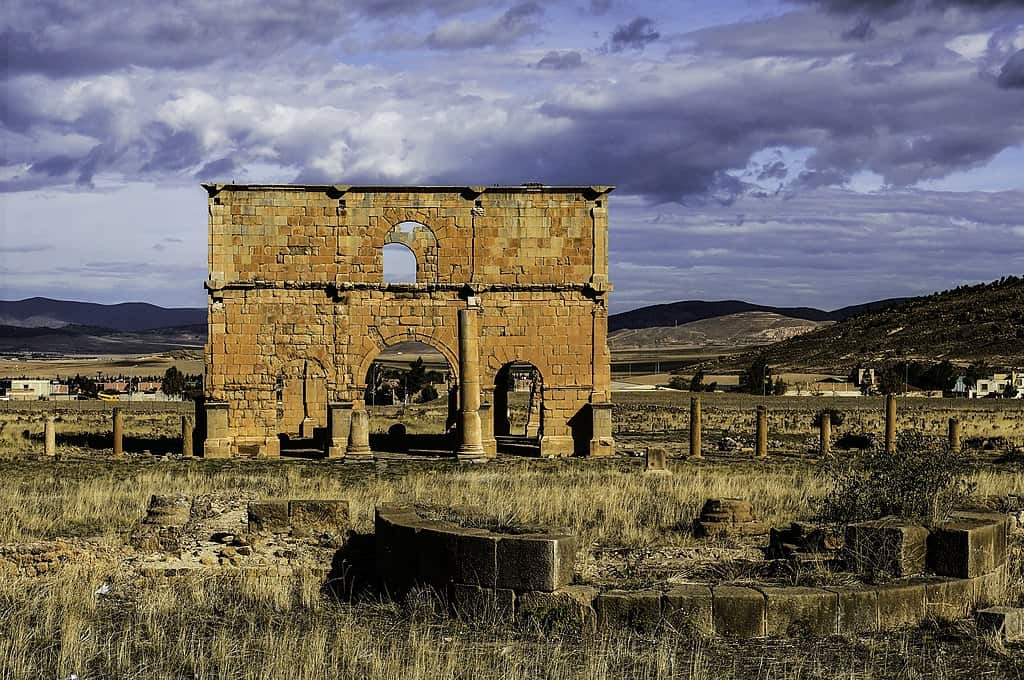
The ruins of Lambaesis (modern Tazoult) tell a different story—that of Rome’s military presence in North Africa. Founded around AD 123–129 as headquarters for the Third Augustan Legion (Legio III Augusta), it served as both a massive military base and provincial capital of Numidia.
The legion’s principia (headquarters building) still rises 15 metres high, its southern façade featuring a grand peristyle courtyard with massive Ionic columns. Over 2,500 Latin inscriptions have been discovered here—more than at most other Roman sites—including military records and even an address by Emperor Hadrian to the troops carved in stone.
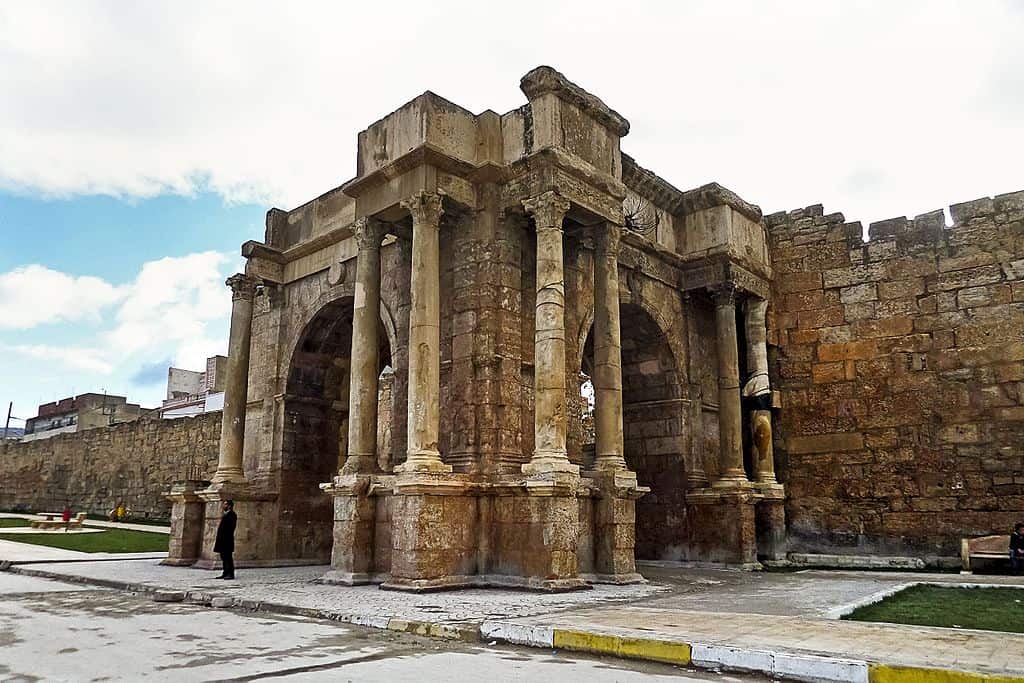
Theveste: Guardian of the Frontier
Theveste (modern Tébessa) began as a military outpost around AD 75, briefly hosting the Third Legion before it moved to Lambaesis. Its Arch of Caracalla, a four-way triumphal arch (tetrapylon) erected c. AD 211-214, remains exceptionally well-preserved with all four identical facades intact.
The city’s Great Basilica of St. Crispina, one of the largest 4th-century Christian basilicas in Africa, was later fortified by Byzantine general Solomon in 535 AD with walls that still stand today. These Byzantine fortifications, which incorporated the Arch of Caracalla as a city gate, demonstrate how successive civilisations built upon Roman foundations.
Hidden Treasures
Beyond these famous sites, Algeria preserves numerous lesser-known Roman sites of high historical interest:
Hippo Regius (modern Annaba), where St. Augustine served as bishop, preserves one of North Africa’s largest forums (76 × 43 metres) with marble columns still standing upright.
Madauros (modern M’daourouch), birthplace of the writer Apuleius and where Augustine studied as a young man, combines a typical Roman city grid with later Byzantine fortress walls—a monument to both Roman architecture and North African intellectual life.
Tiddis, a small hilltop settlement near Constantine, shows how Romans adapted their standard town planning to a clifftop location, complete with a Temple of Mithras carved into the hillside.
Thubursicum Numidarum (Khemissa) boasts what many consider one of North Africa’s most beautiful Roman theatres, its tiered seating still intact against a mountainous backdrop.
Preservation for the Future
These sites face ongoing challenges. Coastal erosion threatens Tipasa’s seaside ruins, urban development presses against site boundaries, and natural weathering takes its toll on exposed monuments. The Algerian authorities, working with UNESCO and international partners, continue conservation efforts—from maintaining the archaeological park at Tipasa to ongoing research at Lambaesis using modern techniques like geophysical surveys.
Yet much remains remarkably preserved. The dry climate and, ironically, centuries of burial under desert sand have protected many structures. Timgad’s colonnaded streets, Djémila’s forums, and Theveste’s monumental arch stand as testament to both Roman engineering and ongoing preservation efforts.
A Living Heritage
Walking these ancient streets—whether through Timgad’s perfect grid, up Djémila’s terraced slopes, or among Tipasa’s seaside ruins—offers more than archaeological interest. These sites reveal how Roman, Berber, Punic, and later Christian and Byzantine cultures blended to create a uniquely North African civilisation.
From grand triumphal arches to intimate mosaics, from military fortresses to Christian basilicas, Algeria’s Roman ruins tell the story of a cosmopolitan ancient world where cultures met, merged, and thrived. They remain hidden gems of antiquity—windows into a past that shaped the Mediterranean world and continues to inspire those who walk among these ancient stones.