

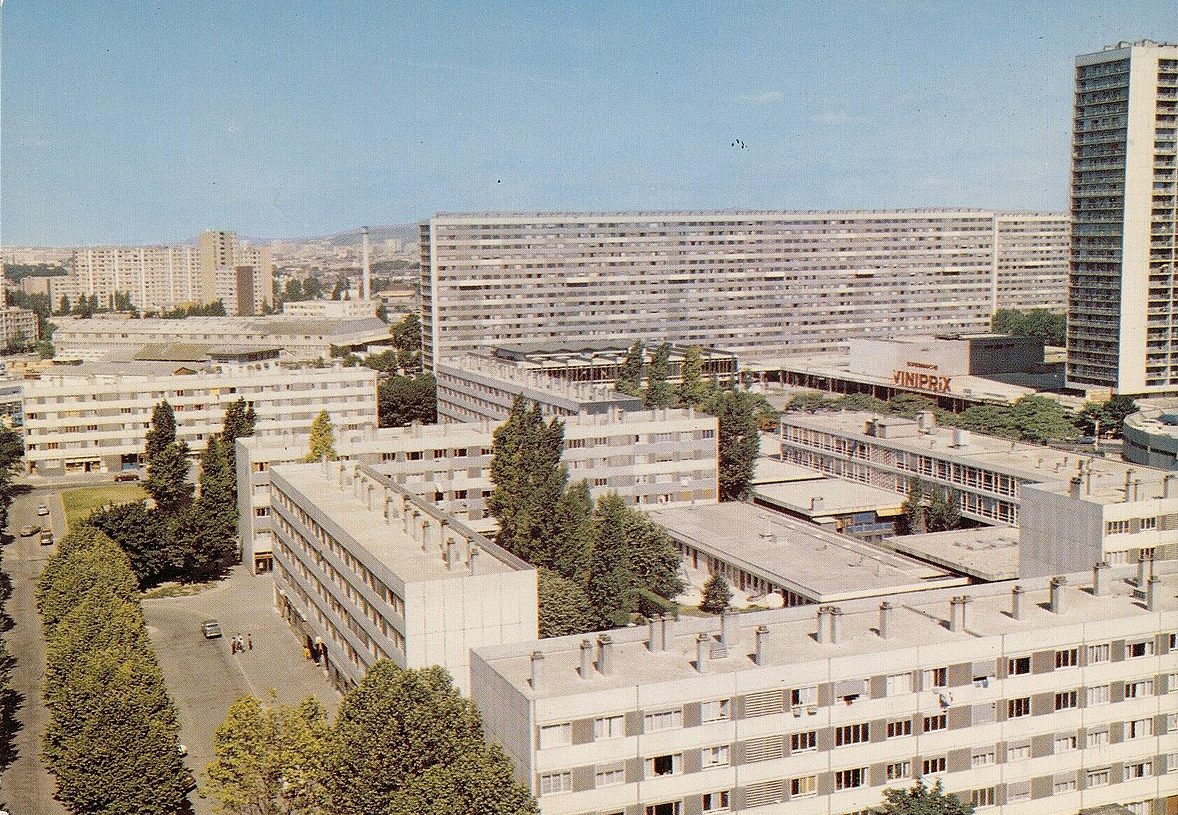
There is a French word that many people in France recognise, that no census has ever counted, and that many of the people it describes increasingly decline to use. The word is beur. It belongs less to demography than to a particular stretch of French history—the moment when the children of Algerian immigrants, born in France and formally French, forced the country to reckon with the colonial afterlife of Algeria inside its own cities (Although French usage often applies beur to Maghrebi-origin people more broadly, Algeria sits at the centre of the term’s history because of the scale, depth and political weight of Algerian migration to France). To understand the beur is to follow one of the oldest and most consequential threads tying Algeria to the wider world: not a connection invented for the occasion, but one that was already there, running through the suburbs of Paris, Lyon, and Marseille for more than a century.
A word made by turning another one inside out
Beur is the most familiar example of verlan, a French slang process that reverses the syllables of a word—arabe becomes beur, and in a later, second-round inversion, rebeu. French dictionaries define beur as a verlan form of arabe, used for young people of Maghrebi origin born in France to immigrant parents; historical lexical sources also show the expression “génération beur” circulating in the mid-1980s. English-language writing often narrows “beur” to the children of Algerian immigrants specifically; French usage tends to be broader, covering Maghrebi origin more generally.
The word is both useful and unstable. Useful, because it names a recognisable Franco-Maghrebi social and cultural formation. Unstable, because many people it might describe prefer other labels, and because public conversation now moves easily between Franco-Algérien, Maghrébin, banlieue, Muslim identity or perceived Muslimness, Amazigh (Berber), and racisé, depending on context. It is best treated as a historical and analytical key rather than a claim about how anyone identifies today. The feminine form beurette is especially sensitive today and is often avoided outside critical discussion because of its sexualised and derogatory associations.
Why the story starts long before the word
Migration from Algeria to mainland France is documented from the late nineteenth century, with early flows often tied to Kabyle labour. It intensified after the Second World War, when France needed workers and, from 1946, Algerians gained freedom of movement within the French Union. From an Algerian perspective, this was not simply migration to a foreign country; it was movement across a former imperial space whose legal, economic and emotional ties had been forged under colonial rule. But mobility did not bring equality. Algeria had been folded into France juridically while colonial rule withheld equal citizenship from most Muslim Algerians.
That entanglement deepened during the Algerian War (1954–1962), when migration, policing, and surveillance became tightly linked. The violent repression of Algerian demonstrators in Paris on 17 October 1961—later acknowledged by the French presidency—remains one of the defining wounds of Franco-Algerian memory. Independence in 1962 did not end the relationship so much as reset its terms. The Franco-Algerian agreement of 27 December 1968 governed circulation, residence, and work for Algerian nationals, and after labour immigration was suspended in 1974, family reunification turned a largely male workforce into a settled population with children born in France.
It was those children who gave the word its charge. The turning point was the 1983 March for Equality and Against Racism, often labelled by the French media as the “Marche des Beurs” — a nickname that became famous but did not fully capture the marchers’ own broader demand for equality, and fed organisations such as SOS Racisme and the feminist Nanas Beurs. The beur story, in other words, is not simply an immigrant story. It is a postcolonial citizenship story, in which people born French inherit the social consequences of colonial hierarchy, labour migration, and urban segregation.
A population that resists counting
Because France runs no general ethnic census, “beur” cannot be measured directly. The cleaner approach is to separate Algerian-born immigrants from descendants of Algerian immigrants born in France. On the strongest official evidence, Algeria was the most common single country of birth among immigrants in France, accounting for 12.6% of roughly eight million immigrants—around one million people. Separately, France had 1.243 million descendants of Algerian immigrants, defined as people born in France with at least one immigrant parent—the largest single national-origin group among descendants of immigrants, according to INSEE.
Taken together, those two lenses imply a conservative floor of more than two million people with first- or second-generation Algerian links. Broader estimates run higher, since they may include mixed families and third-generation descendants. One sign of how much the picture is shifting: In the most recent INSEE presentation of these data, around half of Algerian-origin descendants had only one immigrant parent. For French nationals registered with French consular services in Algeria, the figure was 33,230 in 2025, but this is a consular-registration figure rather than a reliable measure of Algerian-origin French people living in Algeria.
Incorporation and inequality, side by side
The socioeconomic record is mixed, and it must be read with care, because descendants are younger on average than the wider population. In 2024, descendants of Algerian immigrants aged 15–64 had an employment rate of 47.4% and an unemployment rate of 18.1%, against 71.5% and 6.4% for people without migratory ancestry. The gap reflects both a youth effect and a genuine inequality effect.
Housing tells a similar story of urban concentration. In 2019–2020, 24% of descendants of Algerian immigrants lived in a quartier prioritaire de la politique de la ville (a designated priority urban neighbourhood), 44% in social housing, and 21% in overcrowded housing—well above the national figures.
Discrimination is where the evidence is starkest. A large correspondence test found applicants with names suggesting North African origin were 31.5% less likely to be contacted by recruiters, while a separate INSEE-linked study found 27% fewer positive responses. On policing, the Défenseur des droits reported in 2024 that young men perceived as Black, Arab, or Maghrebi were four times more likely than the rest of the population to be stopped by police, and 12 times more likely to undergo a more intrusive check. These figures do not isolate Algerian origin from other North African origins, but they describe the terrain on which many Algerian-origin lives are lived.
Where the word became productive
If “beur” carried a weight of grievance in politics, in culture it also became a source of visibility and authority. Language sits at the centre of this. In France’s first Trajectoires et Origines survey, 72% of descendants of Algerian immigrants said their parents had spoken to them in both French and another language in childhood, mainly Arabic or Amazigh—yet 95% described themselves as French by birth. The result is identity layered rather than split in two.
That layering produced an output disproportionate to the community’s size. In literature, Azouz Begag turned a childhood in the shantytowns of Lyon into national writing with Le Gone du Chaâba, and Faïza Guène, the daughter of Algerian immigrants, became one of the best-known contemporary voices of suburban France with Kiffe kiffe demain. In film, Mehdi Charef’s Le thé au harem d’Archimède was selected at Cannes in 1985 and is widely treated as the breakthrough of beur cinema, a strand the Library of Congress now recognises as part of Francophone film.
Music carried Franco-Algerian and Maghrebi cultural expression especially far into the French mainstream. Rachid Taha and the band Carte de Séjour reworked Charles Trenet’s “Douce France” into a knowing comment on a multicultural, contested nation. And raï, which originated in Oran, became one of the great diasporic sounds linking Algeria and France, carried abroad by artists such as Khaled and Cheb Mami.
A word that is ageing, an identity that is not
The label itself is growing old. Younger generations often prefer rebeu, Franco-Algerian, Amazigh, neighbourhood-based identities, or simply French. Family structures, meanwhile, are increasingly mixed: by 2019–2020, two-thirds of descendants of immigrants who were in couples lived with someone who was neither an immigrant nor a descendant of one.
Yet the conditions that once made the word politically powerful—urban concentration, perceived foreignness, and discriminatory policing—have not vanished. This is why many scholars, journalists and activists have read flashpoints from the 2005 revolts to the unrest after Nahel Merzouk’s killing in 2023 through the longer frame of equality, policing and belonging. The likely future is therefore not disappearance but pluralisation: less a single compact community, more a set of overlapping French, Algerian, Muslim, Amazigh, local, and generational identities.
That is perhaps the truest measure of the beur story. A word coined by turning arabe inside out came to name a generation, and that generation, in turn, helped reshape how France reads, watches, and listens. The connection between Algeria and France was never created by the word. The word only made it impossible to ignore.