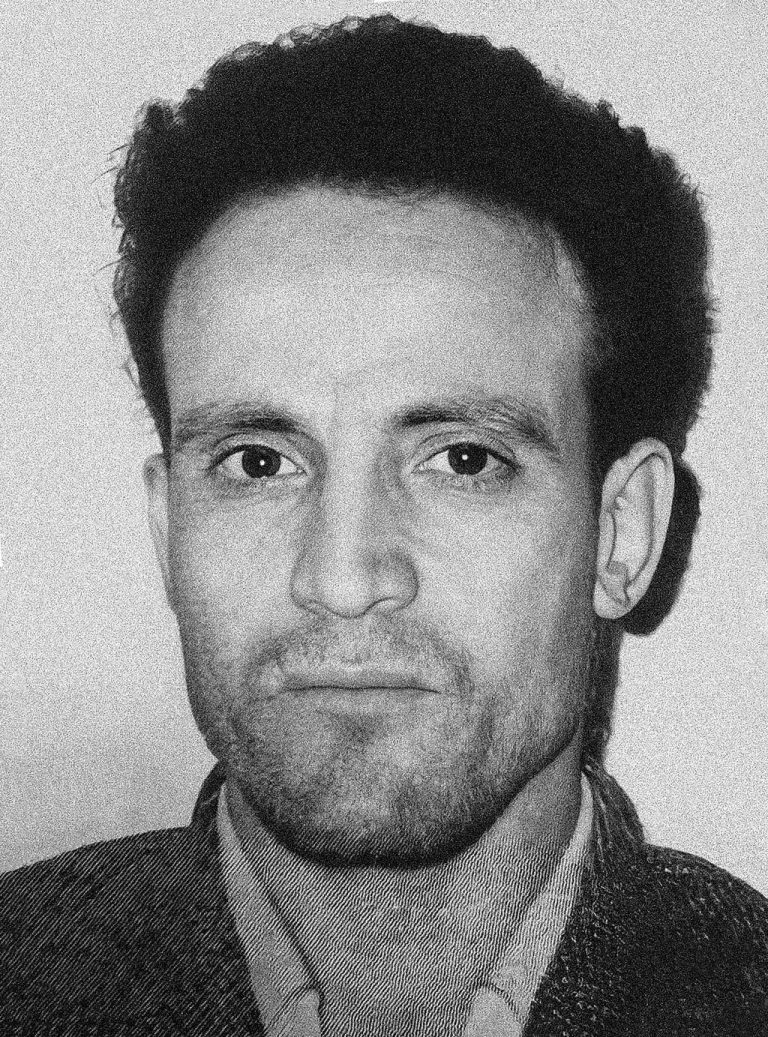
There is a particular kind of writer who becomes inseparable from the history that made them, and Kateb Yacine is one of Algeria’s clearest examples. Best known for his 1956 novel Nedjma, he spent four decades moving between poetry, prose, journalism and theatre, using each form to make the wounds of colonial Algeria visible in the language itself — broken chronology, overlapping voices, mythic ancestry, and a refusal to let the nation settle into a single tidy story.
He was, in the words that fit him best, both a canonical novelist and a writer who resisted the limits of the canon. Nedjma is widely treated as a foundational text of the Algerian and wider Maghrebi novel in French, and the Cambridge History of the Novel in French devotes sustained attention to it. Yet Yacine spent much of his career resisting the comfort of that canon. He called French a butin de guerre — a “spoils of war” — and grew increasingly distrustful of the literary respectability that came with writing in it, eventually turning to popular theatre performed in Algerian Arabic and addressed to workers, students, rural communities and migrants rather than primarily to the Francophone literary establishment.
A life shaped by Sétif
Yacine was born in Constantine in 1929 and died in Grenoble on 28 October 1989. His precise birth date remains disputed. He came from an educated Algerian Muslim family and began with Qur’anic schooling before entering the French colonial system, eventually studying at the collège in Sétif. It was there, in May 1945, that the defining rupture of his life took place. Yacine joined the demonstrations of 8 May 1945, which were followed by mass repression across Sétif, Guelma, Kherrata and the surrounding region. He was arrested and never returned to a normal path through the colonial school system. Accounts differ over whether he was detained for two or four months but all agree that Sétif marked the point at which Yacine’s politics and his writing became inseparable.
The years that followed took him through a 1947 lecture on Emir Abdelkader in Paris, journalism at Alger Républicain between roughly 1949 and 1951, and long stretches in France during and after the war of independence. Politically, he moved through nationalist circles linked to the PPA before drawing closer to the Algerian Communist Party and the broader anti-colonial left, maintaining solidarity with liberation movements from Vietnam to Palestine throughout his life.
Nedjma and the broken archive
Nedjma follows four men — Mustapha, Lakhdar, Mourad and Rachid — whose lives in colonial Algeria orbit a single elusive woman who is at once a person, an obsession, a fractured genealogy and a figure frequently read as an emblem of Algeria. Any plot summary, though, risks flattening what makes the novel matter: it refuses linear development, lets scenes recur out of order, and splinters its narration across multiple voices, so that the nation appears not as a finished object but as a broken archive of desire, ancestry and violence.
Early French critics were unsettled by this refusal of chronology — Maurice Nadeau famously complained that the novel confused past, present and future — and the IMA dossier describes its 1956 publication as landing on the literary field like a “rhetorical bomb” in the middle of what official French discourse still euphemistically called “the events in Algeria”. That mixture of prestige and bewilderment never entirely left Yacine’s reputation: he was consecrated early as a major writer, yet also frequently treated as difficult, opaque, or reducible to this one masterpiece.
For English-language readers, Nedjma remains the obvious starting point. Richard Howard’s translation first appeared in 1961 and was reissued by the University Press of Virginia in 1991.
From the novel to the stage
Yacine’s later work has sometimes been treated as a retreat from literary ambition into something simpler. It reads more accurately as a change of medium and audience rather than a loss of seriousness. His 1959 theatre cycle Le Cercle des représailles — gathering Le cadavre encerclé, La Poudre d’intelligence, Les Ancêtres redoublent de férocité and Le Vautour — already tests in dramatic form what Nedjma does in prose: collective voices, historical violence and myth standing in for straightforward narrative. An English translation of La Poudre d’intelligence, by Stephen J. Vogel, was published as Intelligence Powder in 1985.
By the 1970s, Yacine had moved decisively toward popular theatre performed in Algerian Arabic, beginning with Mohamed, prends ta valise in 1971. These later plays turned to migrant labour, humiliation and identity in the space between Algeria and France, favouring humour and directness over the dense symbolic layering of his earlier prose. He went on to build a workers’ theatre troupe that relocated to Sidi Bel Abbès in 1978, by which point the post-independence Algerian state had begun treating his work with suspicion. After ACT lost the support of the Ministry of Labour in 1977, Yacine became director of the regional theatre in Sidi Bel Abbès in 1978. The IMA dossier describes the move as a form of internal exile, while later research documents the censorship, media neglect and institutional obstacles faced by the troupe.
Language as both wound and weapon
Yacine’s relationship with French was never politically neutral. “J’écris en français pour dire aux Français que je ne suis pas français” — “I write in French to tell the French that I am not French” — is the line most often quoted alongside his butin de guerre formula, and together they capture a writer who treated the coloniser’s language as a captured instrument rather than a home. That stance shaped his prose: in Nedjma and the later, more fragmented Le Polygone étoilé (1966), syntax is pressured, chronology fractured, and lyrical, mythic and documentary registers mixed without warning.
After independence, Algeria’s Arabisation policies sought to reverse the institutional dominance of French, but they did not settle the country’s multilingual tensions. Yacine supported decolonisation while resisting the replacement of one linguistic monopoly with another. This helps explain his commitment to Algerian Arabic, his support for Tamazight and his supervision of translations, and his preference for multilingual performance over a single official idiom.
Why he still matters
Yacine’s influence on Algerian, Maghrebi and Francophone literature is substantial, but different critical traditions emphasise different parts of his career. Francophone literary histories have often centred Nedjma, while Algerian theatre scholarship gives greater prominence to his work with Action Culturelle des Travailleurs and the popular audiences he sought.
Arabic reception also began early. A translated review of Nedjma appeared in the Beirut journal al-Ādāb in 1957, and Arabic translations of Le Cadavre encerclé and Les Ancêtres redoublent de férocité were published in Damascus in 1962. More recent Arab commentary, however, has argued that his reputation remains disproportionately tied to Nedjma.
Yacine’s English-language bibliography remains comparatively limited. Beyond Nedjma and Intelligence Powder, major works such as Le Polygone étoilé, L’Homme aux sandales de caoutchouc and the later plays collected in Boucherie de l’espérance lack complete, readily available English translations.
What endures across all three traditions is the same restless quality: a writer who treated the nation, like the woman at the centre of his most famous novel, as something never fully possessed — always being argued over, rewritten, and reclaimed.