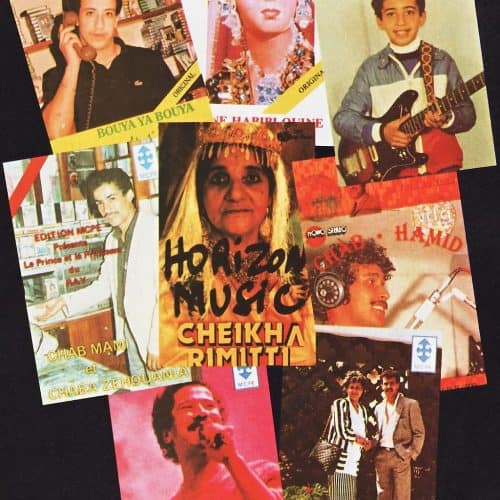
Algerian chaâbi—Arabic الشعبي, literally “popular” or “of the people”—is the great urban art music associated above all with Algiers, its Casbah, and the neighbourhoods that cluster around them. It is built on vernacular poetry, modal melodic practice inherited from the city’s Arab-Andalusian tradition, improvisation, and a distinctive twentieth-century ensemble led by voice and mandole (a large, long-necked Algerian string instrument related to the mandolin). To hear chaâbi performed well is to encounter something that sounds simultaneously ancient and modern: old poems set to an instrumental palette that has absorbed the banjo, the piano, and the goblet drum, yet governed by principles of melody and rhythm that predate all three.
The genre grew during the first decades of the twentieth century from an older musical world that included the sanʿa school of Algerian Arab-Andalusian music, religious madīḥ (devotional praise singing), urban ʿarūbī (an urban Algerian song tradition drawing on vernacular poetry and Andalusi musical practice), and the vernacular melḥūn (vernacular Maghrebi sung poetry) poetic tradition. Rather than simply preserving those traditions, musicians reshaped them for a modern colonial city: new instruments were introduced, the ensemble became louder and more flexible, commercial recordings and radio created professional stars, and new performance settings, recordings and later compositions increasingly connected this inherited repertory with the experiences of ordinary urban Algerians. Research published by Algeria’s CRASC describes chaâbi as emerging amid transformations of Algiers’ traditional ensembles that produced new sonorities, creating a genre related to Andalusi music but more modern and freer in composition.
Origins: two histories at once
Chaâbi makes most sense when viewed as the product of two histories happening simultaneously: a very old North African urban musical inheritance and the extremely modern conditions of twentieth-century Algiers.
The classical tradition of Algiers is usually called sanʿa (الصنعة). Chaâbi did not copy its full nūba suites (extended multi-movement compositions in the Arab-Andalusian classical tradition) wholesale, but absorbed melodic modes, instrumental habits, terminology, and ways of shaping a performance from this sophisticated urban environment. Alongside sanʿa stood madīḥ, ʿarūbī, and popular poetic repertoires. Recent Algerian scholarship presents chaâbi’s emergence as a process of both transformation and continuity: CRASC research describes the new genre as closely related to Andalusi music, while a 2026 open-access Algerian study examines the structural continuum between the Algiers nūba sanʿa and refda chaâbi (a linked sequence of chaâbi pieces forming part of a longer performance).
The poetic foundation was especially important. A qṣīda (also rendered qacida) is, in this context, a long poem whose verses provide the singer with both a narrative and an architecture for musical elaboration. Much of the prized repertory belongs to the North African melḥūn tradition: learned vernacular poetry, usually composed in varieties of Maghrebi Arabic rather than the formal Arabic of classical literary composition. This is one reason chaâbi can simultaneously sound musically elaborate and socially intimate—musically sophisticated melodies and modes carry words that listeners can experience as belonging to their own linguistic world. Algeria’s Cultural Heritage Portal separately catalogues poetry in classical Arabic, popular Arabic, and Tamazight, reflecting the wider multilingual literary environment surrounding Algeria’s musical traditions.
Jonathan Glasser’s The Lost Paradise: Andalusi Music in Urban North Africa, among the strongest English-language scholarly studies available for this background, traces the Andalusi musical culture of Algiers and Tlemcen from the late nineteenth century through colonialism, nationalism, and postcolonial heritage-making. That repertoire was already being consciously collected, taught, and defended as patrimony as the popular idioms that would feed chaâbi were developing around it.
El Anka and the codification of a genre
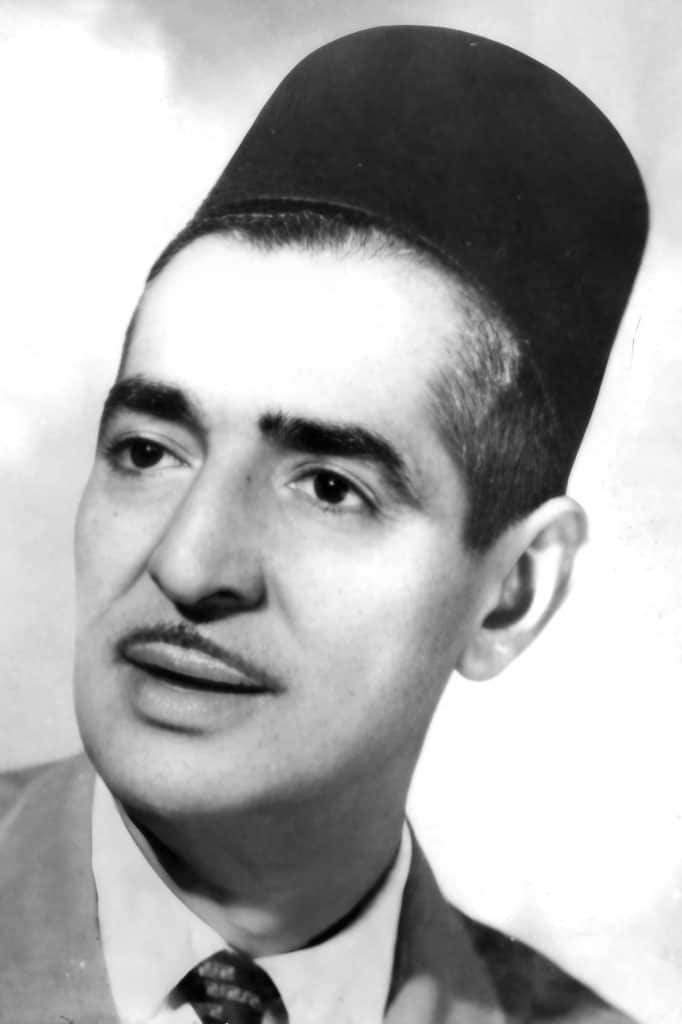
The pivotal figure was El Hadj M’Hamed El Anka (1907–1978)—singer, mandole player, arranger, and teacher. Although describing any single person as the “inventor” of an orally transmitted genre would be too simple, El Anka did more than anyone else to codify what became the classic chaâbi sound. Algerian research and cultural institutions credit him with changes in percussion, development of the enlarged Algerian mandole, introduction or consolidation of the banjo in the ensemble, an enormous qṣīda repertory, and—crucially—a teaching tradition.
His mentor, Mustapha Nador, an important early meddāḥ (a singer-reciter of devotional and vernacular poetry), represents the generation immediately before the genre’s canonical consolidation. A scholarly review of Abdelkader Bendamèche’s major El Anka biography dates Nador’s death to 1926 and presents that event as a decisive turning point in the younger musician’s career. The same institutional research credits El Anka’s subsequent innovations in derbouka, mandole, and banjo with transforming the ensemble.
Radio and records were essential to his rise. The Bibliothèque nationale de France’s authority record for El Anka states that his fame spread rapidly through commercial recordings from 1927 onward, while CRASC’s synthesis identifies the 1920s and especially 1928 as the years in which his radio presence established nationwide recognition.
In 1955, El Anka was appointed to teach chaâbi at the Municipal Conservatoire of Algiers—a milestone recorded by ENAG, the Algerian state publishing enterprise. The importance was not merely bureaucratic: pupils became recognised cheikhs (a respected master musician and teacher) in their own right, creating what later writers describe as an “Ankaouia” school and transforming personal apprenticeship into an identifiable lineage.
How chaâbi sounds
The easiest mistake for a newcomer is to listen for Western-style chord changes. In classic chaâbi, melodic mode, poetic delivery, and rhythmic development are generally more structurally important than harmonic progression. Its deeper grammar comes from the modal traditions shared with the Algiers sanʿa world, although chaâbi musicians simplify, rearrange, and popularise that heritage rather than reproducing a complete classical nūba.
In North African Andalusi practice, a mode is more than an octave scale. It includes characteristic melodic pathways, important notes, conventional phrases, cadential habits, and associations inherited through practice. French-language summaries commonly list modal names such as moual, zīdān, ʿirāq, ghrīb, jārka, raml al-māya, sīka, and mezmūm, with sāḥlī particularly associated with popular practice. Terminology and intonation are not completely standardised between masters, ensembles, and written sources, so mapping these modes onto Western major/minor scales is often misleading. As Glasser’s ethnographic work illustrates, such knowledge remains embodied in teachers, performers, and repertories rather than reducible to one standard theory chart.
There is likewise no single “chaâbi beat”. One of the genre’s most recognisable dramatic devices is the contrast between metrically free and metrically organised passages. An istikhbār—a metrically free improvisatory passage—can float freely, giving the singer or instrumentalist room to establish the mode. Once the measured song begins, derbouka and frame percussion articulate regular cycles, and a performance may gather momentum towards a livelier ending. Claims that chaâbi has a single characteristic time signature—such as 2/4 or 6/8—are too simplistic; rhythmic organisation varies across the genre.
One common long-form trajectory is better understood as a journey than as verse–chorus pop. The ensemble introduces the melodic world, perhaps with an Andalusi-derived prelude. The istikhbār follows, displaying the mode and the performer’s expressive authority. Then the main qṣīda enters, with the pulse becoming clearer and words taking structural control. Successive verses alternate with instrumental replies; ornaments and melodic variants accumulate. Percussion and ensemble grow more insistent, moving the gathering from concentrated listening towards communal rhythmic energy, before a closing section—often quicker and more emphatic—provides release after the long poetic exposition.
This is a template, not a mandatory score. Modern chaâbi songs may be far shorter. The chansonnette became an important vehicle for this change. Algerian Radio identifies Mahboub Safar Bati as a leading master of the chaâbi chansonnette, while its coverage of the national chaâbi festival places Bati, Boudjemaâ El Ankis, and El Hachemi Guerouabi among the masters who adapted the genre to modern musical currents without abandoning its identity. These shorter compositions became a hallmark of modern chaâbi.
The instruments

The characteristic chaâbi sound comes from an unusually cosmopolitan instrumental palette. The Algerian mandole, banjo, derbouka, frame drums, violin, viola, piano, ney, and qanun may all appear, with configurations varying by period and performer. CRASC’s review of Bendamèche’s research credits El Anka with major changes in percussion, the personal conception of the mandole, and the introduction of the banjo.
The mandole deserves special emphasis because it has become almost a visual shorthand for Algerian chaâbi. A large, flat-backed, steel-stringed plucked instrument with a longish neck and doubled courses, it has a stronger low-mid register and greater projection than a small European mandolin. It can carry introductions, interludes, and instrumental answers to the singer. Algerian institutional scholarship confirms that El Anka developed the enlarged instrument in collaboration with the Italian instrument make Jean Belido.
Ensemble size varies enormously. Chaâbi works with an intimate group—voice, mandole, banjo, and percussion can already create a recognisable texture—or with large orchestras including several strings, piano, qanun, and multiple percussionists.
Poetry, language, and life
The phrase “popular music” can suggest music designed primarily for dancing. Chaâbi is different: the poem is frequently the reason the song exists. In a classic performance, an expert listener may know the verses, their author, variant readings, and how different cheikhs have set them. The singer’s task is not simply to possess a beautiful voice but to make language live through timing, melodic emphasis, ornament, and dramatic pacing.
The importance of textual preservation is apparent in Bendamèche’s recent El Anka study, published by ENAG and presented publicly in early 2025: a work of more than 400 pages based on three years of research, the author’s own encounters with El Anka, and testimony from family, friends, and associates. CRASC’s scholarly review gives the volume as 454 pages with extensive French and Arabic sections, 69 photographs, 14 reproductions of record albums, and a discographical corpus—documenting a repertory of more than 150 qṣīdas.
Language in the classic poetic repertory is predominantly Algerian vernacular Arabic, often with old melḥūn vocabulary that can be considerably harder for today’s listener than everyday conversational Darja. Classical or religious Arabic enters devotional passages, formulae, and inherited texts. Amazigh (Berber) is also part of the wider history: CRASC describes Bendamèche’s corpus as documenting material in Arabic and Amazigh, and a further ENAG account notes 13 Kabyle songs in El Anka’s documented repertory.
This complicates any simple Arab-versus-Amazigh classification. El Anka himself came from a Kabyle family background while becoming the canonical figure of an Algiers-centred, predominantly Arabic-language urban form. CRASC research on musical change in Algiers specifically treats El Anka’s family and career as an example of the importance of Kabyle musicians within the emerging urban chaâbi world. Chaâbi consequently belongs to a city whose population and musicians have long moved across Arabic-speaking, Kabyle, Andalusi, Ottoman, Mediterranean, and French-colonial cultural worlds.
The most persistent lyrical subjects are love and separation, betrayal and loyalty, ageing and death, friendship, exile, poverty, religious devotion, praise, moral self-examination, satire, and the behaviour of neighbours, rivals, and hypocrites. But the repertory can also be playful. Hadj M’rizek’s “El Qahoua wel Atey”—”Coffee and Tea”—stages a poetic verbal contest between coffee and tea adjudicated by a qadi, turning everyday objects into characters in a witty moral-literary debate.
Chaâbi beyond the concert hall
Chaâbi has never belonged only to concert halls. It has lived at weddings, family celebrations, neighbourhood gatherings, cafés, religious occasions, radio studios, and festivals. A striking episode recounted in Bendamèche’s biography and discussed by CRASC illustrates the musician’s broader role: El Anka and colleagues, travelling to a wedding in Médéa, learned on arrival that the groom had died. That evening they instead performed devotional madīḥ dīnī (religious devotional praise). A cheikh was expected to know how to shift repertory and emotional register with the community’s circumstances.
The genre has also carried social and sometimes explicitly national meaning. CRASC cites El Anka’s Elhamdoulillah ma bqach istiʿmar fi bladna—approximately, “Praise be to God, colonialism is no longer in our country”—as a work that became sufficiently institutionalised to be rebroadcast for Independence Day commemorations. Yet chaâbi is far broader than “protest music”; moral reflection, romance, humour, mysticism, and everyday philosophy are just as fundamental.
Migration and diaspora: Ya Rayah
Migration created some of chaâbi’s most emotionally durable modern poetry. Dahmane El Harrachi (1926–1980), whose Paris-based career gave emigrant experience a particularly powerful voice, made displacement and the uncertainty of return central to modern chaâbi consciousness. His “Ya Rayah” addresses the traveller with the painful suggestion that wandering will not necessarily solve life’s problems and that return itself may become difficult. A study of Algerian song in France describes El Harrachi as one of the defining voices of Maghrebi emigration and traces the recurring themes of exile, regret, separation, and uncertain return in his work. An ARTE Radio documentary, drawing on historian and musicologist Naïma Huber-Yahi, dates “Ya Rayah” itself to Paris in 1971.
That song’s later history is itself a lesson in diaspora. Rachid Taha reworked “Ya Rayah” for a rock/electronic/global-pop audience, most famously on Diwân in 1998. ARTE Radio’s account describes the reinterpretation as becoming an international dance-floor success. Taha’s version is not “traditional chaâbi”, but it has probably introduced more non-Algerian listeners to a chaâbi composition than any other recording.
The diaspora dimension explains why Paris, Marseille, and other French cities belong to chaâbi’s social geography even though Algiers remains its historical centre.
Waves of renewal
Chaâbi’s history can be read as successive waves of renewal, even if no single periodisation needs to be treated as definitive. El Anka transformed the ensemble sound and established a pedagogical lineage; Dahmane El Harrachi made emigration and exile central themes; and later Mahboub Bati, Boudjemaâ El Ankis, and El Hachemi Guerouabi helped adapt chaâbi to changing popular tastes. Algerian cultural reporting continues to describe that capacity for renewal without loss of identity as one of the genre’s defining strengths. Almost every generation has argued about how much innovation chaâbi can absorb while remaining chaâbi.
Among the key figures across these waves:
El Hadj M’Hamed El Anka (1907–1978) — The central codifier and teacher. Transformed instrumentation, established a pedagogical lineage, and left a vast qṣīda repertory. The BnF records that his fame spread rapidly through commercial recordings from 1927 onward, making those early recordings important archival entry points into the formative chaâbi period.
Hadj M’rizek — An important early master who helped carry Algiers chaâbi into gala circuits elsewhere in Algeria, including Cherchell and the Mzab valley. The BnF catalogue includes the archival collection Le Chaâbi. 3: la chanson populaire algérienne, devoted to recordings by Elhadj Mrizek.
Dahmane El Harrachi (1926–1980) — Gave twentieth-century migration and diaspora experience a definitive chaâbi voice. BnF catalogues surviving Pathé material, including a 1965 recording, alongside other recordings and later reissues.
El Hachemi Guerouabi (1938–2006) — One of the most important figures in chaâbi’s modernising current. Algerian Radio places Guerouabi, alongside Mahboub Bati and Boudjemaâ El Ankis, among the masters who adapted chaâbi to newer musical currents while retaining its identity.
Amar Ezzahi (1941–2016) — Revered for an understated, intimate approach and for the extraordinary importance of informal and private circulation to his reputation. Much of his canonical status in Algeria rested on family celebrations and privately circulating tapes rather than a neat studio-album discography.
Boudjemaâ El Ankis (1927–2015) and Abdelkader Chaou (b. 1941) — Both prominent representatives of the modern chaâbi generation, combining established style with shorter, accessible songs.
The contemporary scene
Chaâbi today occupies an unusual position: it is simultaneously heritage, an active performance craft, and a vocabulary available for reinvention. A young musician can study old qṣīdas, learn a mandole technique tied to El Anka’s school, perform at a wedding, compete in a state-supported festival, and post a compact modern song online without necessarily seeing those activities as contradictory.
The Festival Culturel National de la Chanson Chaâbi remains one of the clearest institutional mechanisms for transmission. Algérie Presse Service documented its fifteenth edition, held from 9 to 12 March 2026 at Algiers’ Palais de la Culture Moufdi-Zakaria, as a competition intended in part to support and promote young chaâbi talent. Female participation is also visible in the contemporary scene: the 2025 national festival included Sarah Benmessai among its competitors, while APS described Naima Dziria in August 2026 as one of the major figures of chaâbi and hawzi.
A major national digitisation effort also produced the Portail du Patrimoine Culturel Algérien (Algerian Cultural Heritage Portal), which hosts a dedicated chaâbi section alongside sanʿa, hawzi, Kabyle, Oranais, and other traditions. Its stated partners include Algérie Presse Service, Radio Algérienne, Télévision Algérienne, and CERIST. UNESCO’s policy-monitoring record reports that the project assembled roughly 10,000 audio files, 3,000 poem texts and translations, 3,000 literary books, 2,000 radio programmes, and 1,000 musical scores—while also recommending more frequent updates, continual additions to the database, and regular maintenance.
Publication is another form of preservation. Bendamèche’s El Anka study is an excellent example: preservation that treats performers and families as knowledge-holders rather than relying only on later commercial metadata.
It is worth noting that, as of September 2026, Algerian chaâbi is not currently inscribed on UNESCO’s Lists of Intangible Cultural Heritage. ENAG’s 2025 publication described chaâbi as recognised within Algerian national heritage while still awaiting UNESCO inscription. The national and UNESCO registers themselves should be treated as the authoritative places to check future status.
Continue exploring
 20 June 2026