

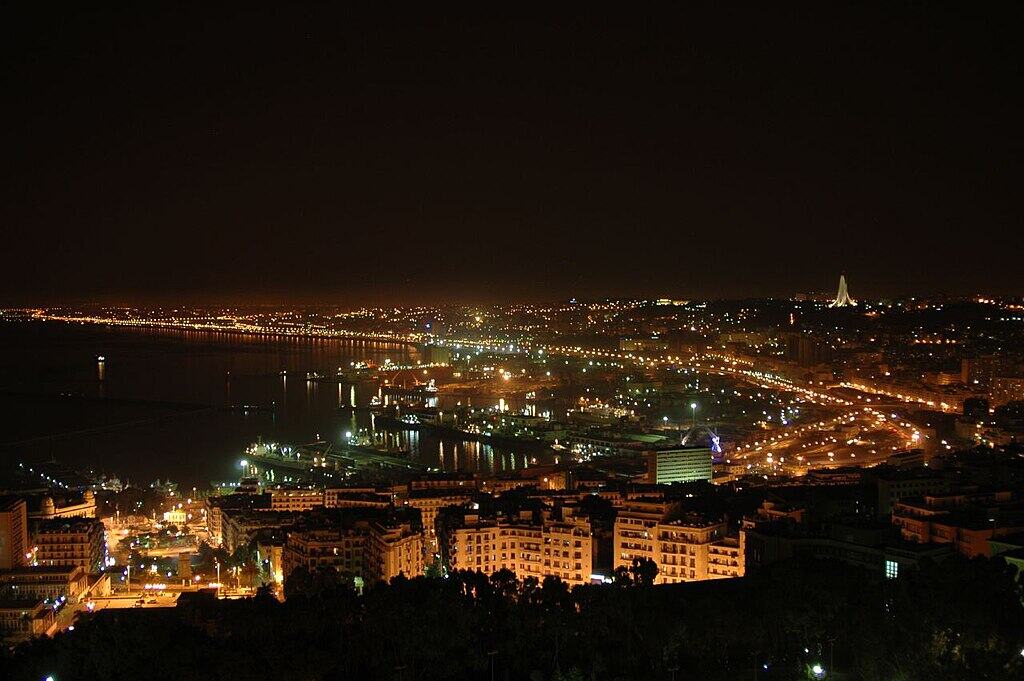
The relationship between Algeria and the United States spans more than two centuries, beginning with early conflict and evolving into a multifaceted partnership that touches on security, energy, commerce, and cultural exchange. This journey from adversaries to close security partners reveals not only the pragmatic nature of international relations and the enduring influence of historical memory on diplomatic ties, but also Algeria’s evolving role as a leader in anti-colonial and non-aligned diplomacy.
The Barbary Wars: First Contact Through Conflict
The earliest significant encounters between the United States and Algeria were marked by confrontation rather than cooperation. In the late 18th century, Algiers operated as an autonomous Ottoman Regency, and its corsairs (ghuzāt al-baḥr in Arabic), often labelled ‘Barbary pirates’ in Western sources, posed a significant threat to American merchant vessels that had lost British naval protection following independence. In 1785, the Dey of Algiers declared war on the young United States and seized several American ships, taking crew members captive.
Interestingly, despite this hostile beginning, the Regency of Algiers is often cited in U.S. diplomatic histories as among the early states to acknowledge American independence by 1783. The United States, lacking a strong navy under the Articles of Confederation, initially opted for diplomacy and tribute payments. The Treaty of Peace and Friendship, signed on September 5, 1795, required the U.S. to pay substantial tribute (eventually totalling $10 million over 12 years) in exchange for safe passage and the release of American captives —payments that Algerian rulers viewed as a normal contractual price for maritime security, but which Americans increasingly denounced as humiliating ‘tribute’.
By the early 19th century, American attitudes hardened against these tribute payments. Following the War of 1812, Commodore Stephen Decatur led a naval squadron to Algiers in 1815 during the Second Barbary War, defeating Algerine corsairs and compelling the Dey to renounce future tribute demands. These so-called Barbary Wars marked one of America’s first overseas military conflicts. In 1830, France’s colonisation of Algeria effectively ended direct diplomatic relations between the two nations for over a century.
World War II and the Path to Independence
Algeria re-entered American strategic consciousness during World War II when U.S. and Allied forces landed in the country as part of Operation Torch in 1942, ending Vichy French control over Algiers and Oran and bringing them under Allied military administration. Many Algerian nationalists later recalled that this experience, which brought tens of thousands of American GIs to Algeria, indirectly encouraged their aspirations by exposing them to Allied rhetoric about freedom and self-determination.
However, throughout the 1950s, as Algeria, led by the Front de libération nationale (FLN) and the Gouvernement provisoire de la République algérienne (GPRA), waged its brutal War of Independence (1954-1962) against France, U.S. policy largely supported its French ally. The Eisenhower administration provided military equipment to France, though American officials attempted to “balance the situation” without completely alienating Algerian nationalists.
A significant turning point came in July 1957 when Senator John F. Kennedy delivered his landmark “Imperialism – The Enemy of Freedom” speech, becoming the first prominent American politician to call for U.S. support of Algerian independence. This bold stance, extraordinary for its time, resonated deeply with Algerian nationalists—a gesture Algerians remember to this day. Algerian narratives of independence tend to foreground the sacrifices of the FLN and rural population, while acknowledging Kennedy’s 1957 speech and early U.S. recognition as diplomatically significant but not decisive.
When Algeria finally achieved independence on July 5, 1962, President Kennedy issued a congratulatory statement two days before formal independence, expressing America’s “profound satisfaction” and looking forward to “multiplying the bonds of friendship” between the two nations. Diplomatic relations were formally established on September 29, 1962, and Kennedy personally welcomed Algeria’s first Prime Minister, Ahmed Ben Bella, to Washington in October 1962—even during the tense Cuban Missile Crisis.
Cold War Tensions and the 1967 Break
The initial years of independence saw Algeria and the U.S. maintaining wary relations shaped by Cold War dynamics. Algeria under Presidents Ben Bella and Houari Boumédiène pursued a staunchly non-aligned, socialist, and anti-colonial foreign policy, positioning Algeria as a key voice in the Non-Aligned Movement and the Organisation of African Unity (often voicing strong opposition to what Algerian official called U.S. “imperialist” interventions). American officials, in turn, grew concerned about Algeria’s close ties with the Soviet bloc.
A major rupture occurred in June 1967 during the Arab Israeli Six-Day War. In solidarity with Arab states and in protest of U.S. support for Israel, Algeria severed diplomatic relations with the United States on June 6, 1967, expelling the U.S. ambassador. This political break lasted for over seven years, though notably, economic exchanges continued to grow during this period, with the United States nearly replacing France as Algeria’s leading trading partner by the early 1970s.
Diplomatic relations were finally restored in late 1974 after quiet exploratory talks. U.S. Secretary of State Henry Kissinger met President Boumédiène in Algiers in October 1974, and a joint announcement of full normalisation was made on November 12, 1974.
Algeria as Mediator: The Iran Hostage Crisis
One of the most significant demonstrations of Algeria’s diplomatic value came during the Iran hostage crisis (1979-1981). After Iranian revolutionaries seized the U.S. Embassy in Tehran and took 52 American diplomats hostage, Algeria offered its good offices as a neutral mediator. Algerian diplomats shuttled tirelessly between Washington and Tehran, carrying proposals that ultimately culminated in the Algiers Accords signed on January 19, 1981. The next day, Iran freed all American hostages after 444 days in captivity. President Jimmy Carter and U.S. officials gave Algeria significant credit for its pivotal assistance in resolving the crisis peacefully. For Algerian diplomacy, the Algiers Accords also reinforced the country’s self-image as a principled mediator between North and South.
Post-9/11: A Counterterrorism Partnership
The terrorist attacks of September 11, 2001, marked a major turning point in Algeria-U.S. relations, bringing the two nations significantly closer on security and counterterrorism. Having fought a deadly Islamist insurgency throughout the 1990s—a civil war that claimed an estimated 100,000 lives—Algeria was one of the first countries to unequivocally condemn the 9/11 attacks and offer support to the United States.
Cooperation in law enforcement, intelligence, and counterterrorism intensified markedly. U.S. officials came to regard Algeria as a “pivotal state” in the Global War on Terror, a key partner in North Africa for combating extremist groups. Algeria shared invaluable intelligence on al-Qaeda and reportedly permitted the U.S. to use at least one airfield in southern Algeria to deploy surveillance aircraft supporting counterterrorism operations.
High-level visits became frequent. Secretary of Defence Donald Rumsfeld travelled to Algiers in February 2006—the first Pentagon chief to do so—to expand military ties. In 2006, the countries established a formal Joint Military Dialogue, and Algeria began participating in U.S.-led regional security programmes like the Trans-Sahara Counter Terrorism Partnership.
This security cooperation continued to deepen through the 2010s. In 2015, the two countries launched a high-level Strategic Dialogue to institutionalise consultations on regional issues. As recently as January 2025, U.S. Africa Command’s General Michael Langley visited Algiers to sign a Military Cooperation Memorandum of Understanding—the first of its kind—covering joint training, counterterrorism, and disaster response.
Energy and Economic Ties
Economic and commercial ties have long been vital to the Algeria-U.S. relationship, centred especially on energy. Algeria is a significant oil and natural gas producer—the largest natural gas producer in Africa—and American companies have been involved in Algerian hydrocarbon development since the 1960s.
During the 1970s, Algeria became one of the first suppliers of liquefied natural gas (LNG) to the United States, pioneering transatlantic gas trade. American energy companies like ExxonMobil, Chevron, Halliburton, and Anadarko (now part of Occidental Petroleum) have played significant roles in developing Algeria’s hydrocarbon resources through joint ventures and service contracts with state company Sonatrach.
The Trade and Investment Framework Agreement (TIFA) signed in July 2001 established principles for expanding commerce. By the mid-2000s, U.S. exports to Algeria reached $1.2 billion, while U.S. imports from Algeria (mainly oil and LNG) exceeded $10 billion. The partnership continues to evolve, with recent agreements including a January 2025 memorandum of understanding between Algeria and Chevron to cooperate on offshore hydrocarbon exploration.
Beyond hydrocarbons, emerging dialogue on renewable energy and Algeria’s vast solar potential has opened new avenues for cooperation in solar and green hydrogen projects.
Cultural and Educational Bridges
While less prominent than strategic ties, cultural and educational relations form an important layer of engagement. The U.S. Embassy in Algiers sponsors Fulbright scholarships for Algerian students and scholars, and since the early 2000s, English-language education in Algeria has been a focus, with the U.S. placing English Language Fellows in Algerian institutions.
The Ambassadors Fund for Cultural Preservation has provided grants to restore Algerian historic sites, including funding for the restoration of the 18th-century El Pacha Mosque in Oran in 2006. The U.S. has also supported civil society development in Algeria through programmes that train journalists, young leaders, and NGOs under initiatives like the Middle East Partnership Initiative (MEPI). Alongside U.S.-funded initiatives, Algerian institutions and diaspora communities have promoted their own cultural outreach to American audiences—through cinema, literature, music and academic exchanges—which often foreground narratives of anti-colonial struggle and everyday life beyond security and energy headlines.
An unusual cultural link from the 1960s saw Algiers become a haven for members of the U.S. Black Panther Party in exile. In 1969, Eldridge Cleaver and other activists were welcomed by President Boumédiène, who allowed them to establish an international chapter of the Panthers in Algiers—reflecting Algeria’s image at the time as a hub for so-called Third World liberation movements.
Contemporary Relations and Ongoing Tensions
As of 2025, Algeria-U.S. relations are characterised by enduring partnership with occasional friction. Cooperation is at historic highs in counterterrorism, military dialogue, and energy ties. Diplomatic contacts remain frequent, and both countries consult closely on North African security.
However, certain tensions persist. A prominent disagreement emerged in December 2020 when the United States recognised Morocco’s sovereignty over the disputed Western Sahara in exchange for Morocco’s normalisation of relations with Israel. Algeria, a staunch supporter of Sahrawi self-determination, strongly criticised this decision as violating U.N. Security Council resolutions. The issue remains a diplomatic sore point, though dialogue continues.
A Pragmatic Partnership
The bilateral relationship between Algeria and the United States has evolved from early conflict and distance to pragmatic partnership. The historical arc includes fascinating reversals: they fought each other in the Barbary Wars, yet Algeria later helped free American hostages in Iran. The U.S. once hesitated to support Algerian independence but soon became a major trade partner and diplomatic interlocutor.
Today, ties encompass high-level strategic dialogue, extensive security and counterterrorism cooperation, growing trade and investment, cultural and educational exchanges, and joint endeavours in energy development. The relationship remains balanced between realpolitik and principle—driven by mutual interests in security and prosperity yet occasionally tested by policy divergences.