

In Algeria, the circumcision of a young boy is far more than a medical procedure. It is a ṭaḥāra — a purification — a moment many families see as confirming the child’s belonging within a Muslim family and community. For generations, Algerian families have transformed this ancient rite into celebrations that can, in some families, approach wedding receptions in their scale, blending religious devotion with regional customs that vary from the Aurès mountains to the Saharan oases.
Ancient Roots, Islamic Foundation
Male circumcision has deep roots in North Africa. Some Saharan rock art in the Tassili n’Ajjer/Oued Djerat corpus depicts masked figures and sexually coded imagery; some scholars have speculated that certain motifs elsewhere in the region may relate to initiation rites, possibly including circumcision — but interpretation is debated. Over the centuries, it became widespread among Muslim communities across North Africa and is now commonly treated as a near-universal norm in Algeria’s Muslim social life.
In Islamic tradition, male circumcision (khitān) is widely classed as sunna (Prophetic tradition) and linked to fiṭra (natural disposition/purity). The Qur’an does not mention it explicitly; its religious weight comes mainly through later tradition and customary practice. For Algerian families, circumcising a son fulfils this prophetic tradition and symbolises the child’s submission to God’s will.
The ceremony’s colloquial name reveals its spiritual weight: In dialect usage, it is often called ṭahāra (‘purification’), with the circumciser termed ṭaḥḥār; in francophone settings (especially in Algeria in the past), people sometimes even called it ‘le baptême’—as a popular analogy, not a Christian sacrament.
The Ceremony Unfolds
Traditional Algerian circumcision ceremonies are rich with ritual and symbolism, often lasting several days in their fullest expression.
Choosing an Auspicious Moment
Families seek spiritually significant dates for the ritual. Laylat al-Qadr (often associated with the 27th night of Ramadan) is widely treated as an auspicious date, though many families also choose school holidays or the days leading up to Eid for practical reasons. Some folk beliefs also favour certain days of the week — Monday or Wednesday — for good fortune.
Age range: from infancy to early childhood (and sometimes later)
In practice, Algerian families circumcise boys across a range of ages, though it is most commonly done in early childhood. A nationally representative survey (MICS Algeria 2006) notes that circumcision may take place at any time of year, but many families prefer school holidays or Ramadan. In that same survey, among circumcised boys under five, 2.8% were circumcised at birth and 17.4% before their first birthday; nearly three-quarters were circumcised between ages one and three, with a smaller share at age four.
Preparations and the Role of Family
Once the date is fixed, preparations begin in earnest. In many families—especially in accounts from the Aurès, women gather to roll couscous and prepare sweets, their ululations (zagharīt) filling the household. In some households, the child’s maternal uncle traditionally holds a position of honour: in many regions, he presents the ceremonial white outfit (l’kiswa) and carries the boy to the circumcision room. The paternal aunt often assumes the tender role of nursing the child through his recovery.
The Night of Henna
On the eve of the circumcision, or earlier that day, women hold a henna ceremony for the boy. Seated at the centre of a circle of mothers, grandmothers, and aunts, the child receives a lump of henna paste on his hand, wrapped in decorative cloth — often blue or green for protection. In some regions, the henna ritual is explicitly organised among women and girls, with men absent.
Feasting and Celebration
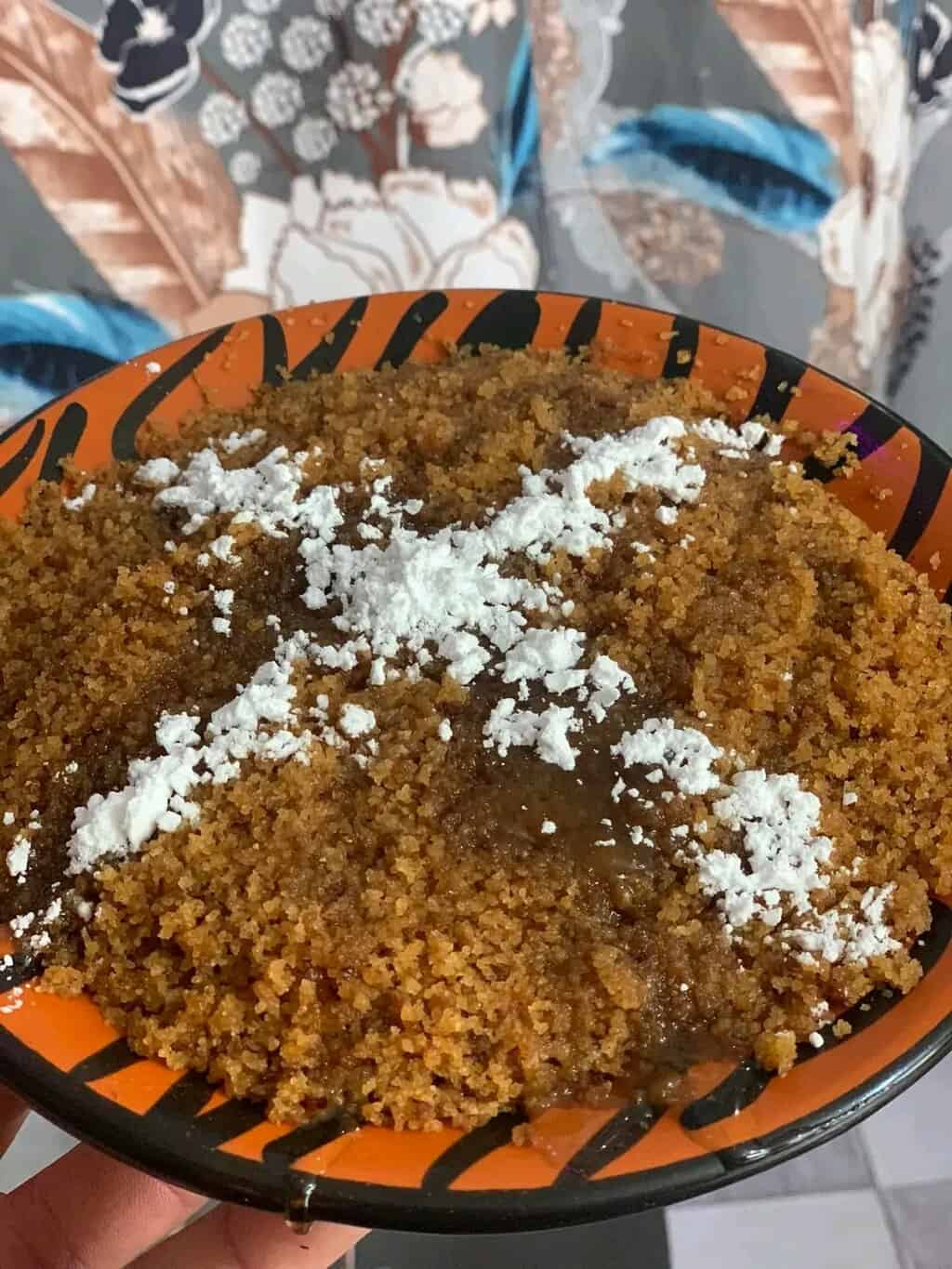
A sheep is often slaughtered on the morning of the ceremony. Grand platters of couscous are prepared, accompanied by regional specialties. In the Aurès, families may serve rfiss ziraoui—a sweet of fine pastry/semolina dressed with honey and butter (often smen) and finished with nuts.
Music and dancing accompany the celebration. The bendir (frame drum) and gasba (flute) play folkloric tunes. In other regions, men perform the baroud — a display with rifles fired into the air — while women’s zagharīt carry blessings and protection.
The child, dressed in white from head to toe — symbolising purity and innocence — is treated like a prince. Relatives slip banknotes into the boy’s hands and bring gifts.
From Tradition to Modernity
The practice has evolved considerably, particularly since Algerian independence in 1962.
The Disappearance of the Hadjam
Traditionally, circumcisions were performed at home by the hadjam (barber-surgeon) or ṭaḥḥār, specialists whose craft was passed down through generations. Today, this role has virtually disappeared. Modern parents overwhelmingly prefer medical doctors in clinical settings. Algerian health regulations now require that circumcisions be performed in medical environments by qualified personnel. A 2022 Ministry of Health directive encourages families to choose hospitals or specialist physicians rather than general practitioners, with mandatory blood tests beforehand to rule out bleeding disorders.
Scaled-Down Celebrations
Economic pressures have transformed the elaborate multi-day feasts of earlier generations. Many urban families now host a single day gathering of close relatives, more akin to a birthday party in scale.
Yet adaptations emerge. Themed circumcision parties have become popular, with traditional décor, custom “Tahara cakes” inscribed with the boy’s name, and professional photographers. Some families dress the boy in elaborate costumes reminiscent of Ottoman princes. The scale may be reduced, but the celebratory spirit endures.
Large-scale Hospital Ceremonies
A new form of community participation has emerged: organised mass circumcision campaigns. Charities, corporations, and government bodies sponsor group events, particularly during Ramadan. In 2025, a single hospital in Béjaia circumcised 459 boys as part of a Ramadan campaign. Even Algeria’s postal service has organised circumcision events for employees’ children.
The Ministry of Health now encourages spreading circumcisions across Ramadan rather than concentrating them on Laylat al-Qadr, to avoid hospital crowding and improve care.
Blending Two Worlds
Today’s Algerian circumcisions often bridge tradition and modernity. A doctor performs the surgery at a hospital in the morning; the family holds a festive party at home in the evening. Many families retain key practices — dressing the boy in white, applying henna, distributing sweets, celebrating with prayer and ululation — ensuring the ceremony remains a meaningful blend of the sacred and the festive.