

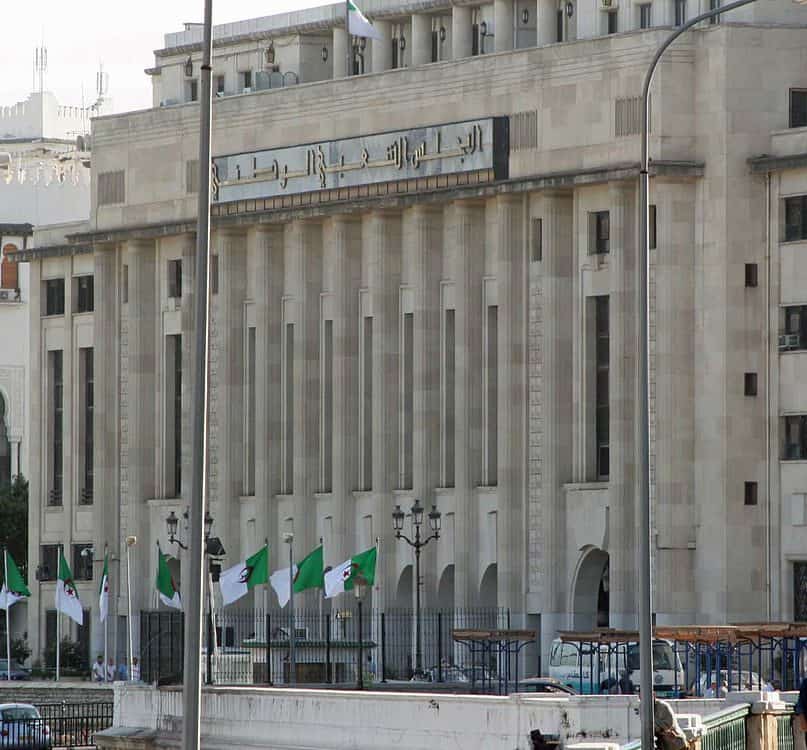
Algeria’s governmental structure reflects a careful balance between democratic representation, institutional stability, and executive authority. As the People’s Democratic Republic of Algeria, the country operates under a semi-presidential system that has evolved significantly since independence, shaped by both constitutional reforms and the nation’s unique historical trajectory.
The Architecture of Power
The Algerian state is built upon three distinct branches of government, each with clearly defined roles and responsibilities. This tripartite system, enshrined in the Constitution (notably amended in 1996, 2016, and 2020), creates a framework for governance that balances democratic accountability with institutional continuity.
Executive Leadership: A Dual Structure
At the heart of Algeria’s executive branch lies a distinctive dual leadership model. The President of the Republic serves as head of state and the cornerstone of executive power, directly elected by the people for a five-year term with a maximum of two terms. This position carries substantial authority, from commanding the armed forces to directing foreign policy and appointing key government officials.
Working alongside the President is either a Prime Minister or a Head of Government, depending on the outcome of legislative elections. Where there is a presidential majority, the President appoints a Prime Minister to coordinate government activity and present the Government’s programme to Parliament; if a parliamentary majority emerges, a Head of Government is appointed. In both cases, the Government must seek the People’s National Assembly’s approval of its programme; failure to secure it requires the Government to resign, and a second failure can trigger the dissolution of the Assembly.
Parliamentary Representation: Two Chambers, Different Perspectives
Algeria’s bicameral (two-chamber legislature) Parliament consists of the People’s National Assembly (المجلس الشعبي الوطني / Assemblée populaire nationale, APN) and the Council of the Nation (مجلس الأمة / Conseil de la Nation). The lower house has 407 directly elected members serving five-year terms. Members are chosen by open-list proportional representation without panachage (mixing candidates from different party lists) and a 5% electoral threshold across 59 constituencies (the 58 wilayas plus one for the diaspora); eight (8) seats represent citizens abroad. Candidate lists must also meet gender-parity and youth-quota rules set in the 2021 electoral law.
The upper house has 174 members serving six-year terms, renewed by halves every three years. Two per wilaya (116 total) are indirectly elected by communal and wilaya assemblies, and 58 are appointed by the President from among national personalities and experts.
For ordinary laws, the Council of the Nation adopts texts by a majority of members present; for organic laws, by an absolute majority. If the two chambers disagree, the Prime Minister/Head of Government convenes a joint committee to propose a compromise text; if disagreement persists, the Government may ask the APN to decide definitively on the committee’s text (or, failing that, on the Assembly’s last adopted version). Separately, the President may request a second reading, which then requires a two-thirds majority in both chambers.
Judicial Independence: Multiple Hierarchies
Algeria’s judicial system reflects its French civil law heritage through a sophisticated court structure. The Supreme Court (المحكمة العليا / Cour suprême) serves as the highest authority for ordinary civil and criminal matters, whilst the Council of State (مجلس الدولة / Conseil d’État) handles administrative law disputes. This dual hierarchy ensures specialised expertise in different areas of law.
Perhaps most significantly, the Constitutional Court (المحكمة الدستورية / Cour constitutionnelle), established through 2020 reforms, stands as guardian of the Constitution. It comprises 12 members: 4 designated by the President (including the Court’s President), 1 elected by the Supreme Court and 1 by the Council of State (from among their members), and 6 elected from among professors of constitutional law. The Court reviews the constitutionality of treaties, laws and regulations, examines electoral appeals and proclaims the final results of presidential, legislative and referendum votes. The Court’s creation represents a strengthening of constitutional checks and balances in response to calls for enhanced rule of law.
Historical Evolution and Contemporary Relevance
Algeria’s governmental structure cannot be understood without considering its historical development. The system has evolved from a single-party state following independence to today’s multi-party semi-presidential republic. The introduction of the Council of the Nation in 1996, for instance, was partly designed to provide institutional stability during a period of political transition.
The 2020 constitutional amendments, implemented following the Hirak protest movement, demonstrate the system’s capacity for reform. These changes strengthened parliamentary oversight, enhanced judicial independence, and created new accountability mechanisms whilst maintaining the essential framework of governance. From an institutional perspective inside Algeria, the 2020 reforms are presented as an incremental consolidation of checks and balances—replacing the Constitutional Council with a Court, widening parliamentary oversight, and formalising the Government’s accountability to the APN; some civil-society groups and international observers nevertheless argue that executive predominance persists and that civic space remains constrained.
Balancing Act: Stability and Democracy
The Algerian system reflects a particular approach to democratic governance that prioritises institutional stability alongside representative democracy. The requirement for super-majorities in certain legislative processes, the role of appointed members in the upper house, and the strong executive all serve to moderate rapid political change whilst maintaining democratic legitimacy.
This structure has enabled Algeria to navigate significant political transitions, from the multi-party opening of the 1990s through to recent constitutional reforms. The system’s emphasis on consensus-building and institutional continuity reflects broader patterns in North African governance, where stability and democratic participation must be carefully balanced.
The governmental framework thus represents more than mere institutional architecture; it embodies Algeria’s approach to managing the complexities of democratic governance in a diverse society with a rich political heritage. Understanding this system sheds light on how Algeria is governed today and informs wider debates about democratic design elsewhere.