

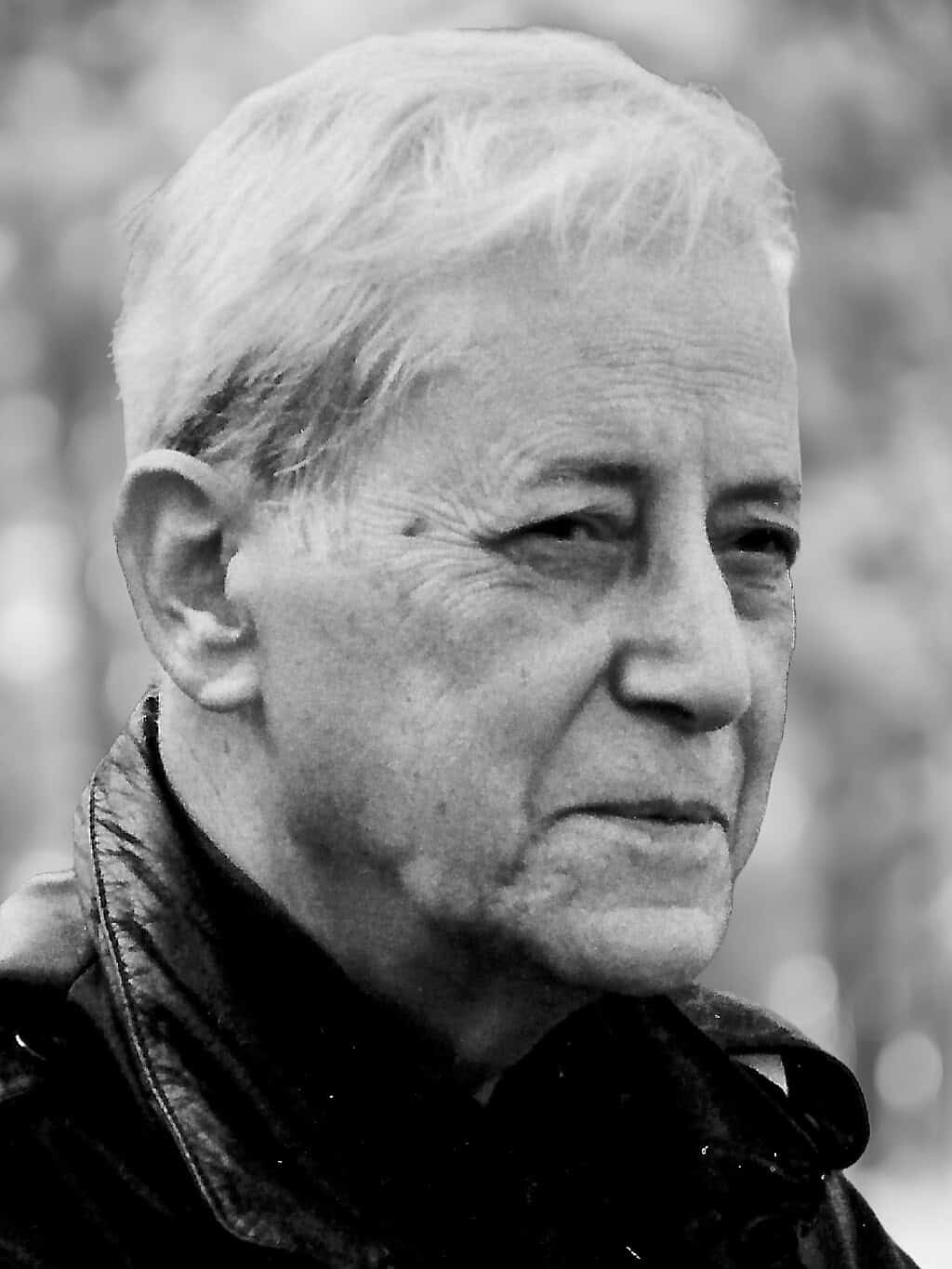
Mohammed Dib spent over five decades crafting novels, poetry, and stories that traced the arc of Algeria’s 20th-century experience—from colonial hardship to independence, from exile to global literary recognition. His work, written entirely in French yet unmistakably Algerian in spirit, established him as one of North Africa’s most significant literary figures.
At the time of his death in 2003, the Guardian described him as “the undisputed doyen of Algerian literature.” France’s Culture Minister at the time called him “a spiritual bridge between Algeria and France, between the north and the south of the Mediterranean”—a fitting epitaph for a writer who made the French language an instrument of Algerian storytelling.
A Childhood Shaped by Loss and Culture
Dib was born on 21 July 1920 in Tlemcen, a historic city in northwestern Algeria near the Moroccan border. His family had once been comfortable but had fallen into poverty by his childhood. When he was around ten or eleven, his father died of pneumonia, leaving his mother to raise six children alone.
Despite the financial hardship, Dib grew up in a culturally rich environment. His grandfather and great-uncle were renowned masters of Tlemcen’s Arab-Andalusian musical tradition, and Sufi-influenced Islamic practice permeated his upbringing. These early experiences—the struggle against poverty and the immersion in traditional arts—would surface repeatedly in his fiction.
Dib received a francophone education, attending the French college in Tlemcen before completing his baccalauréat at a lycée in Oujda, Morocco, in 1938. By 15, he had begun writing poetry. After school, he moved through a series of jobs that gave him intimate knowledge of Algerian society across its social strata: primary school teacher, military accountant, interpreter for Allied forces during World War II, and designer of rug patterns in a carpet-weaving workshop.
Literary Beginnings and Political Commitment
The late 1940s drew Dib into Algeria’s nascent literary circles. In 1948, he participated in influential gatherings at Sidi Madani near Blida, where established French writers mentored young Maghrebi voices. There he met Albert Camus, Louis Guilloux, and Jean Sénac. The poet Jean Cayrol helped connect Dib with the French publishing house Éditions du Seuil.
Dib also became politically active. In 1950, he moved to Algiers and worked as an editor for Alger Républicain, a progressive newspaper, while contributing to Liberté, a publication of the Algerian Communist Party. He joined other writers including Kateb Yacine and Emmanuel Roblès in collaborating on literary journals that provided platforms for anti-colonial discourse.
His political and artistic convictions merged in a belief that writers should use their craft to bear witness to injustice. Yet Dib recognised the complexity of his position. French language and culture, imposed by colonisation, had become part of Algerian reality. For Dib and his contemporaries, writing in French was not a betrayal but a way of claiming the coloniser’s tools to tell Algerian stories.
The Algerian Trilogy: Documenting Colonial Life
Dib’s literary breakthrough came with the Trilogie Algérienne, three novels that depicted Algerian society under colonial rule with unflinching realism.
La Grande Maison (1952), translated as The Big House, was an immediate success. Set in a working-class Algerian milieu on the eve of World War II, it follows a young boy named Omar growing up in poverty after his father’s death—a scenario drawn partly from Dib’s own childhood. The novel’s depiction of hunger and hardship is vivid: children pretending not to notice mealtime because there is no food. Critics praised both its literary quality and its honest portrayal of colonial conditions, though conservative colonial circles objected to what they viewed as an indictment of the system.
L’Incendie (1954), or The Fire, shifted to a rural setting during wartime drought, while Le Métier à tisser (1957), The Loom, returned to Tlemcen to depict Omar as a young adult. Throughout the trilogy, Dib employed a naturalistic style often compared to that of Émile Zola. His aim was documentary and ethical: to place the authentic experience of Algerian life on the page for a French-speaking readership.
The trilogy’s frank portrayal of colonial poverty and stirring of anti-colonial sentiment, combined with Dib’s outspoken journalism, alarmed French authorities. By 1959, with the Algerian War of Independence raging, the colonial administration ordered his expulsion. Dib was effectively exiled in his late thirties. Several French intellectuals, including André Malraux and Camus, intervened to allow him to settle in France rather than be sent elsewhere.
Evolution in Exile
From France, Dib continued writing prolifically, but his work evolved beyond social realism. He settled first in the south of France and later in La Celle-Saint-Cloud, near Paris, which remained his home until his death. Though some might have called him an exile, Dib maintained he had come of his own accord.
With Algeria independent after 1962, Dib felt a new artistic freedom. No longer constrained by the urgent need to rally a cause, he devoted himself to experimentation with language and form. Qui se souvient de la mer (1962), translated as Who Remembers the Sea, marked a departure into allegory and the fantastic. Published the year of independence, it reads as a surreal narrative that scholars have interpreted as an allegory for the Algerian War’s traumas. Dib himself compared it to Picasso’s Guernica—an attempt to translate horror through art rather than reportage.
Through the 1960s and 1970s, Dib absorbed influences from Russian classics, American literature, and European modernists, particularly Virginia Woolf. He fused Western narrative forms with North African oral and poetic traditions. Some scholars read echoes of local oral/poetic traditions in his narrative structures such as the hawfi (a traditional women’s poetic form from Tlemcen).
Dib undertook extensive travels during this period. In the mid-1970s, he spent time at the University of California, Los Angeles as a visiting professor. He developed a particular affinity for Finland after being invited to literary events there in 1975, returning often and even translating Finnish poetry into French.
The Nordic Cycle and Later Experiments
In the 1980s, Dib’s fiction took another turn with what critics call his ‘Nordic cycle’—novels set in or inspired by northern Europe. Works like Les Terrasses d’Orsol (1985), Le Sommeil d’Eve (1989), and Neiges de marbre (1990) follow Maghrebi protagonists navigating alien northern landscapes. These narratives explore exile, identity crisis, and multicultural encounter, weaving Finnish and Nordic mythology with Sufi philosophy.
In his final decade, Dib pushed formal boundaries further still, producing hybrid works that blended novel, essay, memoir, and poetry. L’Arbre à dires (1998), Comme un bruit d’abeilles (2001), and Simorgh (2003) are structured as mosaics—juxtaposing storytelling with reflections, diary entries, and folklore.
Algeria’s brutal civil conflict during the 1990s, often referred to as the ‘Black Decade’, weighed on Dib. Though he avoided direct political commentary, his later fiction grapples with violence and trauma. The story collection La Nuit sauvage (1995) contains tales that indirectly address the war’s toll. True to his artistic principles, Dib waited until he could transform these painful histories through art rather than writing mere reportage.
His final novel, L.A. Trip (2003), was written entirely in verse—a testament to his view of himself as, above all, a poet. He died on 2 May 2003 at his home in La Celle-Saint-Cloud.
Recognition and Legacy
Dib’s literary achievements earned significant recognition over his career. He won the Prix Fénéon in 1953 for La Grande Maison and the Prix Mallarmé in 1998 for his poetry. In 1994, he received the Grand Prix de la Francophonie from the Académie Française—reportedly the first time this prize had been awarded to a writer from the Maghreb.
Within Algeria, despite writing in French, Dib is recognised as a foundational figure in modern Algerian literature, often mentioned alongside Kateb Yacine and Assia Djebar. He is widely taught and commemorated in Algeria.
His international profile, however, remained more limited than some contemporaries, partly due to few English translations during his lifetime. Who Remembers the Sea appeared in English only in 1985 but English availability has been sporadic. A collection of stories, The Savage Night, was published in English in 2001. Recent years have brought renewed interest: 2020 marked Dib’s centenary, prompting French literary magazines to reassess his legacy. The Société des Amis de Mohammed Dib continues to preserve his archives and host conferences.
A Writer Between Worlds
Dib’s body of work—more than 30 novels plus poetry, short stories, children’s tales, plays, and essays produced over 50 years—defies easy categorisation. His major themes interweave: colonialism and its injustices, the search for identity in a changing world, the experience of exile, and the burden of memory.
What distinguishes Dib is how he treated these themes with both ethical commitment and experimental artistry. From depicting colonial social conditions with documentary precision to probing the spiritual alienation of immigrants through hallucinatory prose, he employed an array of forms to illuminate the human condition. Throughout, he maintained that aesthetics must serve ethics—that literature should be beautiful while answering to life’s injustices.
His life traced a path between Algeria and France, between traditional culture and modernist experiment, between political engagement and artistic independence. In an era when postcolonial identity was being forged, Dib demonstrated that writing in the coloniser’s language could become an act of cultural reclamation.