
Algerian Culture: A Guide to Traditions, Arts and People
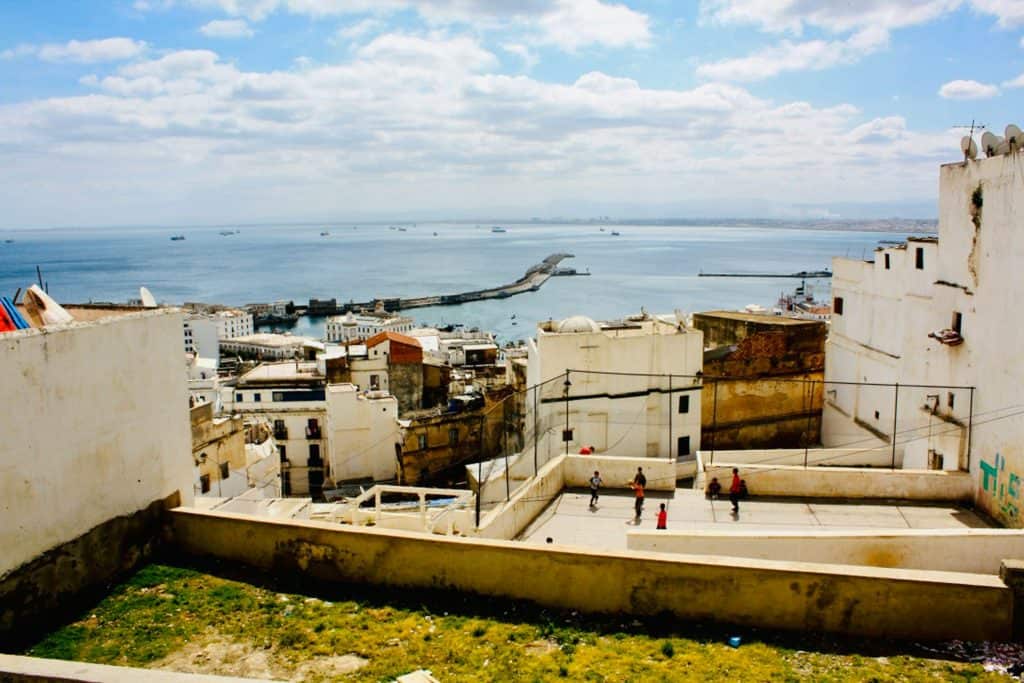
Algerian culture is a culture of layers. It rests on an Amazigh (Berber) foundation older than recorded history, carries an Arab and Islamic inheritance more than a thousand years deep, absorbed an Ottoman chapter and the long, contested imprint of French rule, and is shaped throughout by a geography that runs from the Mediterranean coast to the deep Sahara. The most useful way to understand it is to stop hunting for a single defining thread and instead watch how these layers meet—not as a tidy succession of rulers, but as a long process of continuity, adaptation, conflict and synthesis.
This guide is an introduction to that whole: the peoples who made Algeria, the languages Algerians speak, the literature and music, the food, the dress, the rites of faith and celebration, the cities and the desert, and—perhaps most distinctively—the world-significant figures that Algerian soil produced or reshaped. Each section opens onto a fuller article where there is more to say.
A culture of layers: the peoples who made Algeria
The oldest layer is Amazigh, the Berber peoples indigenous to North Africa, present long before the arrivals that followed—and never displaced by them. Onto that foundation came Phoenician settlements and Carthaginian influence, the Numidian kingdoms of Masinissa and Jugurtha with their own cities and coinage, and the Roman rule that followed; then a Byzantine period and, from the seventh century, the Arab and Islamic expansion that reshaped language, faith and law across the Maghreb. From the sixteenth century the region sat within the Ottoman orbit, governed from Algiers, until the French invasion of 1830 opened 132 years of colonial rule that ended only with independence in 1962, after a war of extraordinary cost.
No single one of these layers “is” Algerian culture; the distinctiveness is in the combination, and in an indigenous society that repeatedly absorbed and reworked what arrived rather than simply receiving it. Today Algeria is the largest country in Africa by area, and that scale holds real internal variety—the Kabyle of the northern mountains, the Chaoui of the Aurès, the Mozabites of the M’zab valley, and the Tuareg of the deep south each carry their own traditions within the wider whole.
The languages Algerians speak
Language in Algeria is plural by habit and by design. The everyday tongue is Algerian Arabic, or Darja—not one uniform dialect but a continuum, laced with Spanish-derived words around Oran, closer to Tunisian in the east, and preserved in isolated pockets like Jijel that guard older sounds. Modern Standard Arabic occupies a more formal place, in education, administration, media and writing; French, an inheritance Algerians turned to their own purposes, still runs through business and higher education, so that in everyday speech many Algerians move fluidly between Algerian Arabic and French, sometimes within a single sentence.
Alongside Algerian Arabic runs Algeria’s living Amazigh inheritance: Kabyle, Chaoui, Mozabite and other varieties spoken across different parts of the country by an estimated quarter to a third of the population. Tamazight was recognised as a national language in 2002 and made an official language of the state in 2016—a milestone in a long struggle for cultural recognition. For how the spoken language actually works, see our article on Algeria’s linguistic landscape, the free course First Words: Algerian Arabic, and the Algerian Name Decoder.
Literature and storytelling
Algeria’s literature carries many of the same tensions as its languages: between oral and written traditions, between Arabic, Tamazight and French, between colonial inheritance and cultural reclamation. Modern Algerian writing cannot be reduced to any one language, but some of its most internationally influential authors used French—the language of colonial rule—to write Algeria back into a literary record that had often spoken about Algerians rather than with them.
Kateb Yacine made that contradiction central to his work. His 1956 novel Nedjma, with its fractured chronology and overlapping voices, refused to present Algeria as a simple or finished national story. He famously described French as a butin de guerre—“spoils of war”—a language seized and turned against the colonial system that had imposed it. Later, he moved increasingly towards popular theatre in Algerian Arabic, performing for workers, students and rural audiences while defending Algeria’s multilingual character.
Assia Djebar used literature to recover voices that both colonial archives and official histories had often pushed to the margins, particularly those of Algerian women. Her novels combine written records, personal memory and oral testimony, turning the act of listening into a form of historical recovery. Writing in French remained a source of tension throughout her career: it was the language of colonial power, but also one she reshaped to carry Algerian memory, Arabic and Amazigh inheritances, and women’s speech.
Mohammed Dib, from Tlemcen, brought another dimension. His early Algerian trilogy depicted poverty and everyday life under colonial rule with unusual directness before his writing moved into exile, allegory, poetry and formal experiment. Across more than five decades he continued to use French as an instrument for distinctly Algerian experiences, drawing at times on North African oral and poetic traditions.
Together these writers show why Algerian literature resists a single linguistic box. Its modern history has unfolded across languages, migrations and political ruptures, while oral storytelling, poetry and regional traditions remain part of the deeper cultural landscape from which the written literature emerged.
Music: from the Aurès to the world
Algeria carries an extraordinary range of distinct musical traditions. Andalusi classical music, brought across the Mediterranean after 1492, still sounds in Algiers, Tlemcen and Constantine; urban chaabi grew out of the Casbah as a popular song of ordinary life; and in the north-east, Chaoui music has carried the voice of the Amazigh highlands for well over a century.
The tradition that travelled furthest is Raï. It developed in and around Oran in the early twentieth century, sung first by cheikhas whose raw, vernacular songs about hardship and desire ran against every convention; the name itself means “opinion.” Persecuted by turns under colonial rule, post-independence broadcasting bans and the violence of the 1990s, Raï survived to become a global force—Khaled, Cheb Mami’s crossover with Sting, DJ Snake’s “Disco Maghreb”—and was inscribed on UNESCO’s Intangible Cultural Heritage list in 2022. Music also lives on the terraces: the football songs that follow Les Verts are less disposable anthem than collective memory set to melody.
Food and the table
At the centre of the Algerian table sits couscous—far more than a dish. Its Berber name, seksu, and cooking vessels found in third-century BCE Numidian tombs point to deep roots in the Berber-speaking Maghreb, well before Arabisation or European rule. Across Algeria, couscous takes numerous regional forms, varying in grain, vegetables, meat, seasoning and occasion. In 2020, UNESCO inscribed the knowledge and practices around couscous on a joint application by Algeria, Mauritania, Morocco and Tunisia—a rare act of Maghreb cooperation after years of dispute. The full story of Algerian couscous runs from Friday family tables to the diaspora’s “taste of memory.”
Alongside it, the Deglet Nour date—the “date of light” of the southern oases—anchors both the economy and the rhythms of faith, breaking the fast during Ramadan in keeping with the date’s longstanding place in Islamic tradition. Tea and coffee mark the day and the season, and both work as instruments of hospitality as much as refreshment.
Dress and craft
Traditional dress is regional and occasion-bound rather than uniform, and each garment tells a story of Amazigh, Arab, Ottoman and Andalusian exchange. The regal chedda of Tlemcen—its bridal costume recognised by UNESCO in 2012—sits alongside the gold-embroidered karakou of Algiers, the velvet gandoura and draped melhfa of the east (inscribed by UNESCO in 2024), the bright, silver-adorned taqendurt of Kabylie, and the understated white blouza of Oran. The hooded burnous, often linked to antiquity, became a quiet emblem of resistance under French rule. Our guide to Algerian dress walks the regions in full.
Faith, family, and the rites of celebration
Islam is the faith of the great majority and of the state, shaping the calendar, the rites of passage, and an ethic of hospitality that Algerians themselves often name as central to who they are. The mosque has long been more than a place of worship—a repository of memory, learning and social solidarity.
Celebration is where much of the culture becomes visible. An Algerian wedding unfolds across chapters—the khoutouba, the fatiha, the henna night, and the tesdira, in which the bride changes through a sequence of regional costumes, becoming a living exhibition of the country’s diversity. Henna itself—inscribed by UNESCO in 2024—is at once cosmetic, blessing and protection at moments of transition. And over all of it carries the zagharid, the trilling ululation that marks weddings, processions and, in July 2019, the streets of Algiers celebrating a continental football title—a women’s collective voice that needs no face.
Cities, monuments, and the desert
Algeria’s cities each hold a different chapter. Algiers rises white above its bay, crowned by the Casbah, the Ottoman-era medina and UNESCO World Heritage site that remains a living neighbourhood. Oran gave the world Raï. In the north-east, Tébessa—Roman Theveste—is a rare continuously inhabited ancient city, and only one of Algeria’s remarkable Roman sites, from Timgad’s perfect grid to hillside Djémila and seaside Tipasa, all set within long-lived Amazigh landscapes rather than dropped onto empty land.
Beyond the cities lies the geography that shapes everything else. The Sahara covers roughly four-fifths of the national territory and is far stranger and richer than the dunes of popular imagination: the rock art of Tassili n’Ajjer, the volcanic Hoggar, the Tuareg “blue men of the desert,” the Mozabite towns of the M’zab, whose architecture influenced Le Corbusier, and the ingenious foggaras that carry water underground to the oases. The nation’s modern memory has its monuments too—the towering Maqam Echahid above Algiers, and the defiant national anthem Kassaman, composed in a colonial prison.
The Algerian Connection: the world Algeria shaped
This is where Algeria’s cultural reach becomes something more than local. The site’s guiding idea—that the connections already existed—is nowhere clearer than in the figures Algerian soil produced or decisively formed. Handled honestly, these are not simple claims of national ownership; they are more interesting than that, and they span very different kinds of connection.
Antiquity offers figures born in the territory of present-day Algeria, long before any Algerian nation existed. Augustine of Hippo, one of the most influential thinkers in Western history, was born at Thagaste (Souk Ahras), schooled at Madauros, and served as bishop for thirty-five years at Hippo Regius (Annaba)—best described not as “Algerian” but as Augustine in Algeria, a global mind whose institutional base and death-site lie in the country’s north-east. The novelist Apuleius came from the same corner of the map.
The early-modern Mediterranean runs through Algiers too. For three centuries the corsairs of the Regency challenged Europe’s great powers from the port—and it was there that a captured Spanish soldier, Miguel de Cervantes, spent five years in captivity, attempting escape after escape, before smuggling the city into the “Captive’s Tale” of Don Quixote and a soldier named Saavedra: an outsider whose Algerian years surfaced decades later in one of the world’s most-read novels.
The modern figures are the most debated, and deliberately so. Albert Camus was made by working-class Algiers and named colonial injustice more plainly than most writers of his position—yet could not follow Algerians to independence, which is why we call him Algeria’s witness, not its champion. Jacques Derrida, founder of deconstruction, was marked for life by the colonial hierarchies of citizenship he was born into in El Biar. Frantz Fanon—not born in Algeria but decisively shaped by it—did the work that made him the theorist of decolonisation in a hospital outside Algiers. The painter Baya Mahieddine, self-taught and sixteen, walked into the Paris art world of Breton and Picasso in 1947 with a wholly feminine visual universe that owed nothing to European academies. Even the settler story—the pieds-noirs, whose 132-year presence ended in the exodus of 1962—belongs here, told with its privileges and its rupture both named.
These are stories of a place complex enough to produce writers and thinkers who still argue with one another across the centuries—which is, in the end, the truest measure of a culture’s reach. And if these figures show Algeria shaping the world, the world has spent two thousand years shaping its image of Algeria in return—watching, describing and often misreading it, a history we trace in Algerians in the world’s imagination. You can follow each of these threads, and many more, across our full collection of culture articles.
Frequently asked questions
What is Algerian culture known for? For its layering of Amazigh, Arab, Islamic, Mediterranean, Saharan and Ottoman inheritances; for strong regional diversity; for its music, food and hospitality, dress and crafts; for a multilingual culture of Arabic, Tamazight and French; and for a rich literature and oral tradition.
What languages do Algerians speak? Everyday life runs on Algerian Arabic (Darja), often mixed with French. Modern Standard Arabic is widely used in formal writing, education and administration, Tamazight has been an official language since 2016, and French remains widely used in business and education.
What is Algeria’s national dish? Couscous, a dish with deep roots in the Berber-speaking Maghreb, inscribed on UNESCO’s Intangible Cultural Heritage list in 2020 as a shared tradition of Algeria, Mauritania, Morocco and Tunisia.
What religion do most Algerians follow? Islam, which is also the religion of the state and shapes the calendar, the rites of passage and daily life.
What is Raï music? A genre that developed in and around Oran in the early twentieth century, sung first by cheikhas about the realities of urban life, long persecuted, and inscribed by UNESCO in 2022.
Which famous people are connected to Algeria? Many, in very different ways—see the section above. They include Saint Augustine of Hippo and the writer Apuleius, both born in what is now Algeria; the philosopher Jacques Derrida and the painter Baya Mahieddine, both Algerian-born; the writer Albert Camus and the decolonial theorist Frantz Fanon, each shaped by Algeria; and Miguel de Cervantes, whose years of captivity in Algiers ran through his later work.